Tackling Malnutrition Through Strategic Investment
The United Nations Capital Development Fund (UNCDF) has said it will invest $2.5 million to change the way humanitarian supplies are delivered in West Africa. The goal of the project is to fight child malnutrition while also boosting local economies and making new ways for people to make money.
The Food Security Information Network’s 2025 report says that millions of children under five in Nigeria are severely malnourished. The new investment wants to change that by helping local businesses make therapeutic nutrition foods, which will make it possible for more kids to get the treatment they need to live.

Source: UN Road Safety Fund
Empowering Farmers and Strengthening Local Supply Chains
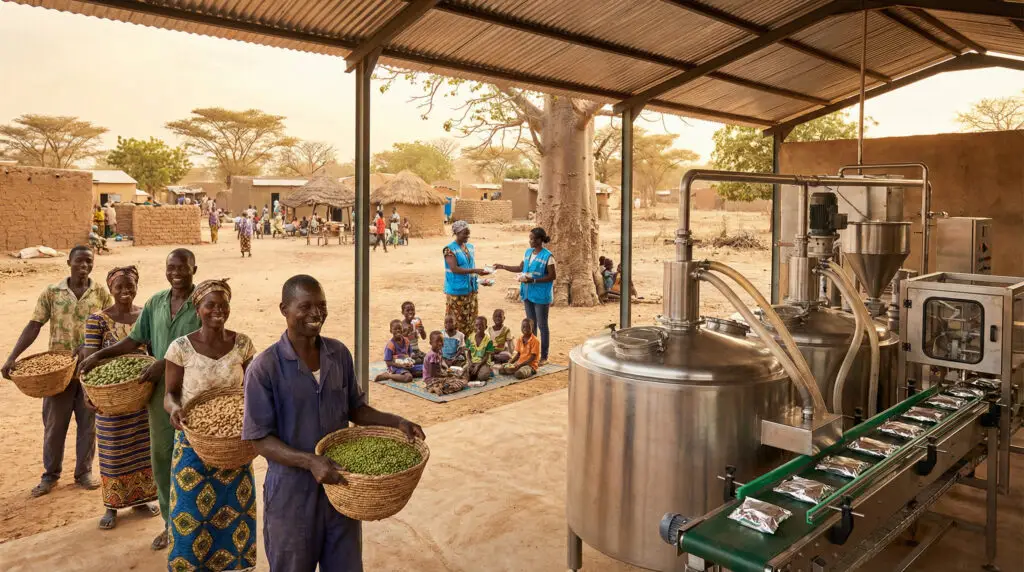
The UNCDF project brings in new specialized processing machines to make Ready-to-Use Therapeutic Foods (RUTFs). UNICEF and other humanitarian groups use these peanut pastes with added vitamins to help children who are not getting enough food.
UNCDF wants to get peanuts from Nigerian farmers by improving local manufacturing capabilities. This will create a supply chain that is both sustainable and self-sufficient. The effort promises to raise farmers’ incomes, make them less dependent on imports, and lower the costs of making important food supplies.
Ariel Foods Expansion Brings Economic and Social Impact
The money goes to Ariel Foods FZE, a Kenyan-owned company that works near Lekki Port in Nigeria. With the new money, Ariel will be able to make more nutrition products by processing peanuts and legumes grown in the area.
This expansion should help more than 1,500 smallholder farmers in northern Nigeria, where communities are always unstable and don’t have enough food. The project also wants to reach 25,000 more kids each year by 2030, giving them important nutrition support.
Recommended Article: US Venezuela Clash Seen as No Risk to Philippine Economy Now
Building Resilience Amid Climate and Economic Challenges
West Africa is facing a growing malnutrition crisis that is getting worse because of climate change, war, and rising food prices. About 16.3 million children under five in 14 countries were severely malnourished in 2025, with 4.3 million of them being severely affected.
Northern Nigeria and Chad are two of the hardest-hit areas, so local help is very important. The UNCDF investment helps these communities become more resilient by making sure there is a steady supply of food, creating jobs, and keeping local markets stable even when the environment is tough.
Partnership Between UNCDF, UNICEF, and CIFF
The project is a joint effort between UNCDF, UNICEF, and the Children’s Investment Fund Foundation (CIFF). They are working together to create a Nutrition Supplier Finance Facility, which will give money to companies that make food in a way that is good for the environment.
Anna Hakobyan, CIFF’s Chief Impact Officer, says the goal is to create “a healthy manufacturer-supplier market” by helping businesses that need access to cheap credit. This model of partnership encourages businesses to get involved in humanitarian and development projects.
Making a Market for Growth and Long-Term Success
The Ariel Foods project shows that targeted funding can help the economy and society as a whole. By fostering local production and supporting agribusiness infrastructure, it strengthens both humanitarian operations and private-sector growth.
Charles Wetherill of UNCDF called it “a model of impact-aligned capital that makes supply chains better while also making new opportunities.” The investment makes it less necessary for aid organizations to rely on outside suppliers, which helps them work more efficiently and reach more people.
A Model That Can Grow for Future Development Financing
This project is a test for UNCDF to see if it can make future investments in sustainable development. The project shows how risk-tolerant capital can help solve systemic problems and encourage economic growth that includes everyone.
Wetherill said, “This is more than just putting money into one company; it’s changing the whole system.” The partnership between UNCDF, UNICEF, and CIFF is a turning point in the way development is funded through local empowerment. It shows that investing in children also helps economies in West Africa.