


Ex-Leader Faces Insurrection Charges Over Martial Law
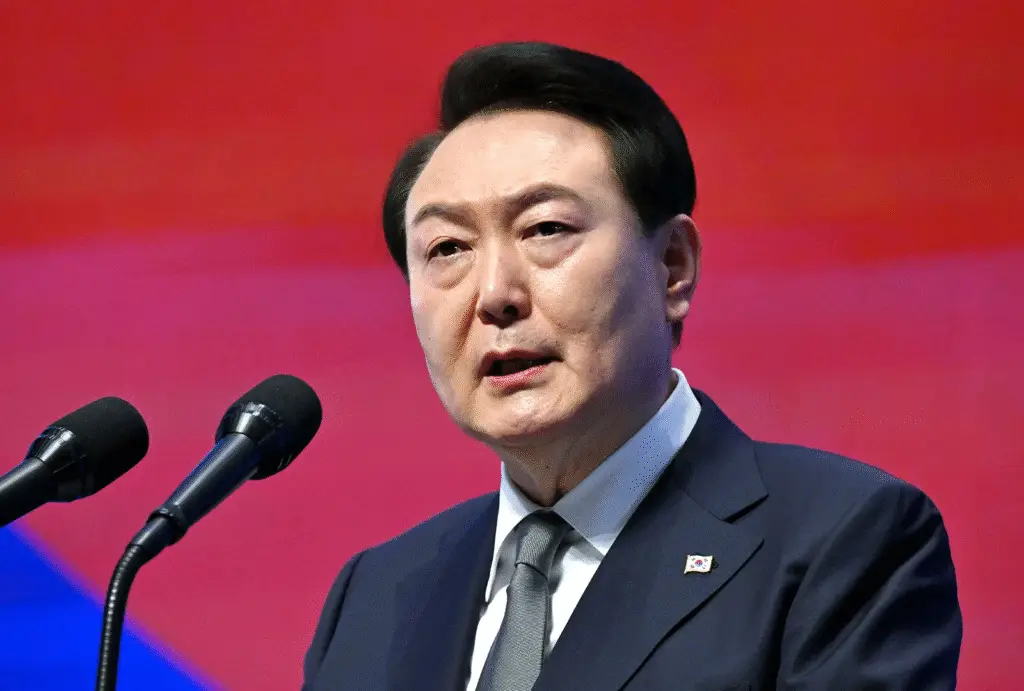
Former South Korean President Yoon Suk Yeol has been formally charged with insurrection. Prosecutors say he tried to get North Korea to attack South Korea in order to strengthen his power. The action comes after a six-month probe over his contentious announcement of martial law in December 2024.
After an investigation found plots to use national security issues for political benefit, special prosecutor Cho Eun-seok declared that Yoon, five former cabinet members, and eighteen other people had been prosecuted. Prosecutors said that what Yoon did broke constitutional rules and put democratic institutions at risk.
The Martial Law Crisis and Its Political Effects
South Korea went through one of its worst constitutional crises in decades when Yoon decided to establish martial law in late 2024. The order caused huge demonstrations and a revolution in parliament, which led MPs to cancel the order in the face of enormous public anger.
The Supreme Court quickly ruled that the order was against the law, and Yoon was impeached and then dismissed from office. He was arrested in July 2025 after being kicked out of office and is still in jail awaiting trial on charges of undermining national stability and trying to take control of the military away from civilians.
Alleged Plan to Provoke North Korea Into Conflict
The prosecution says that Yoon and his friends planned for more than a year to get Pyongyang to escalate its military actions, thinking that an outside threat would make martial law necessary. Investigators said the plan started in October 2023 and involved working together to put friendly officers in charge and get rid of defense officials who disagreed.
Prosecutor Cho added that Yoon’s government did secret provocations, such as flying drones with propaganda pamphlets into North Korea. These measures were meant to generate a reaction that would allow for exceptional emergency powers to be used in the name of national security.
Recommended Article: Thailand Heads to Early Election After House Dissolution
Failure to Provoke North Korea Amid Global Distractions
Even though they tried, North Korea didn’t respond with military force, supposedly because it was helping Russia’s war in Ukraine. Cho said that Yoon’s attempts to exploit conflict as a reason for martial law failed since Pyongyang did not respond.
Still, Yoon is said to have gone through with the plan, calling opposing lawmakers and party leaders “anti-state forces” to justify what he did. Prosecutors say that this kind of speech was part of a planned plan to get rid of political opponents and give the executive branch more power.
Long-Term Conspiracy and Military Control
Investigators said that the conspiracy went beyond spreading false information and included changing how the military was run. Yoon’s defense minister, Kim Yong Hyun, and counterintelligence head Yeo In-hyung were accused of helping the military work with the president’s goals.
The organization is said to have held private dinners and other events to get top military personnel to be loyal. Prosecutors said that these occasions were informal meetings to make sure that the institutions followed the rules once martial law was put in place.
Legal Consequences: Death Penalty or Life in Prison
In South Korea, rebellion is punished by life in prison or execution. This makes the allegations some of the most serious ever brought against a former national leader. The indictment is a historic event that shows how the country won’t put up with political excess or military meddling.
Yoon has refuted the claims several times, saying that the martial law proclamation was meant to bring order back to the country since the opposition Democratic Party was blocking political progress. His lawyers say that the measure was meant to protect the Constitution, not undermine it.
How the Government Responded and the Political Divide
President Lee Jae Myung, who put many independent prosecutors in charge of the inquiry, said that the indictment was an important step toward holding people accountable. Conservative groups, on the other hand, see the proceedings as politically driven revenge.
The case has made political differences in South Korea even worse. Supporters of Yoon say that the allegations are unfair, while detractors say that they are necessary to protect democracy from authoritarianism.
Implications for South Korea’s Democracy and Security
The Yoon indictment shows how hard it is for South Korea to keep a balance between security and democracy, especially with tensions on the Korean Peninsula. Experts say that the case might change the relationship between the military and civilians for years to come, making it harder for the president to abuse his power.
As the trial date gets closer, the country is still divided, which is a reflection of larger tensions between authoritarian nostalgia and democratic resilience. No matter what happens, the case against Yoon Suk Yeol will be a defining test of South Korea’s political maturity and rule of law in times of crisis.