
XRP Decline Reflects Rising Market Sensitivity to Policy Signals
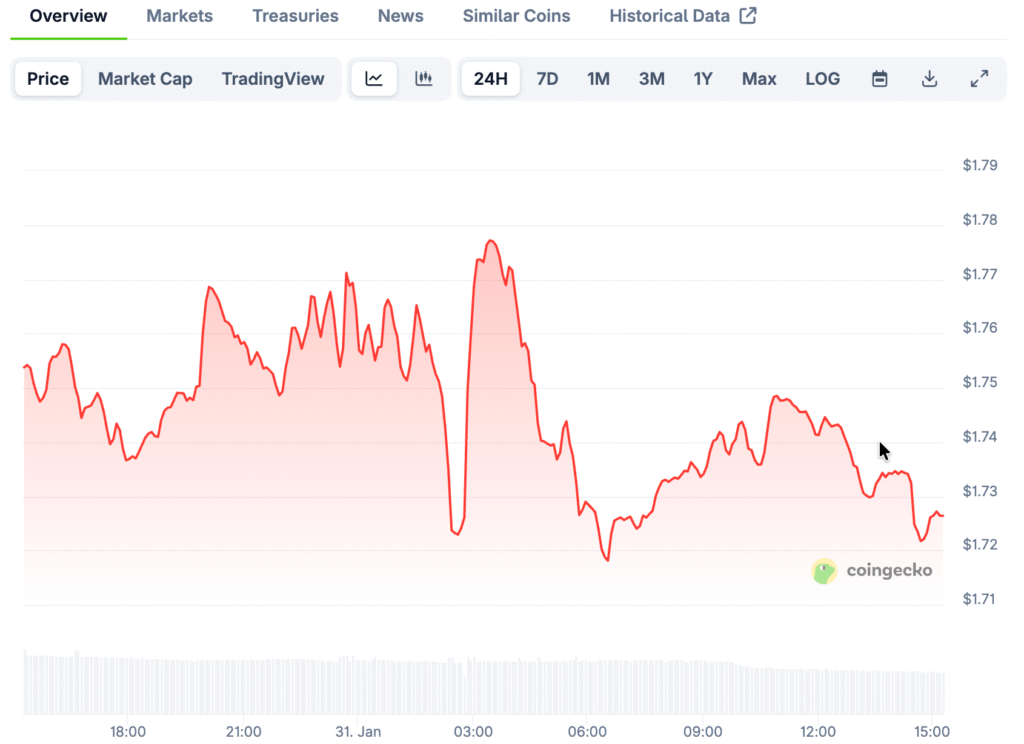
XRP fell by about 3% as traders reacted to expectations of tighter liquidity and a general weakness in risk assets. The token briefly hit $1.72 before settling around $1.77 when selling pressure from derivatives rose.
People in the market said that leveraged positions quickly unwound as major digital assets became more volatile. This behavior showed that crypto is once again sensitive to changes in macroeconomic policy.
Fed Chair Nomination Fuels Liquidity Withdrawal Fears
Risk markets were shaken up when President Donald Trump chose Kevin Warsh to be the chair of the Federal Reserve. Warsh’s earlier calls for a smaller Fed balance sheet brought back worries about less systemic liquidity.
When central bank policy signals suggest that financial conditions will get tighter, investors tend to rethink their exposure. When there are changes in sentiment like this, cryptocurrencies are usually the first to react.
Washington Politics Keep XRP Especially Volatile
XRP is still very sensitive to news about regulations that comes out of Washington policy talks. Traders keep a close eye on news about market structure laws and disagreements between regulatory authorities.
Even though there is new momentum in making rules for cryptocurrencies, political differences are still holding up clear laws. This lack of clarity makes tokens like XRP more sensitive to short-term price changes.
Recommended Article: Crypto Startups Raise $588m as Arthur Hayes Backs Growth
Broader Crypto Market Mirrors Risk Asset Pullback
Bitcoin fell back to around $82,300, and ether stayed around $2,735 as the market as a whole put pressure on both. The dollar’s strength and the stock market’s volatility both affected digital assets at the same time.
Portfolio strategists said that changing views on liquidity change which assets work best as hedges. Speculative assets often react more strongly during these kinds of changes.
Derivatives Liquidations Accelerate Price Movement
In a single day, XRP futures markets saw about $67.6 million in liquidations. Forced sell-offs sped up the downward trend as leveraged positions quickly closed.
High derivatives exposure creates a feedback loop in which volatility causes more liquidations. This structure makes both rallies and declines bigger when things are uncertain.
Ripple Pushes Product Story Despite Price Pressure
Ripple tried to get people to focus on the basics by releasing a product for managing corporate treasuries. Digital assets were presented by company leaders as optional tools instead of things that had to be used.
The goal of these kinds of projects is to strengthen long-term utility stories when the market is under stress. But macro and regulatory forces still control short-term price action.
Key Regulatory Meetings Could Shape Near-Term Direction
The U.S. Senate moved forward with a bill about the structure of the crypto market, but it’s not clear if both parties will support it. On February 2, leaders from the banking and cryptocurrency industries are going to meet at the White House.
Traders will keep an eye on whether talks lead to progress on rules for stablecoins and exchanges. The short-term direction of XRP will likely depend on when the Federal Reserve confirms things and when the rules are clear.