Guterres Calls for Change in the Economy
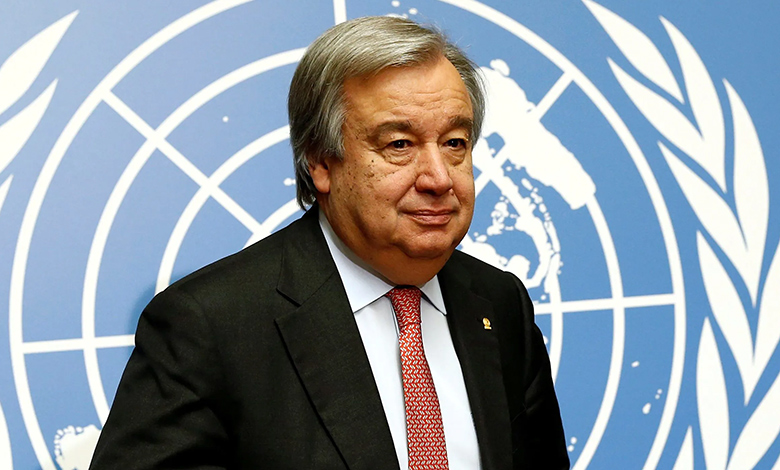
António Guterres said that the world economy needs to change a lot to avoid environmental collapse. He said that the way accounting works now encourages pollution and resource depletion instead of encouraging sustainable development. He warned that without reform, people could speed up ecological damage beyond what can be fixed.
After a meeting of economists hosted by the UN, Guterres stressed how important it is to change how progress is measured around the world. He said that traditional indicators don’t take into account the environmental costs of uncontrolled growth. The warning shows that policymakers are becoming more worried about economic models that are putting stress on the planet.
Source: Commercial Risk/Website
GDP Criticized As Incomplete Measure Of Progress
For decades, governments have put growth first, using gross domestic product as the main measure of success. Critics are saying more and more that GDP ignores environmental damage and makes bad actions look like good economic contributions. Logging forests or overfishing, for example, can make output numbers look better, even though they hurt the environment in the long run.
Guterres said that societies need to look at more than just short-term financial data to see what really matters to people. He made it clear that the world is not a business that only cares about making money and losing money. Broader evaluation frameworks could better show how people are doing.
Geneva Conference Looks at Other Ways to Measure
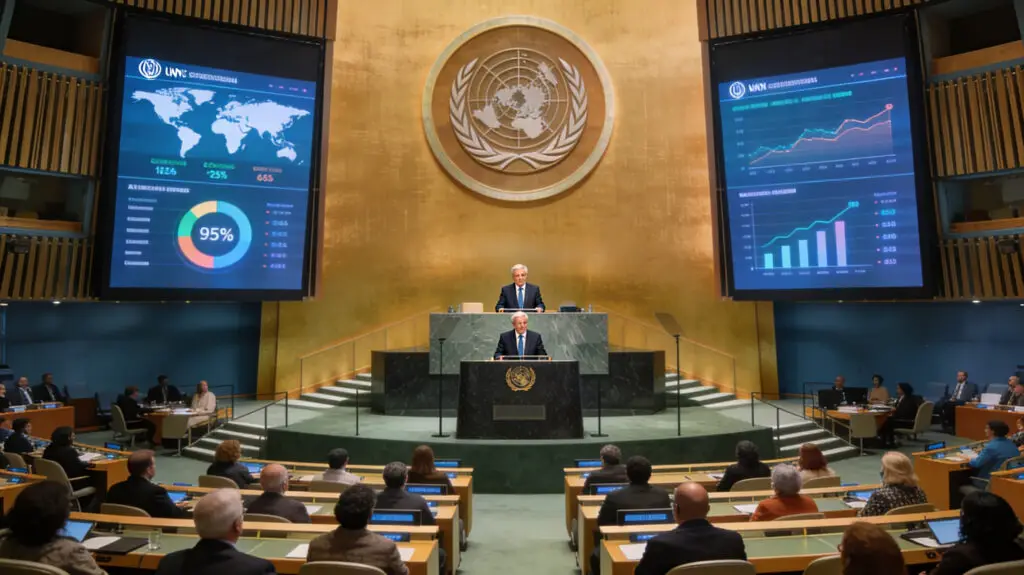
The United Nations held a big conference in Geneva called “Beyond GDP” that brought together well-known economists to talk about other ways to measure progress. Joseph Stiglitz, a Nobel Prize winner, Kaushik Basu, an Indian economist, and Nora Lustig, an expert on inequality, were all there. Their job is to make a dashboard that includes sustainability, fairness, and quality of life.
The people in charge hope that the framework will work with GDP instead of replacing it completely in policymaking. Governments could better figure out if development really makes life better by using more types of measurement tools. These kinds of projects show how economic ideas are changing.
Recommended Article: UN Faces Financial Collapse Warning As Global Dues Crisis UN
Global Crises Show Weaknesses in Structures
A recent report backed by the UN said that repeated shocks have shown how weak the current economic systems are. The 2008 financial crisis and the COVID-19 pandemic made calls for structural reform even stronger. Experts say that these problems made environmental threats that were already threatening global stability even worse.
The report also talked about a “triple planetary crisis” that includes climate change, loss of biodiversity, and pollution on a large scale. Rapid changes in technology make the job market even more complicated and make inequality worse. All of these pressures call for coordinated responses from around the world.
Economists Warn Growth Race Ignores Wellbeing
Basu said that countries are still competing with each other to do better, with GDP as the main measure of success. He said that this obsession with wealth concentration among smaller groups of people puts sustainability on the back burner. People are often told to be happy about higher output, even if it isn’t evenly spread out.
Lustig said that GDP was never meant to measure human progress, but it is still the most talked-about topic in policy discussions around the world. When growth happens at the same time as poverty or violations of rights, standard statistics may not show the whole picture. Adding more metrics could show hidden social costs.
New Economic Ideas Gain Momentum Worldwide
There is more and more debate in academia and policy circles about models that are good for both the environment and social justice. There are many different ways to limit the damage to the environment, from green growth strategies to wellbeing and steady-state economics. Each framework seeks to harmonize prosperity with ecological limits.
People who support degrowth want to cut back on production that harms the environment on purpose, especially in richer countries. They say that resources should be moved to areas like public transportation, renewable energy, and care. These thoughts are slowly becoming part of everyday conversation.
Systemic Change Seen As Necessary For Long-Term Success
Jason Hickel, an economist, said that moving beyond GDP is a good start, but it’s not enough on its own. He said that democratizing control over production would change what economies make and who they serve. He said that structural reform is needed to make markets work better for people.
A recent survey of almost 800 climate policy researchers found that 73% of them support post-growth views. This suggests that the intellectual momentum is growing. With political and economic pressures, it’s not clear if governments will follow these suggestions. Still, the conversation marks a major change in how progress might be defined.