



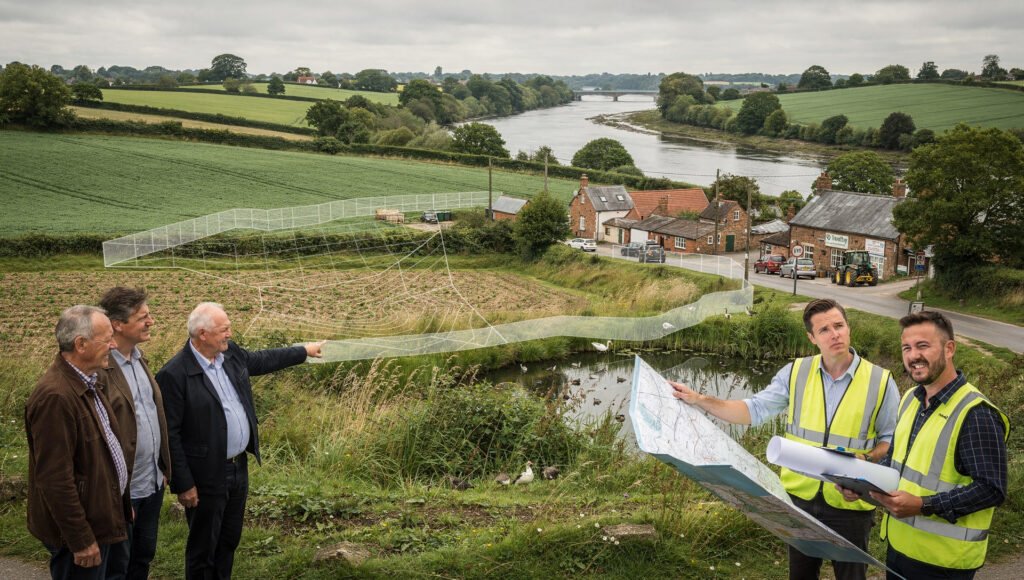
Oxfordshire Reservoir Plan Triggers Business Disruption Fears
Businesses located within the proposed development zone in Oxfordshire have voiced growing concern over the planned reservoir. Owners fear permanent displacement and the loss of land critical to their long-term operations. Many say relocation would be financially unfeasible and logistically impossible.
Local enterprises emphasize the unique value of the land and infrastructure they rely on daily. If construction proceeds, sectors such as aviation, agriculture, and specialized training could face severe disruption. These concerns have intensified as the public consultation period draws to a close.
Consultation Process Questioned by Affected Landowners and Officials
Thames Water’s mandatory public consultation has generated extensive feedback, yet significant disagreement remains among stakeholders. Some affected businesses claim they were not adequately engaged during the process, fueling frustration and distrust over how the project is managed.
Local officials argue that consultations focus more on presentation than genuine debate over alternatives. Critics believe irreversible land-use decisions require deeper examination before approval. Others say the process feels rushed, given the project’s far-reaching implications.
Source: Thames Water
Environmental and Land-Use Impacts Dominate Local Opposition
Opponents of the reservoir warn that it would permanently alter farmland and fragile ecosystems across the proposed site. Habitat loss and wildlife displacement are cited as major long-term environmental costs. Critics maintain that design revisions cannot fully mitigate such impacts.
Skepticism also surrounds the project’s claims of climate resilience. Some residents believe alternative water supply methods could achieve similar outcomes with less environmental damage. Demand management and leak reduction are frequently cited as more sustainable solutions.
Recommended Article: Why Venezuela Remains a High-Risk Market for Global Business
Financial Risks Raise Political and Public Accountability Questions
The reservoir’s projected multibillion-pound cost has drawn scrutiny amid Thames Water’s ongoing financial challenges. Lawmakers warn that escalating expenses could ultimately fall on taxpayers or consumers. These concerns grow as national public finances remain under pressure.
Critics note the uncertainty surrounding who would bear the cost if the project exceeds its budget. Customers in different regions could face higher water bills to fund construction. Such financial risks underscore the need for greater transparency and detailed cost-benefit analyses.
Infrastructure Advocates Stress National Water Security Needs
Supporters argue that the reservoir is vital to addressing England’s looming water scarcity. Population growth, climate change, and recurring droughts continue to strain existing resources. Large-scale storage, they contend, is essential for long-term resilience.
Engineering experts emphasize that future demand levels require expanded infrastructure capacity. Without new storage, increased river extraction could worsen ecological degradation. Proponents frame the reservoir as a preventative investment in national security rather than an optional upgrade.
Community Integration and Landscape Adaptation Promises Offered
Thames Water maintains that the reservoir can coexist harmoniously with its surrounding landscape. Design plans highlight improved public access, biodiversity gains, and tourism potential. Officials portray the project as a long-term benefit to local communities.
The company also cites job creation, skills development, and regional economic uplift as key advantages. Integrating public spaces with nature is positioned as compensation for inevitable disruptions. These assurances aim to counter perceptions that the project represents permanent local loss.
Long Timelines Amplify Uncertainty for Businesses and Residents
Construction is not expected to begin until 2029, with completion projected around 2040. The extended timeline deepens uncertainty for affected landowners and businesses. Many investment and expansion plans remain on hold pending final approval decisions.
Following the consultation, stakeholders await government review and determination. The outcome will shape the region’s economic trajectory for decades. Balancing national water security priorities with the survival of local businesses remains the central challenge.