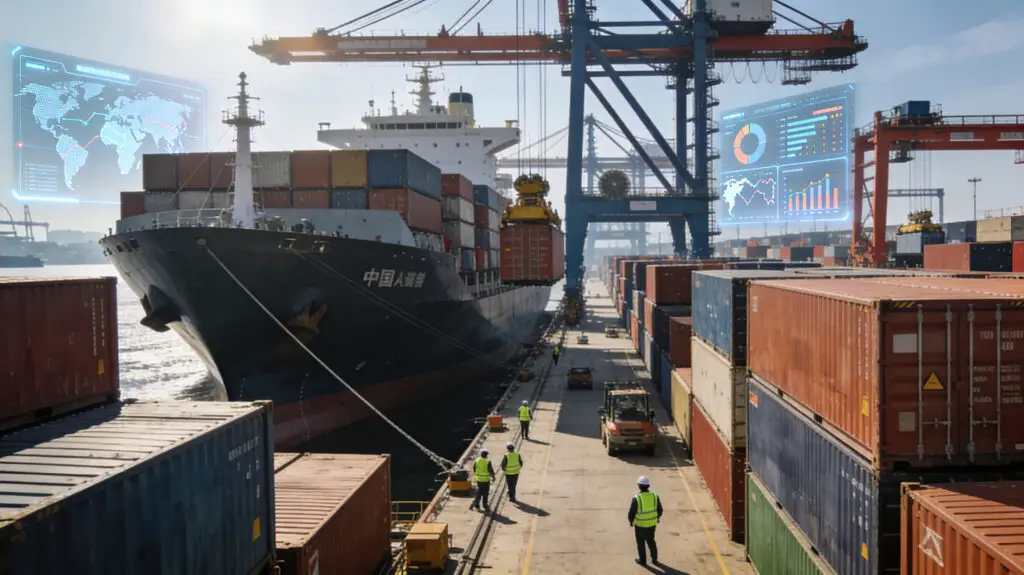




Global Growth Outlook Improves as Trade Pressures Decline
UBS economists say that global output will speed up in 2026 as trade barriers slowly lose their power. As supply chains get back to normal in major industrial economies, manufacturing activity is expected to steadily improve. As inflation slows down and job markets around the world stabilize, consumer demand should pick up a little.
The bank said that business investment confidence is still shaky because of long-term uncertainty about politics and money. But making trade restrictions less strict could give multinational companies in important sectors more visibility when it comes to planning. Lessening disruptions caused by tariffs could be most helpful for economies in Asia and Europe that rely on exports.

Source: Hubbis
Tariff Impacts Expected to Weaken Across Major Economies
Analysts at UBS said that previous tariff measures made costs higher for a long time in all international manufacturing networks. Those extra costs made it harder for companies to make money and made long-term investments less appealing around the world. As tariffs slowly go away, the cost structures in the transportation technology and consumer goods sectors should return to normal.
Less friction in trade could also lead to new partnerships between suppliers, distributors, and logistics providers across borders. Working together like this could make things more efficient and cut down on delays in production caused by having to get supplies from different places. UBS stressed that the benefits will not be the same for everyone, depending on changes in domestic regulations and the state of the infrastructure.
United States Policy Uncertainty Remains Key Downside Risk
UBS was hopeful, but they also warned that American fiscal and trade policies will stay unpredictable during the next few election cycles. Changes in regulations that happen suddenly could cause problems in the financial markets and slow down private sector growth plans around the world. Investors are still wary of possible new tariffs, technology restrictions, or limits on capital flow.
Arend Kapteyn, the chief economist, said that inconsistent policies make the currency, bond, and stock markets more volatile. This situation makes it harder for companies that want to plan production or expansion projects that will last for many years to make long-term predictions. UBS says that having investments in many different places can help protect against sudden changes in policy.
Recommended Article: Rule of Law Message Heads to Davos Economic Forum 2026
Inflation Easing Supports Household Consumption Recovery
Slowing inflation should make it easier for families in both developed and emerging markets to buy things. After a long time of being careful with money, lower prices for food and energy could bring back discretionary spending. Retail and service businesses may benefit from the gradual return to normal consumer behavior.
UBS warned that wage growth is still uneven around the world, both by region and by income group. Mortgage holders and small business owners are still feeling the effects of rising borrowing costs in recent years. Still, prices should stabilize, which should make consumers feel better as we enter 2026.
Corporate Investment Expected to Rebound Cautiously
Companies put off big investments in the past few years because it was too expensive to borrow money and trade was too uncertain. Better macroeconomic visibility might lead to more targeted spending on digital transformation and automation infrastructure. UBS, on the other hand, thinks that companies will focus on efficiency rather than quickly adding more capacity at first.
Regions with stable regulations, predictable taxes, and industrial policies that help businesses may attract more capital. Southeast Asia and some Latin American markets could see more manufacturing move there. Europe might become more competitive again if energy prices stay stable and the supply of energy sources becomes more varied.
Financial Conditions Gradually Turn More Supportive
Central banks in a number of countries are likely to slow down the tightening cycles in 2026. This change might make it cheaper for businesses to borrow money and lead to moderate credit growth. UBS said that banks are already seeing more loan requests from medium-sized businesses.
If earnings forecasts get better along with signs of economic growth, equity markets may react positively. But sudden tensions in world politics could still make people less willing to take risks and cause capital flight. Portfolio diversification is still very important when the world is politically unstable.
Long Term Recovery Depends on Structural Reforms
UBS said that for growth to be sustainable, productivity must go up, education must be invested in, and technology must be updated. Demographic pressures in developed economies could make it harder to find workers and lower long-term output potential. Emerging markets need to fix their infrastructure problems if they want to fully take advantage of the global recovery.
Kapteyn stressed that trade normalization alone cannot ensure lasting prosperity without coordination of domestic policies. Governments need to find a balance between being fiscally responsible and giving targeted support to programs that promote innovation and workforce development. If reforms work, they could boost global growth beyond conservative baseline forecasts after 2026.