


Washington Lifts Some Limits on Nvidia Chip Sales
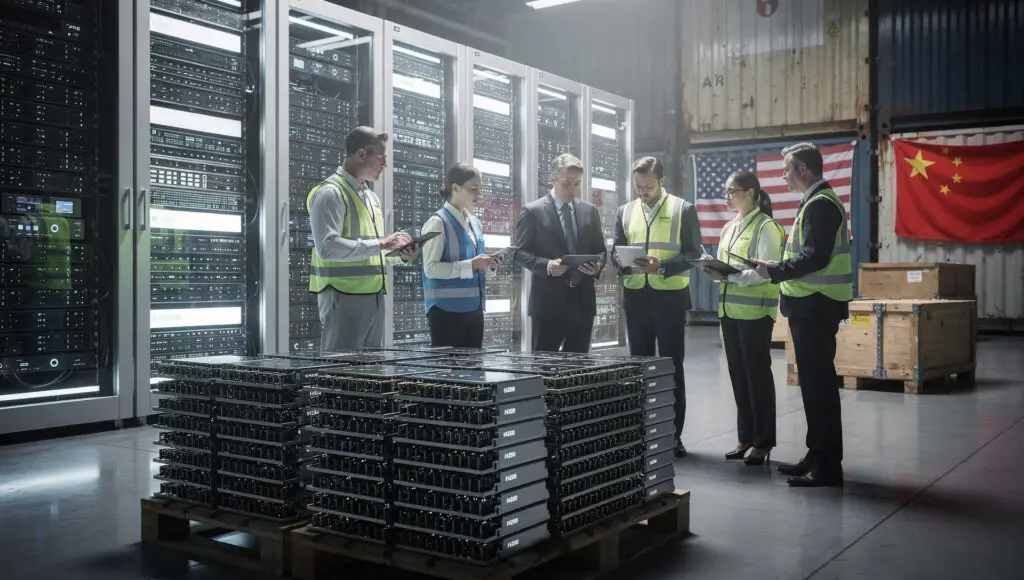
The U.S. Department of Commerce has given Nvidia the green light to sell its advanced H200 AI processors to some customers in China. The move is a partial reversal of earlier restrictions on exports that were put in place because of national security concerns. As long as there is enough supply at home, shipments are allowed.
The H200, Nvidia’s second-most-powerful AI chip, was not allowed to be sold to China before because people were afraid it would make China’s technology and military stronger. Chinese buyers must now show that they follow strict security rules and are not allowed to use the processors for defense-related purposes.
Source: France 24
The Trump Administration Gives Conditional Approval
President Donald Trump confirmed the choice, saying that the U.S. would allow chip sales to approved customers but charge a 25% fee on all sales. The government said that the policy would protect American interests and bring in money from sales to other countries.
Trump’s way of doing things shows that he is trying to find a balance between protecting national security and keeping U.S. semiconductor companies competitive. “We will collect from every sale,” Trump said, stressing that the new model is meant to help both the economy and technology at home.
Nvidia Welcomes the Move Amid Industry Tensions
Nvidia said in a statement that it was happy with the U.S. decision and called it a positive step for innovation and American manufacturing. A company spokesperson told the BBC that the measure would help keep jobs in the U.S. and the supply chain strong.
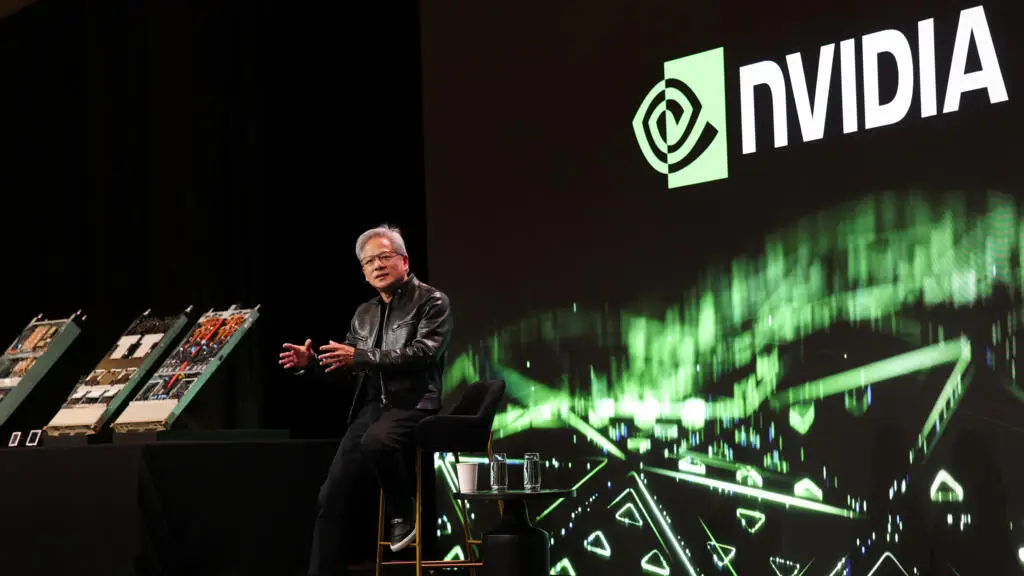
The chipmaker has been stuck in the middle of the political fight between Washington and Beijing for a long time. Throughout 2025, CEO Jensen Huang pushed U.S. officials to lift the export ban, saying that access to global markets was key to keeping the U.S. in the lead in the AI field.
Recommended Article:
Commerce Department Sets Export Safeguards
The Bureau of Industry and Security says that the export license covers Nvidia’s H200 chips and some less powerful processors. Companies in China must show that they are not using their products for military purposes and keep their supply chains open and honest.
The department made it clear that these conditions are meant to lower the risk of technology transfer. The statement said, “Changes to export policy make sure that the U.S. stays in the lead in AI development without putting security at risk.” The Blackwell processor, Nvidia’s newest and most powerful chip, is still not allowed to be sold in China.
China Condemns Politicization of Technology
Beijing said that Washington’s change of policy was politically motivated. Liu Pengyu, a spokesperson for the Chinese embassy, said that the U.S. still politicizes and weaponizes trade. Liu told the BBC, “We don’t want to block or limit China because it hurts the stability of the global supply chain.”
In response, China has sped up its efforts to build up its own semiconductor industry. Officials are said to have told local businesses to stop buying Nvidia’s chips and instead buy chips made in their own country. But analysts say that Chinese chipmakers are still far behind their American counterparts in terms of design and performance.
Analysts See Trade and Security Balancing Act
Experts in the field see the U.S. decision as a well-thought-out compromise. Austin Lyons, a semiconductor analyst, said that Beijing’s own companies will rush to buy H200 chips even though they cost 25% more. He said that local businesses need to be able to use Nvidia’s technology while they work on their own.
Lyons said that Nvidia will still benefit from new sources of income, even if its profit margins go down. He added that any access to the Chinese market, even if it is limited, helps Nvidia stabilize growth and keep investing in research and development. The move could also help with inventory problems caused by shifts in global demand.
U.S. Tariff Model Could Shape Future Trade Policy
Experts think that Trump’s plan for sharing revenue could be a model for future trade talks. Marc Einstein from Counterpoint Research said that the tariff-based approach was one of a kind and set a precedent.
Einstein said that this model could go beyond semiconductors. If it works, it could change how the U.S. sets trade terms in other important industries. Analysts say this could change the rules for export controls by allowing limited access while also bringing in revenue for the U.S. government.
Implications for Global AI Competition
The approval shows that Washington is still having trouble finding a balance between national security and economic competitiveness. The decision helps Nvidia’s business around the world, but it also opens the U.S. up to criticism for not enforcing its technology policy consistently.
For now, Nvidia will start shipping H200 chips to China again, but only under close watch. The U.S. and China remain in a fierce AI race, with both countries trying to take the lead in next-generation computing. As global demand for AI grows, this move highlights the fragile balance between innovation, regulation, and geopolitical strategy that will shape the future of technology.