



Historical Reverberations of Resource Extraction Politics
The concept of seizing foreign resources by force recalls historical eras when empires extracted wealth through domination rather than cooperation. In those times, trade served as a justification for conquest, merging military power with private financial interests. That legacy is now being revived as a modern geopolitical strategy rather than remembered as a warning from history.
Unlike colonial trading companies, this intervention was executed directly by a powerful modern state. The operation mirrored earlier patterns where economic dominance was imposed instead of negotiated. Such approaches undermine contemporary expectations of sovereignty and the principles of the current international economic order.
Source: Brookings Institution
Oil-Driven Reasons for Venezuela’s Intervention
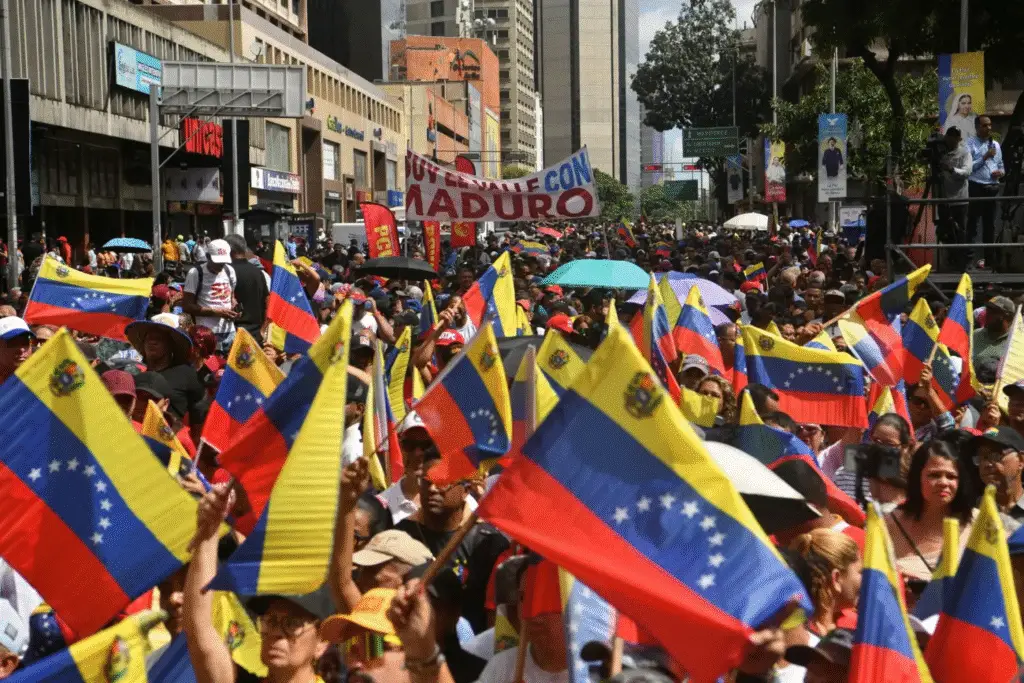
The primary motivation behind the raid was access to Venezuela’s vast oil reserves. Donald Trump made little effort to conceal the influence of fossil fuel companies behind the operation. Economic interests appeared to outweigh political or humanitarian considerations.
The absence of a clear framework for political transition weakened claims of democratic legitimacy. Power changed hands without set election dates or inclusive governance plans. This inconsistency undermined assertions that the intervention served the Venezuelan people’s interests.
A Bad Example for How the World Economy Should Work
The intervention sets a troubling precedent for how major powers may compete for resources in the future. Military seizure of assets could normalize economic coercion outside established legal systems. Rival states might adopt similar tactics, but with even fewer safeguards.
Such behavior erodes confidence in international law’s ability to ensure global investment stability. Investors depend on contracts, institutional protections, and predictability. Militarizing resource control introduces volatility that discourages long-term economic participation.
Recommended Article: Why Venezuela Remains a High-Risk Market for Global Business
Oil Economics No Longer Define National Strength
Global oil supplies remain abundant, meaning additional production from Venezuela provides limited strategic value. Since the U.S. shale boom, America has become a major energy exporter. Energy independence has reduced the nation’s vulnerability to external supply shocks.
At the same time, lower global prices threaten the profitability of U.S. shale producers. Depressed prices could weaken domestic extraction economics, contradicting the idea that controlling oil reserves automatically strengthens national power.
Structural Challenges Limit Venezuelan Oil Gains
Venezuelan crude is heavy and costly to refine compared to lighter global alternatives. Decaying infrastructure and chronic underinvestment hinder rapid production increases. Analysts predict that recovery will require significant capital and extended timeframes.
Financial institutions caution against assuming that Venezuela’s oil output can quickly rebound. Persistent political instability compounds risks for energy companies. Any potential supply growth remains fragile under uncertain governance conditions.
Modern Resource Bottlenecks Lie Elsewhere
Today’s corporate resource constraints center on materials driving electrification and technological transformation. Copper, lithium, and aluminum underpin renewable infrastructure and electric mobility. Climate-related disruptions also strain global food supply chains.
These areas will shape competitiveness more than fossil fuel dominance. Strategic investments increasingly favor sustainable technologies and resilient supply networks. Ignoring this shift risks misallocating national economic effort toward declining sectors.
Innovation Erosion Threatens U.S. Competitiveness
Reshoring manufacturing has not reversed the long-term decline of industrial employment in the United States. Despite tariffs and protectionist rhetoric, job losses persist. Nostalgia for past industrial strength has not delivered a genuine economic revival.
Meanwhile, competitors accelerate progress in electric vehicles, renewable energy, and artificial intelligence. China’s rapid clean energy expansion exemplifies a forward-looking growth model. Weak research funding and under-supported universities continue to erode America’s innovation capacity.
Rule of Law Underpins Durable Economic Power
Institutional trust, innovation capacity, and international cooperation remain essential to lasting economic strength. Violating legal norms, domestically or abroad, undermines these foundations. Illegitimate power provokes resistance rather than reinforcing leadership.
The intervention in Venezuela represents a demonstration of force rather than a coherent economic strategy. Such actions risk empowering adversaries while alienating allies. Over time, U.S. economic influence is more likely to weaken than consolidate.