




Trump Signals Possible Block on New U.S.-Canada Bridge
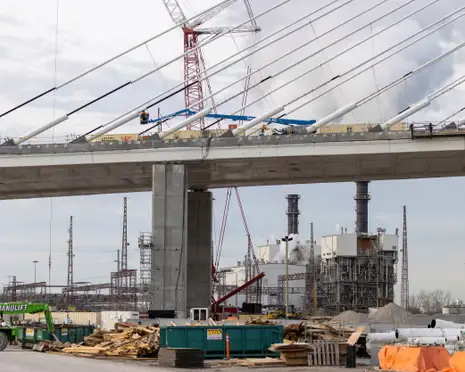
President Donald Trump has indicated he may block the opening of a new international bridge connecting the United States and Canada. Canada financed most of the project, which was designed to improve trade flows and travel efficiency between the two economies. Trump’s warning has introduced uncertainty into cross-border infrastructure cooperation that policymakers had broadly viewed as mutually beneficial.
The dispute marks the latest development in a series of tensions shaping relations between Washington and Ottawa. Although details about a potential blockade remain unclear, the rhetoric has already attracted attention from market observers and government officials. Infrastructure decisions often carry symbolic weight within broader diplomatic dynamics.
Source: The Guardian/Website
Infrastructure Project Viewed as Economic Lifeline
Cross-border bridges are essential to maintaining North America’s integrated supply chains, particularly in manufacturing and agriculture. Efficient transportation corridors shorten delivery times, stabilize logistics costs, and support employment tied to international commerce. Any disruption could ripple across regional economies.
Business leaders typically favor predictable infrastructure policy because uncertainty complicates investment planning and operational forecasting. When political disputes interfere with major projects, companies may reconsider expansion strategies dependent on reliable trade routes. Consequently, the bridge represents far more than a transportation link.
Public Attention Appears Limited Despite Political Noise
Early data suggests the controversy has drawn less attention from American voters than domestic economic concerns. Inflation, labor conditions, and household finances remain higher priorities for many citizens than cross-border infrastructure disagreements. This pattern reflects longstanding voter behavior.
Political disputes may dominate headlines without sustaining public engagement. Analysts note that awareness often depends on direct personal impact rather than media visibility alone. Interest could remain muted unless immediate economic consequences emerge.
Recommended Article: Germany’s SPD Calls for Strategic Reset in US Relations
Polls Show Strong Preference for Domestic Priorities
Survey findings consistently indicate that Americans rank domestic economic performance above foreign policy disagreements when evaluating government effectiveness. Issues affecting wages, taxes, and consumer prices typically outweigh geopolitical tensions in public perception. The bridge dispute appears aligned with this trend.
Such responses do not imply indifference toward international partnerships but instead highlight how voters allocate attention. Individuals tend to monitor developments most likely to influence their financial stability. As a result, infrastructure diplomacy rarely dominates national debate absent tangible disruptions.
U.S.-Canada Relationship Historically Stable
The United States and Canada maintain one of the world’s most stable bilateral relationships, collaborating extensively on trade and security matters. Decades of integration have tightly connected industries such as automotive manufacturing, energy, and agriculture. Occasional disagreements rarely derail broader cooperation.
Many observers expect tensions to ultimately yield negotiated outcomes due to the partnership’s durable foundation. This assumption may further reduce public concern about temporary friction. Institutional resilience often fosters confidence in established conflict-resolution mechanisms.
Political Messaging May Target Strategic Audiences
Some analysts interpret the strong rhetoric as political messaging aimed at domestic constituencies rather than a definitive policy shift. Leaders frequently invoke themes of sovereignty or negotiation leverage when addressing voters concerned about national competitiveness. Such communication can influence perceptions even when policy direction remains uncertain.
Strategic messaging also shapes bargaining positions by signaling readiness to challenge existing arrangements. Whether the bridge opens on schedule may depend heavily on behind-the-scenes diplomacy. Public statements represent only one dimension of policymaking.
Economic Stakes Could Shift Public Interest
Should the dispute begin affecting regional trade or employment, public awareness could rise quickly as economic consequences become visible. Financial disruptions often transform abstract policy debates into immediate voter concerns. Markets likewise respond rapidly to threats against supply chain continuity.
The episode illustrates that political conflict does not always align with current public priorities. Americans appear chiefly focused on domestic stability rather than infrastructure disagreements abroad. Nevertheless, the situation underscores how interconnected economies remain vulnerable to policy uncertainty.