


Supreme Court Leans Toward Upholding State Restrictions
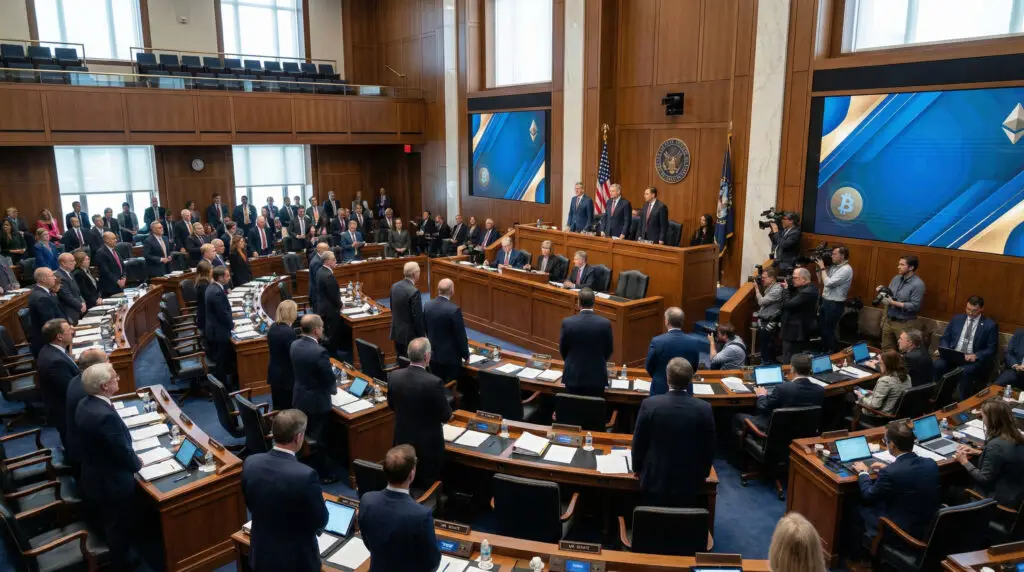
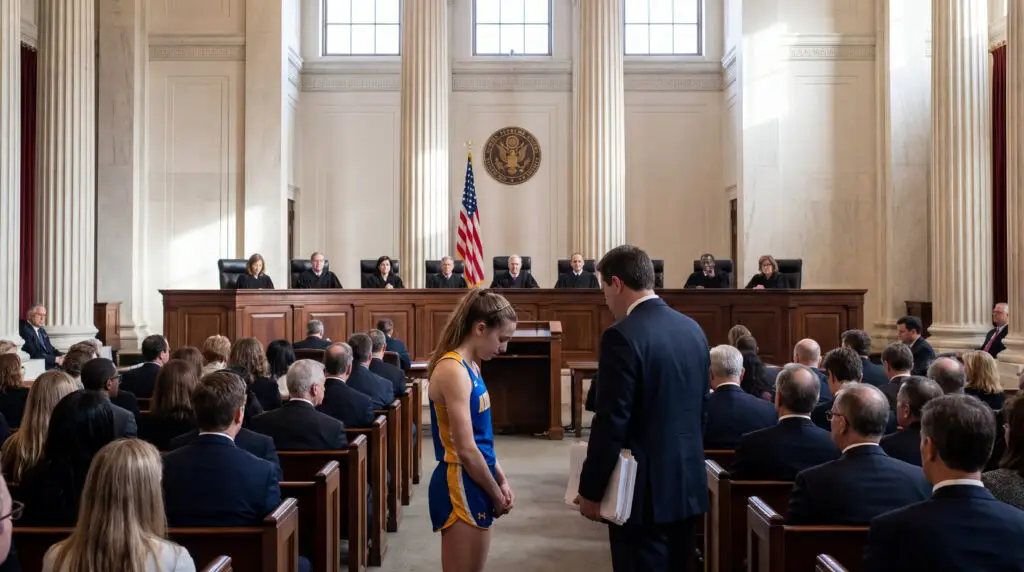
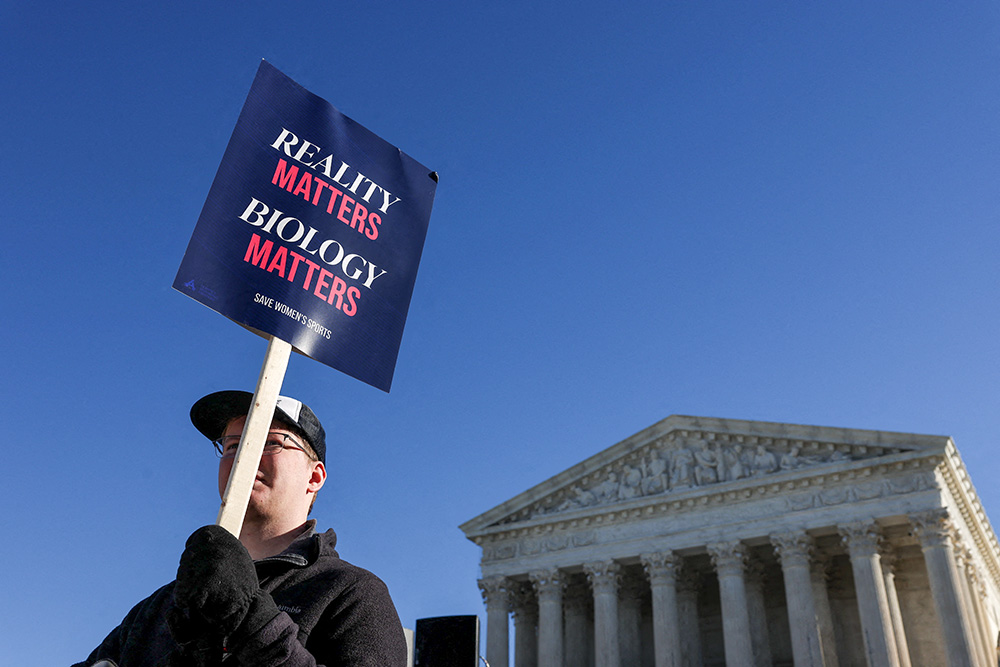
After more than three hours of oral arguments on Tuesday, it looks like the US Supreme Court will uphold state laws that keep transgender women and girls from competing in women’s sports. The main topic of the conversation was the lawsuits filed by students in Idaho and West Virginia, both of whom say that these bans violate their civil and constitutional rights.
Each of the state laws in question says that public school and college sports teams must be divided by the sex assigned at birth, which means that transgender athletes cannot compete in female divisions. During the session, the court’s 6–3 conservative majority seemed to agree with the states’ arguments, which suggests that the bans will probably be upheld.
Source: National Catholic Reporter
Idaho and West Virginia Cases Shape the Debate
The first case was about Lindsay Hecox, a transgender student from Boise State University. She says that Idaho’s ban on transgender people violates her right to equal protection under the Constitution. The family of Becky Pepper-Jackson, an 11-year-old girl from West Virginia, filed the second case so that she could join her school’s girls’ track team.
Hecox has since said she does not want to compete anymore, but the justices talked about whether her case should be thrown out or still looked at from a legal point of view. Several conservative justices, such as Brett Kavanaugh, asked if the court should step in while states keep taking different approaches to the problem.
Conservative Justices Emphasize Biological Factors
Idaho Solicitor General Alan Hurst defended his state’s law during the trial by saying, “Sex is what matters in sports,” and pointing to differences in muscle mass, bone structure, and lung capacity. He said that separating athletes by biological sex makes sure that women have a fair chance to win.
Justice Kavanaugh said that the court should wait before setting a national standard. He asked, “Why make the rule constitutional while the debate is still going on?”
This line of questioning showed that the conservative justices would rather let states make their own decisions about policy than have a single federal ruling.
Recommended Article: Real Madrid Replace Xabi Alonso With Alvaro Arbeloa
Liberal Justices Push for Narrow Interpretation
Three liberal justices on the court, including Ketanji Brown Jackson, asked for restraint and wondered if the current cases were even right for a broad constitutional ruling. Justice Jackson wanted to know why Hecox’s case had not been thrown out, since she had asked to drop it.
Lawyers for the transgender athletes said that each case should be looked at separately, with a focus on those who are taking testosterone-suppressing drugs and those who keep biological advantages. They said that these kinds of nuanced approaches could keep sports fair without having to make everyone follow the same rules.
Broader Political Context and Public Opinion
There is a lot of disagreement in the country about whether transgender people should be able to play sports. A New York Times Ipsos poll from early 2025 found that almost all Republicans and almost 70% of Democrats do not want transgender women to be able to compete in women’s sports.
Donald Trump made the issue a big part of his 2024 campaign. Since then, he has taken away protections against discrimination for transgender people, banned them from serving in the military, and pushed for state-level bans in sports programs. The administration is also suing California over its policy of inclusion in a different case.
Past Cases and Their Effects
Legal experts say that the court’s 2025 decision to uphold Tennessee’s ban on gender-affirming treatment for minors is a good sign of where this case is going. That decision was not directly about sports, but it showed that most people were willing to let the states decide issues related to gender and identity.
On the other hand, a Supreme Court ruling in 2020 that protected transgender workers under federal employment law gave them more civil rights protections. However, the current court has moved a lot to the right since then.
Waiting for the Court’s Final Decision
A final decision is expected by June 2026, and it will have effects that go beyond sports. If the bans are upheld, it would mean that states have the right to set rules about who can play sports based on their biological sex. This could lead to new rules across the country.
For transgender athletes like Pepper-Jackson, the case is about more than just being able to compete. It is also about how far federal civil rights law goes to protect gender identity. The conservative majority of the court signaled that they agreed with the state’s positions. The outcome may change the future of sports inclusion and gender equality in the United States.