



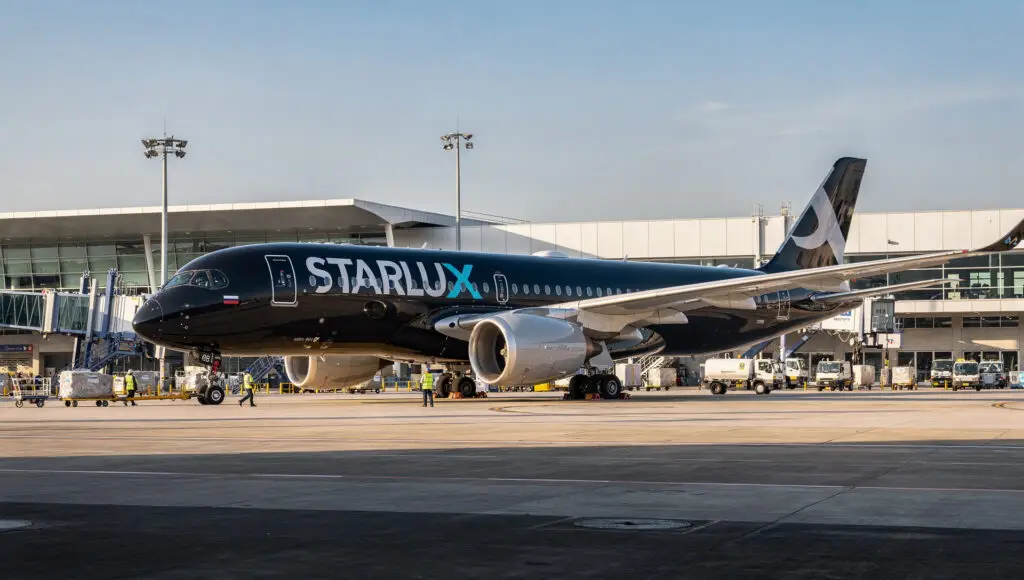
Starlux Becomes First Airline in Taiwan to Receive A350 Aircraft
Starlux Airlines is now Taiwan’s first airline to get the Airbus A350-1000 wide-body plane. The delivery is a big step forward in the airline’s plan to modernize its long-haul fleet. Executives said that the plane would be a key part of their plans to expand their international network in the future.
The plane left Airbus headquarters in Toulouse, France, and flew to Taoyuan International Airport. Company representatives said that the plane made its intercontinental delivery flight without any problems. Starting in February of this year, the plane will be used for scheduled commercial flights.
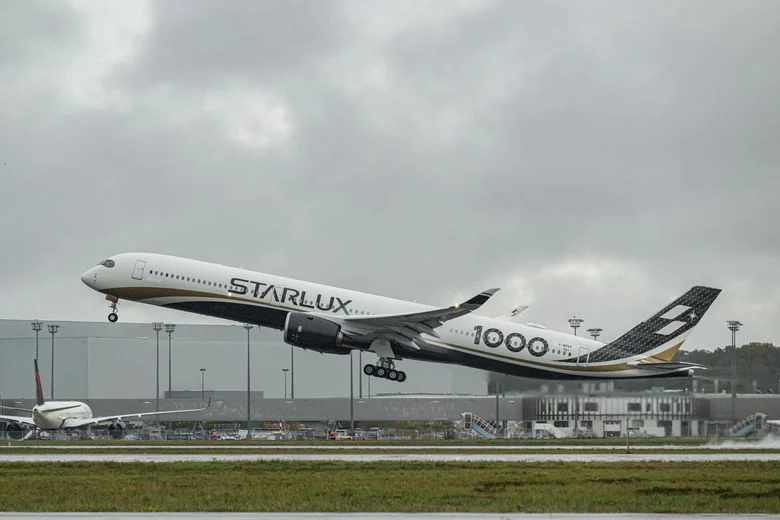
Source: Airbus
Aircraft Delivery Ceremony Held At Airbus Headquarters In France
At Airbus headquarters in Toulouse, the plane was officially given to the leaders of Starlux in a private ceremony. Chairman Chang Kuo-wei personally led the group that got the new wide-body plane. Company officials stressed how important it is to have good relationships with manufacturers when planning fleet growth.
The plane left Toulouse in the afternoon local time and flew for a long time to Taiwan. It landed the next morning after flying through a number of international airspaces. Aviation experts say that the delivery is a strong sign of confidence from European manufacturers in Taiwanese carriers.
New Aircraft Strengthens Long-Haul Competitiveness and Expansion Goals
According to Glenn Chai, the CEO of Starlux, the plane lets the company compete directly in the high-end long-distance aviation markets. He stressed how it helped open up new routes to North America and Europe. The company wants to make its brand more visible in busy intercontinental travel corridors.
The airline used to use smaller wide-body planes for international flights. The A350-1000 has more seats and can fly farther than the A350. Management thinks that this makes both the cost and the experience of the passengers better at the same time.
Recommended Article: CONAPESCA Pushes Sustainability in Aquaculture and Fisheries
Cabin Configuration Features Four Classes and Extended Flight Range
The A350-1000 has 350 seats spread out over 4 cabin service classes. It can work over a distance of about 15,600 kilometers at most. The plane is the biggest model in the Starlux fleet right now.
The design of the cabin is all about comfort and amenities for long-haul passengers. Engineers at the company pointed out that the new design would use less fuel and produce less carbon dioxide per passenger. These technical improvements are in line with long-term goals for sustainability.
Airline Fleet Expands to 30 Aircraft After Latest Delivery
After the delivery, Starlux now has a fleet of 30 commercial planes. This includes 10 A350-900s, 6 A330neos, and 13 A321neos. The fleet strategy focuses on being able to adapt to different markets, both regional and long-haul.
Executives said that 5 more A350-1000 planes will be delivered in 2026. The company has orders for 18 of this model. Fleet expansion helps meet the expected rise in passenger demand.
North American Routes Grow as Airline Broadens International Network
Starlux now flies long distances to Seattle, San Francisco, Los Angeles, and Ontario in California. Soon, there will be direct flights to Phoenix. More European destinations are still being looked at strategically.
The new plane makes it possible to fly nonstop on very long routes. Management said that expanding capacity would help both business and tourist travel. The airline wants to be known as a high-end carrier between Asia and America.
Other Taiwanese Airlines Also Invest in Airbus A350 Aircraft
China Airlines and EVA Air have also ordered a lot of the A350-1000 model. China Airlines ordered 15 planes, and EVA Air promised to buy 24. People who watch the industry think there will be more competition on transpacific routes.
Taiwan’s aviation industry keeps upgrading its fleets with newer planes. Experts say that the quality of service will get better and international connections will grow. The A350-1000 is becoming a key platform for regional airlines.