



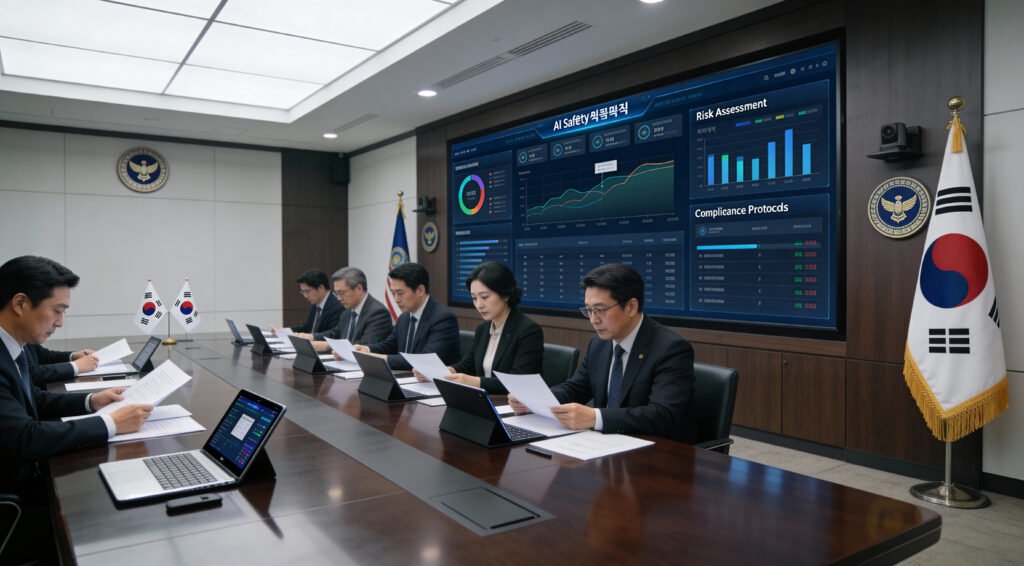
South Korea Sets Global Precedent With Comprehensive AI Safety Law
The AI Basic Act was passed in South Korea, making it the first country to have a full set of laws about the safety of artificial intelligence. The law makes it mandatory for developers and businesses to deal with false information, deepfakes, and systemic technological risks. Officials said the framework strikes a balance between encouraging new ideas and making sure that public trust and daily life are protected.
Lawmakers said that quickly putting AI to use needed structured oversight to protect democratic processes and consumer protection standards. The rule applies to both new businesses in the US and large tech companies that offer digital services in the US. Authorities stressed the need for consistent enforcement mechanisms to keep compliance practices from becoming inconsistent across different business sectors.

Source: Digicon Asia/Website
Law Defines High Risk AI Systems Affecting Daily Public Safety
The law makes it official that there are high-risk AI systems that affect jobs, money, health care, and other important services. Systems that affect hiring decisions, loan approvals, or medical advice must be more open and accountable. Regulators think this group is aimed at technologies that have the most potential to affect people’s health and livelihoods.
Before they can go live, service providers must do risk assessments and send compliance paperwork to the agencies that oversee them. These steps make sure that people who are affected can still understand, check, and challenge algorithmic decisions. Officials said that the number of high-risk designations will grow as AI applications become more common in different fields.
Mandatory Disclosure And Watermarking Required For AI Generated Content
When systems interact with customers or affect public information channels, developers must be clear about how they use AI. The law says that synthetic media must have watermarks on them to stop impersonation, political manipulation, and non-consensual digital exploitation. Authorities want to make it easier to tell the difference between real and fake content online.
Compliance includes technical standards for being able to trace text, audio, and video outputs made by AI systems. When there are investigations into misinformation campaigns, platforms that host automated content must work with monitoring agencies. Regulators said that people who intentionally break labeling rules will face penalties.
Recommended Article: Trump Imposes 25% Tariff on Selected AI Chip Imports
Global Technology Firms Must Appoint Local Representatives In Korea
Large international companies that make a lot of money or have a lot of users must have legal representatives in South Korea. This requirement makes sure that regulators can enforce compliance orders and do timely investigations with technology providers from other countries. If operational benchmarks are not met, companies like OpenAI and Google must follow these rules.
If you don’t name representatives or respond to regulatory notices, you could face administrative penalties and fines. Officials said that holding local governments accountable stops delays in enforcement that used to make it harder to go after foreign-based companies. Industry groups agreed that this change makes it much easier for regulators to do their jobs in digital markets.
Violations Face Fines With Grace Period For Industry Adaptation
Under the new enforcement structure, companies that break the rules could be fined up to thirty million won. Businesses have a year to update their governance policies and technical compliance systems. Officials think that slowly putting things into place will cause less economic disruption while keeping the credibility of the law.
During the transition period, regulators will give guidance on how to follow the rules and set technical standards for specific industries. At first, inspections will be more about education than punishment for small mistakes. Serious violations that hurt the public may still lead to faster legal action.
Government Mandated To Promote AI Development Through Policy Planning
The act tells government agencies to actively support the research and commercialization of artificial intelligence, in addition to putting limits on it. Every three years, a national plan for developing AI will be published. It will list the most important areas for funding and infrastructure. Policymakers saw regulation and innovation as goals that could work together instead of against each other.
The government will put money into training workers for data infrastructure jobs and doing research on ethical technology. Authorities think that stable governance frameworks will draw responsible foreign investment into domestic AI ecosystems. Officials said that long-term competitiveness depends on having trusted deployment and clear rules.
Regional Observers See Model Influencing Future International AI Regulation
Analysts in Europe and Asia see the Korean framework as a model for new digital governance standards. Governments have the same problem: how to speed up innovation while also protecting people from false information that comes from automation. South Korea is a good place to look to for responsible use of artificial intelligence because it was one of the first countries to do so.
During talks about national policy, Kazakhstan’s leaders recently talked about how digitalization is changing the economy. Other countries are looking at how Korea enforces its laws so they can use similar methods in their own legal systems. Experts say that as artificial intelligence becomes more powerful around the world, it will be easier for countries to work together.