


US Officials Raise Succession Questions Amid Escalating Iran Tensions
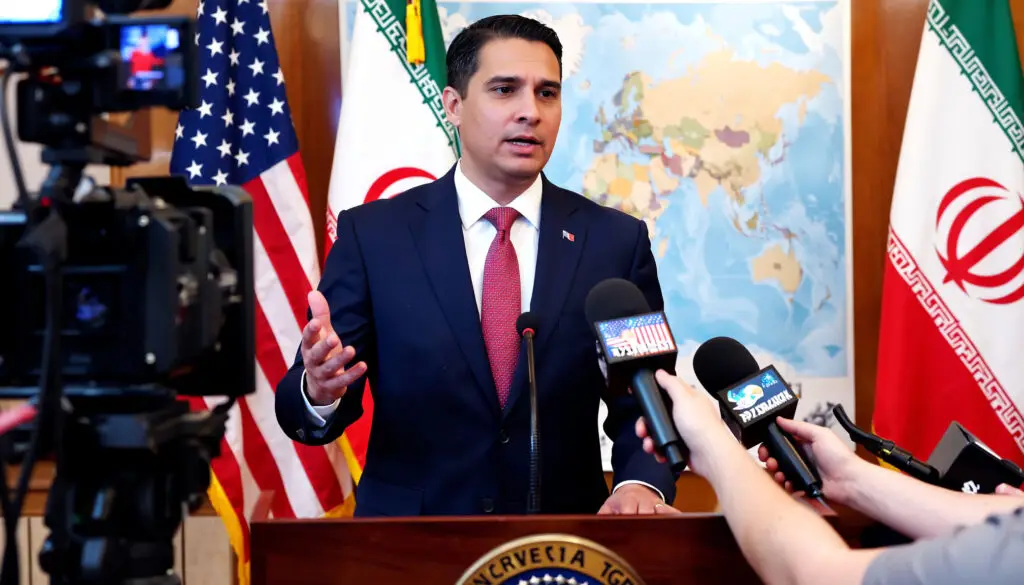
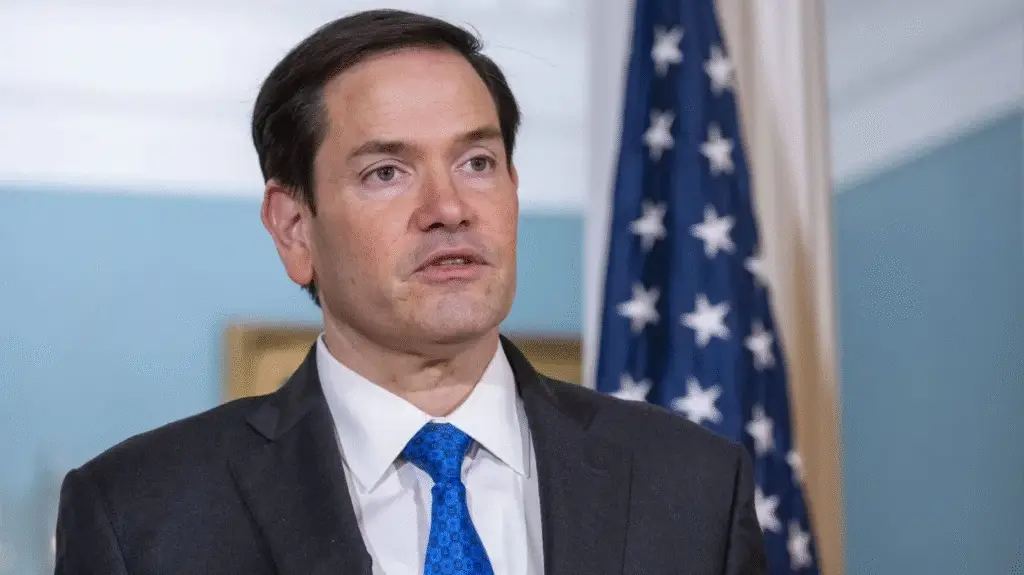
As tensions over Iran’s nuclear program grew and questions arose about who would lead the country next, US officials stepped up their rhetoric. Marco Rubio, the Secretary of State, spoke to senators after President Donald Trump gave them more warnings. The comments brought attention to the fact that there is a lot of uncertainty about what would happen if Iran’s current political system were to fall apart.
Rubio said that the results of regime change are still unknown, unlike the simpler transitions that Washington has tried in the past. He said that Iran was worse than Venezuela because Venezuela had a clearer external strategy framework for changing leaders. These kinds of comparisons showed how hard it is to change the political system in Iran today because of how deeply entrenched power structures are.
Source: The Hill/Website
Rubio Cautions Against Simplistic Assumptions About Leadership Change
Rubio told policymakers not to think that removing Iran’s leaders would lead to a quick or smooth transition. He said that changing a regime is hard and doesn’t fit with pre-planned models from outside. Rubio says that no one in power can be sure who will run Iran after the current government.
He stressed that there is no clear successor in Iran who can quickly bring together the country’s political institutions. Power centers include clerical, military, and economic networks that are hard to move quickly. This fragmentation makes it more likely that things will become unstable after a sudden change in leadership.
Trump Intensifies Pressure With Renewed Military Warnings
President Trump raised the stakes by threatening Tehran over its nuclear program and possible military action. He told Iran in public to go back to the negotiating table or face worse consequences. The message made it clear that human rights were less important than they had been in previous diplomatic efforts.
Trump said that sending a lot of ships to Iran would give him leverage to start talks again. He said that military pressure would be necessary if diplomacy completely failed. The statements made things even more unclear in terms of regional security and diplomatic channels.
Recommended Article: Pezeshkian Vows Economic Overhaul as Protests Sweep Iran
Iran Responds With Threats of Immediate Retaliation
Iranian officials strongly rejected talks that were held under the threat of military action. State-run media said that leaders warned that any US military action would be met with quick retaliation. Tehran saw the possibility of conflict as being bigger than just a fight between 2 countries.
Officials made it clear that attacks would lead to responses that would hurt American interests and allies in the region. Iranian leaders said that deterrence was necessary to protect the country’s independence. The speech showed that they were not very willing to calm things down right now.
Nuclear Issue Overtakes Human Rights in US Messaging
Washington’s recent statements show that they are changing their strategy and putting nuclear containment ahead of human rights advocacy. Criticism of Iran’s repression of its own people is now less common. Right now, the United States’ security calculations are mostly based on nuclear capabilities.
This change of framing shows how urgent things have become after previous attacks on Iranian nuclear sites. Officials say that stopping weapons from being made is more important than other diplomatic issues. The strategy reduces the space for negotiation and raises the risk of geopolitical conflict.
Regional Instability Complicates Post Regime Scenarios
Analysts say that Iran’s influence in the region makes it even harder to predict what will happen with leadership changes. When a regime falls, proxy networks could act in ways that are hard to predict. States next door are worried about the effects of long-term instability.
Rubio said that these factors make things even more uncertain outside of Iran. If there is a power vacuum, it could lead to internal division or conflict between regions. These kinds of risks make it hard to make clear policy recommendations about succession planning.
Supreme Leadership Removal Offers No Clear Roadmap Forward
Rubio said that there is no agreement on who would take over as Supreme Leader Ayatollah Ali Khamenei if he were to be removed. Different groups don’t have the same legitimacy in Iran’s institutions. This lack of clarity makes people more afraid of chaos than of change.
He came to the conclusion that regime change is not a process that can be predicted. Policymakers need to think about unintended consequences as well as their main goals. The warning made it clear that there is a lot of uncertainty in the current debates about US-Iran policy.