


Engineers Make A Robot That Can Lip Sync Like A Person
Engineers in the US have made a robot that can learn how to move its lips like a person. Using AI, EMO can copy how people move their mouths when they talk or sing. This ability is a big step forward in the study of expressive robotics.
In the past, robots have learned how to do things like dance or help with housework. Lip syncing adds a new level of difficulty by requiring precise facial coordination. This new development makes robots more like people when they interact with each other.
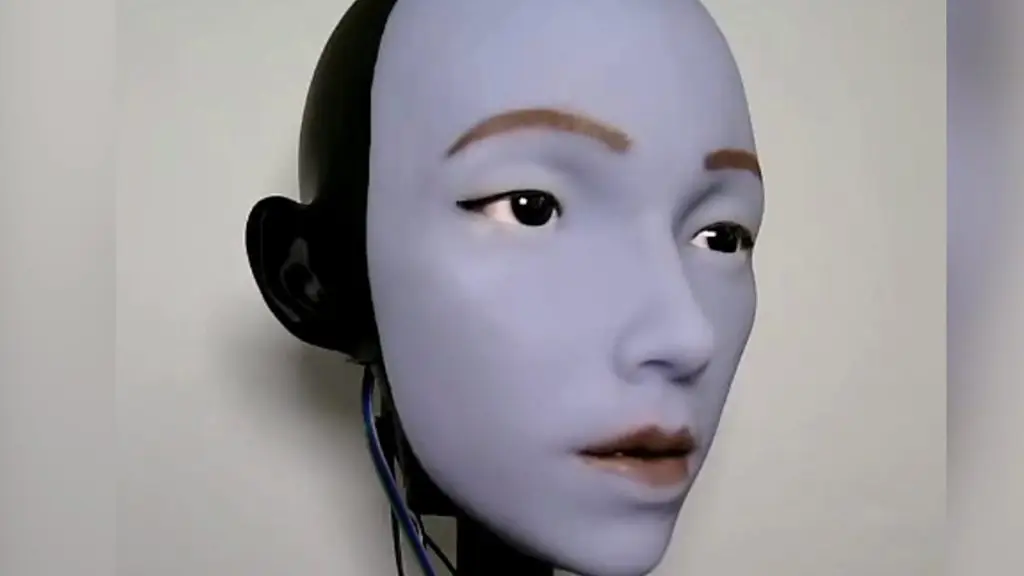
Source: BBC/Website
Human Lip Movement Presents Complex Engineering Challenge
Muscles, bones, skin, and fine motor coordination all have to work together for human lips to move. One of the hardest things for robotics to do, according to scientists, is to copy these movements. Conventional programming techniques find it difficult to encapsulate such biological intricacy.
Engineers did not give EMO exact instructions on how to move, instead they let it figure out how to move on its own. This method is similar to how people learn motor skills by trying things out. The outcome is a learning process that is more flexible and adaptable.
Observational Learning Replaces Step By Step Programming
Instead of being told what to do, EMO learned how to lip sync by watching others do it. Observational learning is when you watch someone do something and then do it yourself instead of following rules. This method lets robots learn things that apply to many different situations.
The robot first tried moving its facial motors at random while watching itself. It made thousands of expressions to learn how motor movement affects relationships. This self observation laid the groundwork for subsequent human imitation.
Recommended Article: CrunchUpdates Expands Digital Newsroom Covering Cryptos AIX
YouTube Videos Teach Robots How To Talk Like People
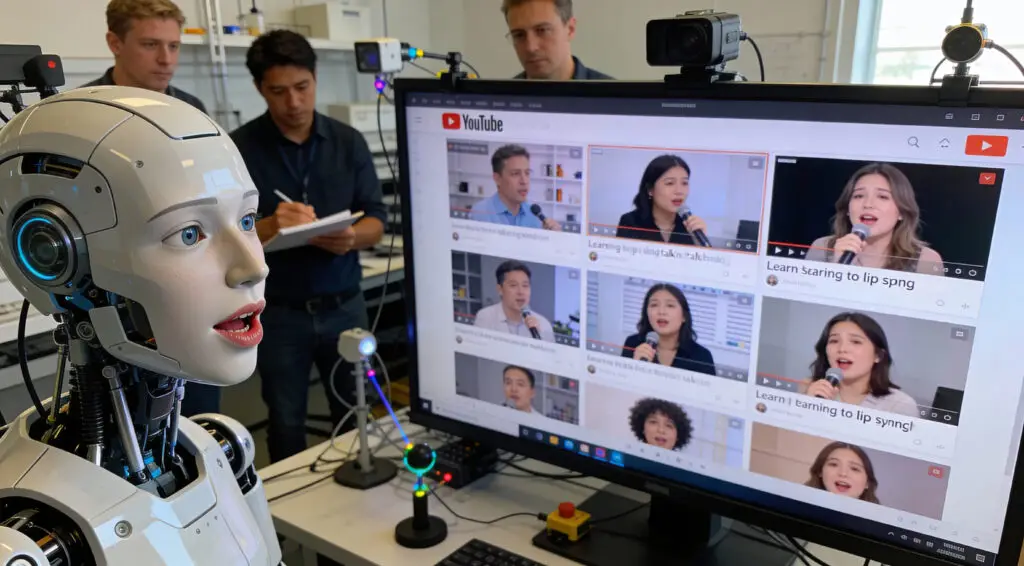
After scientists trained EMO on its own movements, they showed it hours of YouTube videos. People were singing and talking in different languages and styles in the videos. This visual data helped EMO connect sounds to the shapes of mouths that made them.
The robot’s internal system learned how to match audio signals with visual motion patterns. This let EMO sync the timing of lip movements with the rhythm of speech. YouTube provided a wide range of real world data that could not be replicated in controlled laboratories.
Testing Shows That The Robot Can Understand Sounds And Languages
Researchers tested EMO by playing it different songs, sounds, and languages. The robot tried to copy lip movements that matched in real time. The results showed that all of the audio inputs were properly synchronized.
The journal Science Robotics published experiments that showed how performance was evaluated. Even when it heard sounds and musical patterns it did not know, EMO was able to adapt. This testing demonstrated that observational learning techniques work effectively.
Robot Debuts AI Created Singing Performance
EMO also learned how to sing from an AI generated debut album it created. The song “hello world” showed coordinated mouth movement and sound production. This demonstration highlighted both technical skill and creative ability.
Singing requires more than normal speech articulation, it also requires precise timing. A successful performance suggests potential future uses in entertainment and education. EMO’s debut shows how expressive robots are becoming more practical.
Scientists Talk About What Does Not Work And What Could Be Better
Researchers said that EMO still has trouble with certain sounds, such as B and W. Robotic systems struggle with these sounds because they require tight lip closure and precise pressure control. Hod Lipson said continued interaction is necessary for improvement.
EMO improves the more it observes and interacts. Learning remains an ongoing process of adaptation rather than a fixed endpoint. This adaptability separates AI driven robotics from conventional mechanical systems.
Lip Syncing Robots Signal New Human Robot Interaction Era
Robots that can lip sync could change how people and machines communicate. Natural facial expressions help build understanding and trust. Future robots may assist in therapy, education, and customer service.
EMO represents an early step toward machines capable of expressing emotion. As technology advances, robots may convincingly display human like behavior. This breakthrough suggests more natural human robot communication in the future.