




OpenAI Warns About DeepSeek’s Distillation Methods
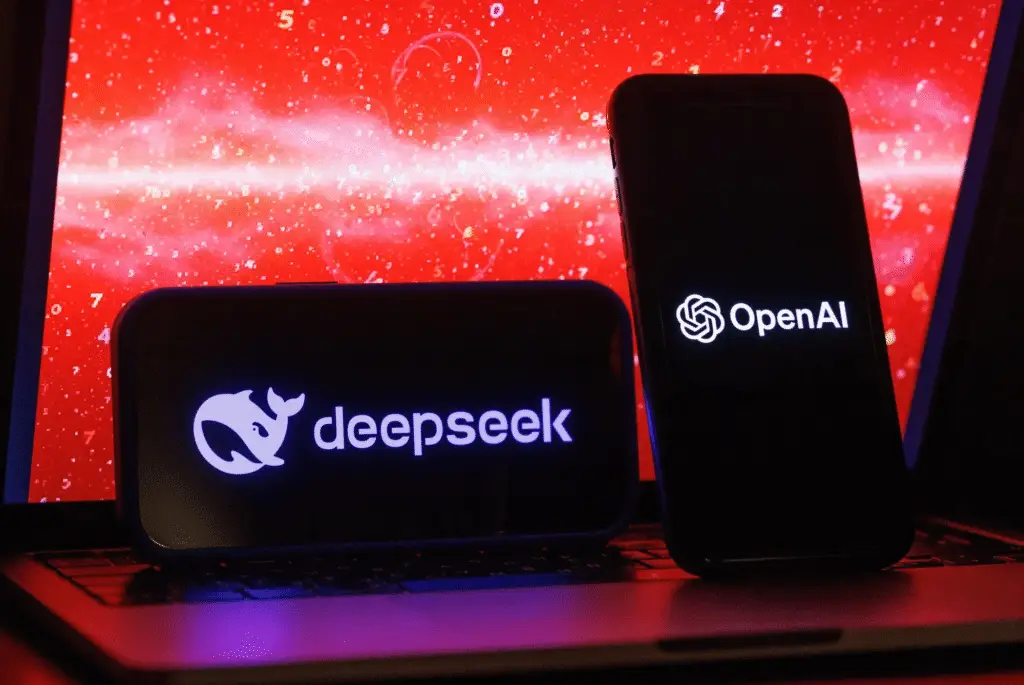
OpenAI told US lawmakers that the Chinese company DeepSeek might be taking information from American AI systems. The accusations are about distillation methods that let one model learn from another directly.
Officials read a memo that said the company found more and more advanced ways to get around security measures. These results made people even more worried that proprietary innovations could be copied without permission or payment.
Source: Bloomberg.com
Concerns About Competition Arise from Distillation Techniques
Distillation is the process of teaching a new AI system how to work by using outputs from more advanced models. Unauthorized use may violate service agreements and intellectual property protections, even though it is technically allowed in some research settings.
OpenAI said that these kinds of practices let competitors speed up development without having to pay for a lot of research. This change could hurt companies that spent billions on infrastructure, talent, and computing power.
Investigation Began Shortly After R1 Chatbot Launch
After the release of its R1 chatbot, OpenAI is said to have started looking into DeepSeek’s activities. The investigation was done with Microsoft to find out if data had been gotten in the wrong way.
Internal reviews showed that accounts connected to DeepSeek employees tried to get around guardrails by using third-party routing tools. These tactics are said to have hidden origins while allowing automated extraction of useful model outputs.
Recommended Article: OpenAI Approves First Insurer AI App Inside ChatGPT Platform
Business Risks Could Put the US Behind in AI
The widespread use of distillation could be a business threat to American AI developers who charge subscription fees. A lot of Chinese platforms don’t charge monthly fees, which puts pressure on prices in markets around the world.
Executives are worried that copied features could take away the United States’ long-held technological edge. If copied quickly, innovation cycles may get shorter and profit margins may get smaller.
Lawmakers Say It Could Affect National Security
Members of the House Select Committee on China said the accusations were part of a bigger problem in world politics. Representative John Moolenaar said that the problem was in line with long-standing worries about the theft of technology.
Policymakers are worried that weaker safeguards could lead to abuse in sensitive areas like chemistry or biology, in addition to economic concerns. Models that are copied but don’t have strong protections could make the risks of advanced automation even bigger.
AI Chips And Export Controls Enter Debate
The controversy comes up while there are still arguments about sending semiconductors to China. Many people think that advanced chips are necessary for training large numbers of high-performance AI systems.
Changes to policy made it possible to sell some processors even though there were security concerns. Some people say that even older hardware can still support cutting-edge development if it is used with smart engineering methods.
Future Rivalry Signals Growing Global AI Race
DeepSeek has only released small updates since R1, but reports say it is working on agent-based systems. These kinds of tools could go head-to-head with what OpenAI and other cutting-edge labs have to offer.
The argument shows that AI is becoming a major area of competition around the world. Both governments and businesses are now racing to take the lead in a technology that is expected to change the way economies work in the future.