


Trump’s AI Executive Order Sparks State-Level Political Firestorm
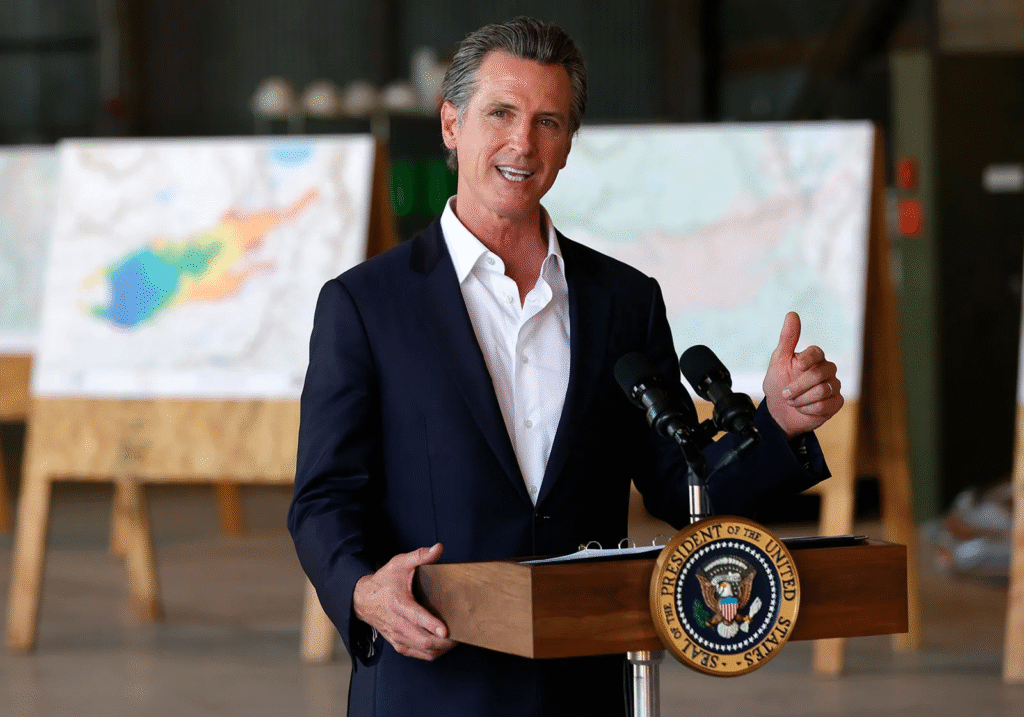
California Governor Gavin Newsom strongly disagreed with US President Donald Trump’s executive order that stopped states from developing their own AI legislation. The directive, which was given on Thursday, gives the federal government much of the power to make rules, stopping states from doing so.
Newsom called the action grift and corruption, saying that Trump and AI adviser David Sacks put the interests of the tech industry ahead of the public good and new ideas.
California Lawmakers Promise Legal Challenge to Federal Preemption
California Attorney General Rob Bonta said that he will look into the order’s validity, which might lead to a constitutional fight over state rights. Representative Sara Jacobs said the directive was deeply misguided and promised to fight it in court and in Congress.
Critics say the president doesn’t have the power to go against state laws, pointing out that California’s AI transparency rules were designed to keep people safe and make sure people are held accountable.
Executive Order Seen as Major Victory for Tech Industry Lobbyists
Analysts say that Trump’s action is a big triumph for big tech companies that have fought against state-level AI control. The order sets up a federal task group to look at state AI rules that are seen as getting in the way of national supremacy and maybe change them.
Opponents, such as labor unions and digital rights groups, say the ruling makes it possible for strong AI businesses to operate in an unregulated Wild West setting.
Recommended Article: UN Warns Artificial Intelligence May Deepen Global Inequality Gap
Newsom Defends California’s AI Transparency Framework
Governor Newsom signed the Transparency in Frontier Artificial Intelligence Act in September. This law says that AI companies must report safety occurrences and risk statistics. The regulation also says that anyone who doesn’t follow it can be fined up to $1 million. This sets a good example for responsible innovation.
Newsom said that California’s balanced approach to regulation should be used as an example for the whole country. It combines incentives for innovation with protections for ethics to protect public confidence.
Critics Warn of Rising Corporate Influence in AI Regulation
Members of both parties in Congress were worried that prominent Silicon Valley funders had a hand in writing Trump’s directive. Congressman Don Beyer from Virginia stated the legislation creates a lawless landscape for AI, while Alex Bores from New York termed it a huge windfall for oligarchs.
Steve Bannon, who used to work for Trump, also opposed the policy, saying that Sacks misled the president about what would happen if he broke state laws.
Child Safety Advocates Condemn AI Order as Reckless
Groups including Common Sense Media and the Heat Initiative said that the Trump administration was putting kids at risk by loosening rules on AI systems that talk to kids. They said that the executive order doesn’t take into account the accumulating evidence that uncontrolled AI platforms are harmful.
James Steyer from Common Sense Media stated, The AI industry’s never-ending race for engagement has already killed people, and the government is letting it happen.
National Backlash Highlights Deep Divisions Over AI Governance
State officials from both parties around the country have spoken out against the directive, saying that the White House has not provided a full alternative framework for AI regulation.
As legal experts expect constitutional challenges, the disagreement shows a bigger fight between state independence and federal authority. This fight might shape the future of technology in the United States.