


Conflict In Iran Forces Huge Airspace Closures Across The Gulf
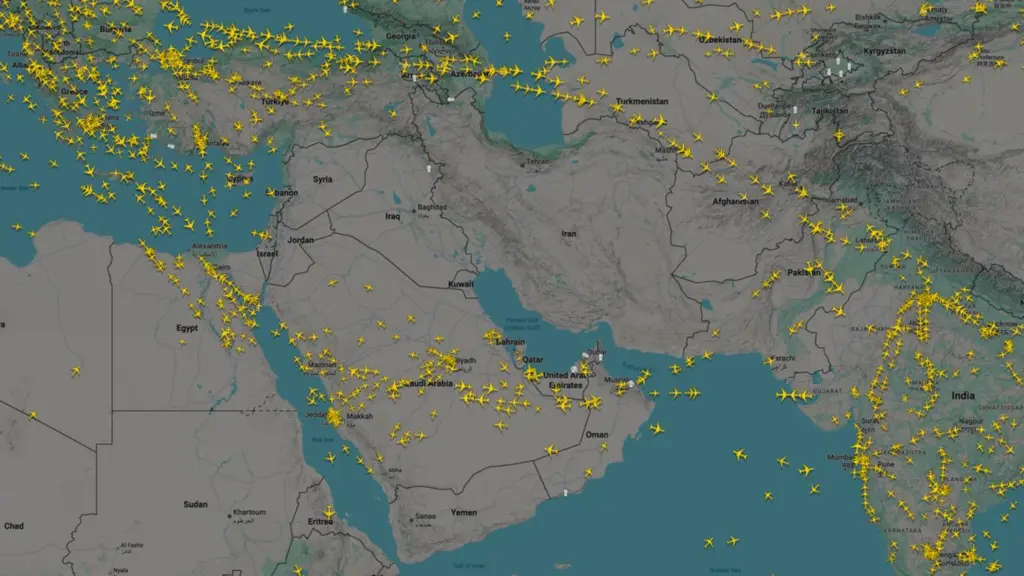
The growing conflict between Iran, the US, and Israel has caused problems for air travel in the Middle East. Several countries, such as Qatar and the United Arab Emirates, closed off parts of their airspace to keep civilian flights safe. These closures made airlines cancel thousands of scheduled flights while officials looked at the risks to aviation safety again.
Major Gulf airports suddenly became off-limits, which changed the way people traveled by air around the world. Airlines that usually run large transit networks through the area had to stop or change their routes. Experts in aviation say that the disruption has quickly spread to flight schedules around the world.
Source: CNN
Gulf Airlines Are Having Big Problems With Their Operations
Several big Gulf airlines, like Emirates, Qatar Airways, and Etihad Airways, had problems with their operations right away. These airlines rely a lot on airspace corridors in the Middle East that connect Asia, Europe, and Africa. Airlines temporarily grounded planes or cut back on scheduled flights because of these restricted routes.
Qatar Airways stopped many of its scheduled flights because Qatar’s airspace was still mostly closed to commercial aviation. Emirates and Etihad started limited flights again using tightly controlled air corridors that regional authorities had approved. Even small operations need a lot of safety coordination between airline dispatch teams and aviation regulators.
Flight Rerouting Creates Longer Travel Times And Higher Costs
Airlines now use longer alternative routes that avoid conflict areas to keep flying safely. These detours make it much longer for people to travel between Europe, Asia, and Africa. Airlines have to pay more to operate because planes use more fuel on longer flights.
Many direct flights over Iran and the Gulf are still on hold until security improves. Airlines have to keep changing their flight plans because of how quickly things are changing in the world. This uncertainty makes it harder to make plans and makes it more likely that flights will be delayed again.
Recommended Article: China EV Industry Gains Advantage As Oil Prices Surge
Passenger Disruptions Spread Across Global Travel Networks
The Middle East aviation crisis has caused a lot of problems for travelers all over the world. Airlines said that many international flights were canceled, delayed, or had their schedules changed. People who were traveling through Gulf hubs had to rebook their flights and wait longer than expected.
Dubai, Doha, and Abu Dhabi are some of the biggest transit airports in the world. They handle millions of connecting passengers every year. When these hubs have problems, the effects quickly spread to airline networks all over the world. Experts in the travel industry say that problems may last as long as tensions in the region do.
Rising Fuel Prices Increase Financial Pressure On Airlines
Because of the conflict, oil supply routes were uncertain, which led to higher jet fuel prices. The Strait of Hormuz is still one of the most important places in the world for shipping oil. Tensions in this corridor can quickly affect energy prices around the world.
Fuel costs are one of the biggest costs for airlines, so when they go up, it has a big effect on their finances. Airlines that are already having trouble with their operations now have to deal with higher fuel costs. These financial problems could hurt airlines’ profits during long-lasting geopolitical crises.
Tourism And Business Travel Decline Across Gulf Region
As the conflict spread across the Gulf region, tourism and business travel dropped sharply. Because of safety concerns and unclear travel conditions, travelers often stay away from places near conflict zones. Airlines are already having a hard time with operations, and now they have to deal with fewer passengers.
Regional economies are also affected because air travel supports trade, tourism, and business travel between countries. Most of the time, airports in the Gulf are major international transit hubs. So, fewer cars on the road affects hotels, tourism companies, and other businesses that provide services.
Aviation Industry Faces Biggest Test Since Pandemic
Analysts in the industry say that the current crisis is the hardest thing that Middle Eastern airlines have had to deal with since the COVID-19 pandemic. Even airlines with a lot of money, like Emirates and Etihad, have to be very careful about safety risks and operational costs. Airlines need to be able to adapt because airspace restrictions change often.
This situation shows how quickly geopolitical tensions can affect global air travel. Stable cooperation between governments and regulators in international airspace is very important for the smooth operation of airlines. When there are conflicts, aviation systems on many continents can quickly become very disorganized.