



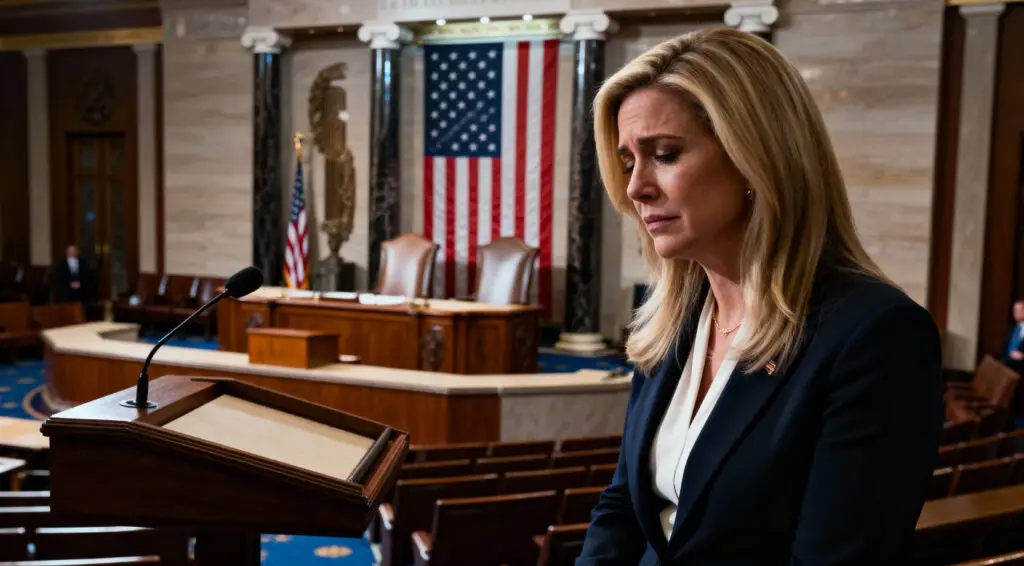
Greene Apologizes for Role in “Toxic Politics” After Trump Rift
WASHINGTON — US Representative Marjorie Taylor Greene has publicly apologized for her part in stoking divisive political rhetoric. This comes after a public falling out with former President Donald Trump, a person she had previously considered an ally. The Georgia lawmaker promised to temper her language and move away from the heated, often polarizing statements that have characterized her time in office.
The shift happened after Trump withdrew his support for Greene, calling her a “ranting lunatic” and claiming she’d turned against his presidency. The consequences of this split were stark, signaling a significant shift in their formerly strong bond. It also highlighted the growing divisions among the Republican Party’s populist faction.

A Feud That Turned Personal and Public
The conflict intensified when Greene started publicly voicing her disapproval of Trump’s management of the government shutdown and several other political matters. On CNN’s State of the Union, Greene spoke on the emotional impact of Trump’s recent criticisms.
“The most painful thing he said, and it’s completely false, was that I was a traitor,” she stated. Such statements can incite individuals and put my safety at risk.
When pressed on why she hadn’t spoken out against Trump’s incendiary rhetoric before, Greene acknowledged the fairness of the criticism. She said she’d formerly accepted the very conduct she now denounces.
“I’m Sorry for Taking Part in Toxic Politics”
Greene, in her comments, considered her actions and how they had fueled political animosity. “I want to sincerely apologize for my involvement in the toxic political climate; it’s detrimental to our nation,” she stated.
She also mentioned that the killing of conservative broadcaster Charlie Kirk hit her hard, leading her to some serious soul-searching. “I’ve been focusing on this quite a bit recently, trying to put an end to the political knives,” she added. I genuinely hope to witness more kindness among people.
Recommended Article: Experts Warn Trump Faces Long Commitment If Maduro Is Ousted
A Shift From Firebrand to Contrition
The congresswoman’s remarks marked a significant shift from her usual confrontational style. Greene’s reputation has been built on a foundation of incendiary language and contentious pronouncements. She’s made headlines for downplaying the Holocaust, championing conspiracy theories, and frequently sparring with fellow lawmakers during legislative sessions.
Her apology suggests a potential shift, both in strategy and in her personal approach, following Trump’s public dismissal. The president’s announcement of his withdrawal of support hit social media, where he accused Greene of veering “far left” and ridiculed her as being unhinged.
Trump Withdraws Endorsement and Escalates Criticism
In a recent post, Trump stated, “I am withdrawing my support and endorsement of ‘Congresswoman’ Marjorie Taylor Greene.” She’s gone far left. He also launched a personal attack, stating, “With 219 Congressmen, 53 Senators, and nearly 200 countries to oversee, I simply can’t field a call from a raving lunatic every single day.”
The comment certainly got people talking, and some speculated it was meant to push Greene to the fringes of the conservative world. Greene, in turn, said that Trump was attempting to “make an example of her” to prevent the release of Epstein-related documents, a statement that remains unproven.
Calls for Accountability and Change
Greene made it clear that she’s concentrating on owning her actions, not trying to shift the blame elsewhere. “I’m only accountable for myself and what I say and do,” she stated. I’ve been focused on self-improvement and trying to inspire others to follow suit.
She recognized that the poisonous atmosphere in Washington had intensified, regardless of party affiliation. She called on her fellow lawmakers to “end the culture of hostility” that increasingly characterizes contemporary American politics.
A Moment of Reckoning for the GOP Firebrand
Political experts saw Greene’s abrupt change in tone as a strategic move, a bid to reshape her public persona following a stretch of heavy criticism and diminished standing within the Republican Party. Once a prominent member of Trump’s inner circle, she’s now experiencing political isolation after their partnership crumbled.
Whether her apology will actually mend her reputation is still up for debate. However, Greene’s words offer a glimpse of something unusual: a moment of self-reflection in a political world often defined by conflict. “Time to put the knives down,” she declared, a sentiment that might find an audience even outside her usual supporters.