


Record 2026 Budget Marks Major Fiscal Milestone for the Philippines
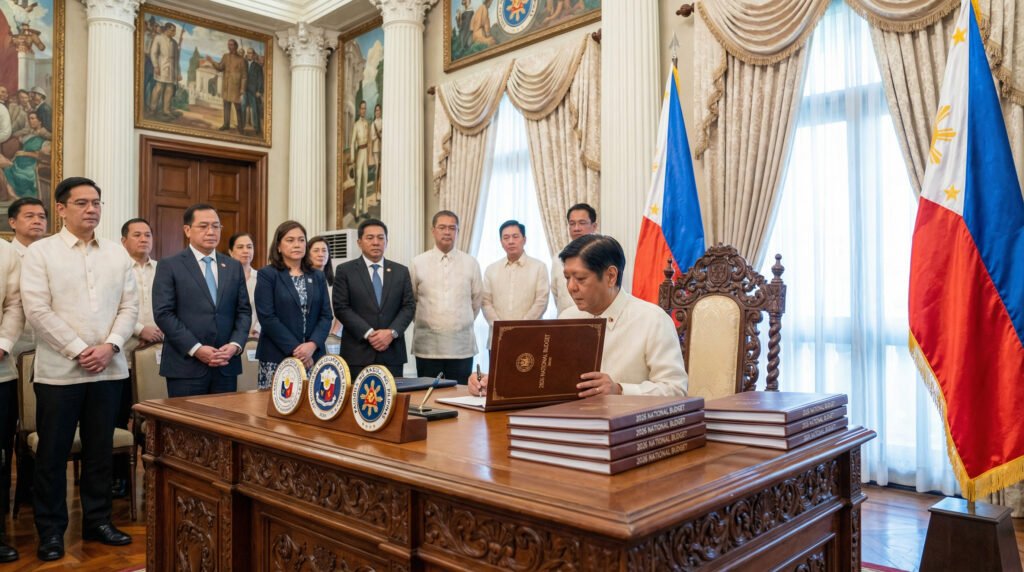
The ₱6.793-trillion national budget for 2026, the largest in Philippine history, was signed by President Ferdinand R. Marcos Jr. The administration described the spending plan as a key step toward rebuilding public trust following disasters and governance challenges. The budget aims to strengthen institutions and deliver targeted assistance to vulnerable communities.
The signing ceremony emphasized discipline, accountability, and long-term national growth. Marcos described the budget as a framework built on fairness and efficiency, focused on empowering people. He reiterated that public funds must directly benefit citizens without political interference.
Source: PNA
Ban on Lawmakers Distributing Aid Targets Patronage Politics
The President declared that politicians are prohibited from distributing financial aid nationwide. He emphasized that social assistance must reach recipients directly, without political influence or favoritism. The goal is to dismantle long-standing patronage networks in welfare programs.
Marcos reiterated that aid must reach intended beneficiaries in full, saying “walang bawas, walang kulang” (“no reduction, no shortfall”) to stress zero tolerance for diversion. Administrative controls and oversight mechanisms will ensure compliance with the policy.
Education Receives Largest Allocation to Build Human Capital
Education received the largest share of the 2026 budget, with ₱1.34 trillion allocated for classrooms, teacher development, and the creation of thousands of new teaching positions. The investment underscores the administration’s focus on long-term productivity and skill formation.
Officials stated that education spending is the cornerstone of sustainable growth and economic competitiveness. Strengthening public schools aims to reduce inequality and regional disparities. Improved facilities and expanded staffing are expected to enhance learning outcomes nationwide.
Recommended Article: Palestine Advocates Praise Mamdani First-Day Policy Shift
Health Funding Expanded with PhilHealth and Hospital Support
The health sector was allotted a record ₱448.125 billion. A major portion restores PhilHealth funding following a Supreme Court ruling that adjusted previous allocations. Additional resources will also support local government hospitals implementing zero-balance billing.
Health investments prioritize access to affordable care and system stability amid rising costs. Expanded insurance coverage helps families manage medical expenses and shields them from financial hardship. The administration considers healthcare essential to protecting citizens and sustaining productivity.
Agriculture and Social Protection Drive Inclusive Recovery Goals
The government allocated ₱297 billion to agriculture to modernize supply chains and improve rural infrastructure. Programs focus on logistics efficiency, particularly farm-to-market roads, to stabilize food supplies and boost farmer incomes.
Social protection received over ₱270 billion to accelerate poverty reduction efforts. One key objective is to bring the national poverty rate down to single digits by 2028. The strategy includes cash transfers, nutrition programs, and livelihood support initiatives.
Presidential Vetoes Reinforce Fiscal Discipline and Safeguards
Marcos vetoed nearly ₱92.5 billion in unprogrammed spending to prevent potential misuse. He stressed that unprogrammed funds are not discretionary allocations but conditional resources tied to revenue performance.
The President clarified that such appropriations are not “free money” for agencies, signaling tighter control over additional spending channels. Unprogrammed allocations are now at their lowest level since 2019, reflecting renewed fiscal discipline.
Military Pay and Local Government Support Strengthened
The 2026 budget also adjusts base pay and living allowances for military personnel to boost morale and readiness. Compensation reforms align with the broader goal of modernization within the security sector.
Dedicated funding was also increased for local government units to strengthen disaster response, community resilience, and public services. Enhancing local government capacity remains central to decentralized development and effective service delivery.