


Japan Secures Tariff Reductions Through Strategic Investment Pledge
Japan and the Trump administration agreed that import tariffs would not go above 15%. The deal trades lower trade penalties for a huge investment promise of five hundred fifty billion dollars. Officials think the deal strikes a good balance between long-term strategic security goals and economic stability.
The deal that was reached in the middle of 2025 lowered the original twenty-five percent tariff. To protect export competitiveness in important industrial sectors, Tokyo agreed to Washington’s terms. This framework directly connects trade access to investment performance and working together politically.
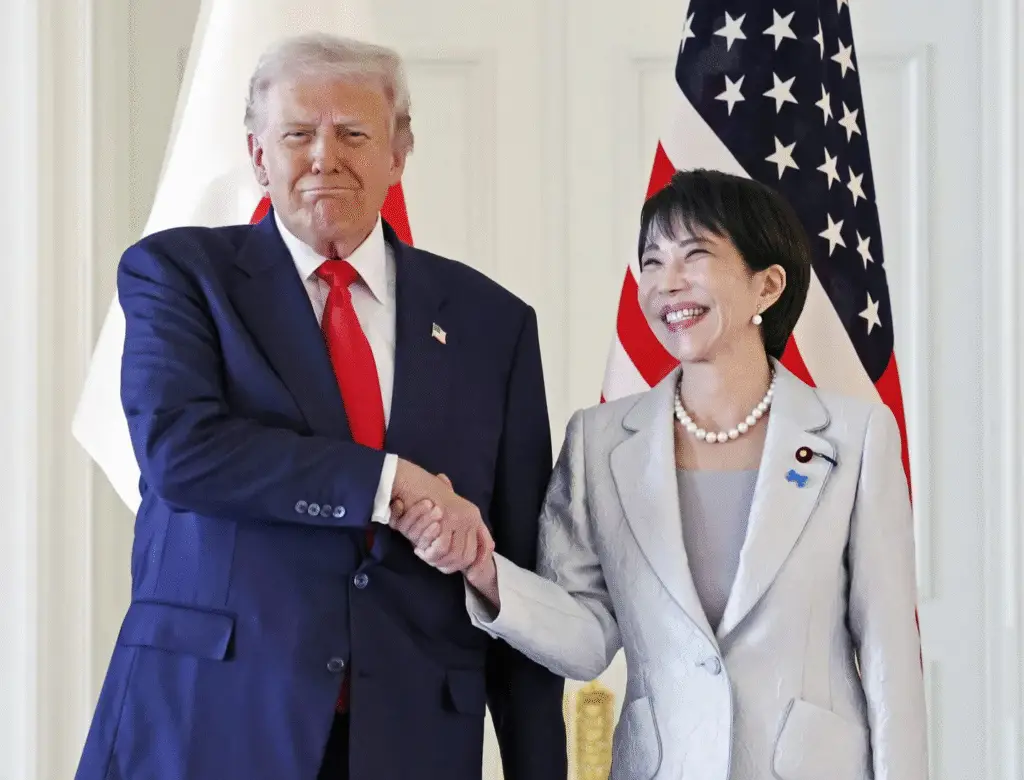
Source: Fortune
United States Leads Selection of Investment Targets
The deal lets Washington decide which projects and sectors get money from Japan. The US commerce secretary leads an investment committee that is in charge of approvals and compliance mechanisms. The president still has the final say on decisions that speed up implementation timelines.
A joint consultation committee makes sure that both governments are open and follow the same reporting standards. Washington may raise tariffs if it thinks Japan has not kept its promises to invest. This enforcement mechanism gives the US more power over how well its allies work together on economic issues.
Investment Scheme Supports Economic Security Priorities
Japan’s contribution focuses on energy infrastructure, such as projects to improve nuclear safety, renewable energy, and the grid. These sectors want to make the American electricity supply more stable while making the country less dependent on foreign energy sources that are vulnerable. Government-affiliated banks and other financial institutions offer funding guarantees that encourage businesses to get involved.
Other allies help by providing shipbuilding, semiconductors, pharmaceuticals, artificial intelligence, and strategic minerals that work well with each other. The coordinated model gives trusted partners, not global competitors, the responsibility for industrial tasks. This selective cooperation makes supply chains that are mostly Chinese less important.
Recommended Article: Chinese Capital Boosts Cambodia’s Fast-Growing Economy
Reciprocity Reshapes Trade and Alliance Relationships
Countries that keep their promises get better tariff rates and faster regulatory approvals. Those who don’t do what they say will have to pay higher tariffs and wait longer for investment screening. Trade relationships are becoming more and more dependent on measurable economic cooperation instead of diplomatic statements.
This method replaces multilateral friend-shoring models with trade frameworks that link bilateral investment. Officials from the Trump administration say that allies who take part are selective partners in economic security. The agreement Japan made is the first big example of this plan.
Investment Envelope Structures Corporate Participation
The five hundred fifty billion dollar number shows how much money can be borrowed, not how much money can be sent right away. The Japan Bank for International Cooperation and export insurance companies use the money. Private companies choose projects that are backed by government guarantees and ways to share risk.
Profit sharing agreements only apply to government-backed loans, not to all of a company’s profits. To get better trade treatment for their own companies, Japanese institutions take on a lot of risk. Officials stress that projects must stay financially viable even if they have political goals.
High Expectations Pressure Japanese Implementation Speed
Under the agreement’s enforcement clauses, American officials said that delays could lead to higher tariffs. Think tanks say that project approvals could happen in a matter of weeks if the process is made easier. Early endorsements from the president will show that Japan is a trustworthy and reliable country.
Some businesses were worried after hearing that America would get 90% of the profits. Tokyo made it clear that how profits are shared depends on how much money is invested and how the money is borrowed. Individual negotiations will take place under memorandums and executive orders to set up real plans.
Countering China Through Economic Security Networks
The framework could grow into a bigger network of alliances that includes Europe, Australia, Korea, and Britain. The initiative is based on strategic materials like semiconductors, lithium, and rare earth elements. These actions are meant to counter China’s growing power in industry and resources.
China is still building stronger ties in the region by investing in green energy and digital trade in Southeast Asia. Japan is still at risk of Chinese rare earth export restrictions as relations between the two countries get worse. Part of the effort to diversify is working with Australia, Canada, and the US on mineral security partnerships.
Japan Balances Alliances With Open Trade Ambitions
Tokyo wants to be a part of American security systems while keeping trade open with other countries. The CPTPP is a different platform that is not connected to either Washington or Beijing. Japan’s influence over the future of trade architecture grows as more countries join.
Officials see the deal as a way to protect against rising economic competition between superpowers. Japan wants to be a stabilizing middleman between systems that are competing with each other around the world. This plan protects the independence of the country while also helping the security goals of its allies.