Iran Prepares Contingency Governance Amid Escalating War Threats
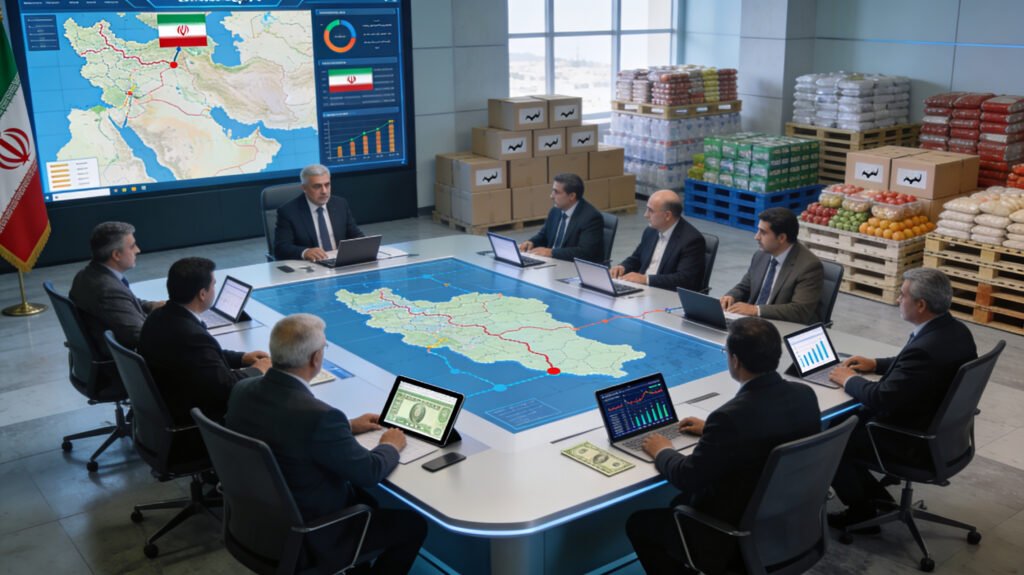
As threats of war from the US and Israel grow stronger, Iranian officials are putting in place backup plans for how to run the country. President Masoud Pezeshkian brought together governors from border provinces and high-ranking economic officials in Tehran. The meeting was mostly about how to delegate emergency duties in case of armed conflict that disrupts centralized administration.
State-run media said that a working group had been set up to make sure that everyone in the country had the basic supplies they needed. Making sure there was enough food became the government’s main job. Officials said the actions were meant to be precautionary and not a sign of an imminent conflict.

Source: BBC/Website
Governors Gain Expanded Powers to Import and Barter Goods
Governors can now bring in goods without having to use foreign currency reserves, thanks to the new directive. They can also do barter trade and make customs procedures easier for sailors. These powers are meant to speed up the flow of supplies in case of war.
Pezeshkian said that governors might be able to bring in goods that are directly related to jobs and keeping the market stable. The authority goes beyond just the basics to stop hoarding and shortages. Officials say the policy eases the pressure from international sanctions.
Sanctions Pressure Deepens as Economic Instability Worsens
Iranian officials said that the US and UN sanctions made the economy worse. Sanctions that were put back in place in September have made it harder to get trade finance and currency. The government says that emergency trade powers lessen some of the effects of sanctions.
Despite these measures nearly all sectors remain under severe strain. The purchasing power of inflation and the confidence of the market are both getting worse quickly. Economic planning is more and more focused on survival than on growth.
Recommended Article: Trump Praises Iran After Reported Halt of Mass Execution Plans
Internet Shutdown Cripples Businesses and Daily Economic Activity
A nationwide internet shutdown imposed on January 8 continues disrupting commerce. After protests grew stronger in major cities, the government put the blackout in place. Thousands were reportedly killed as security forces suppressed unrest.
The state intranet doesn’t work very well and doesn’t support online businesses. Traditional shops also struggle as foot traffic declines sharply. Digital disruption makes the economy even less stable.
Currency Collapse Erodes Trust and Destabilizes Markets
The rial in Iran keeps going down even though some markets opened up again this week. The value of the currency was about 1.6 million rials for every $US dollar. This is a drop from 700,000 a year ago and 900,000 in the middle of 2025.
People who work in the market say that conditions are unpredictable and changeable. Shopkeepers say that business is slowing down and that people are less confident in their purchases. Unstable currencies make it hard to plan prices in all sectors.
Central Bank Defends Market While Criticism Intensifies
Abdolnasser Hemmati, the head of the Central Bank, said that the currency market goes through its own natural cycles. He pointed to $2.25 billion in recent transactions in foreign currencies as proof. Officials said that this amount was okay given the current situation.
Hardline media quickly attacked Hemmati’s opinion. The Keyhan newspaper said that what he said goes against what is happening in the market. Critics brought up promises made in the past that prices would stay stable but weren’t kept.
Subsidy Reforms Fuel Inflation and Social Frustration
To fight corruption, Pezeshkian’s government got rid of subsidized import currency. Officials said that state-linked groups abused the system. Electronic food coupons helped people share their savings.
Every citizen gets 10 million rials every month for 4 months. The amount went down from more than $7 to about $6 because the currency lost value. Prices for basic goods went up a lot as inflation neared 50%.