



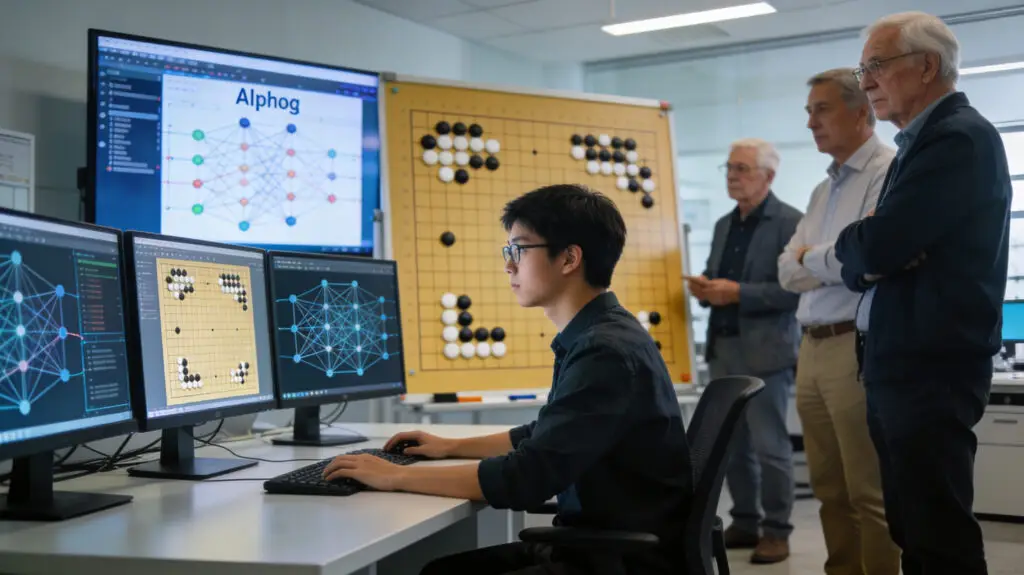
AlphaGo’s Historic Win Against Lee Sedol
AlphaGo stunned global audiences in March 2016. The AI system defeated world champion Lee Sedol in a five-match series. Millions watched the broadcast as artificial intelligence reached a historic milestone.
For years, computers had failed to conquer the ancient board game Go. Its immense complexity challenged traditional programming approaches. AlphaGo’s victory marked the beginning of a new era in machine learning.
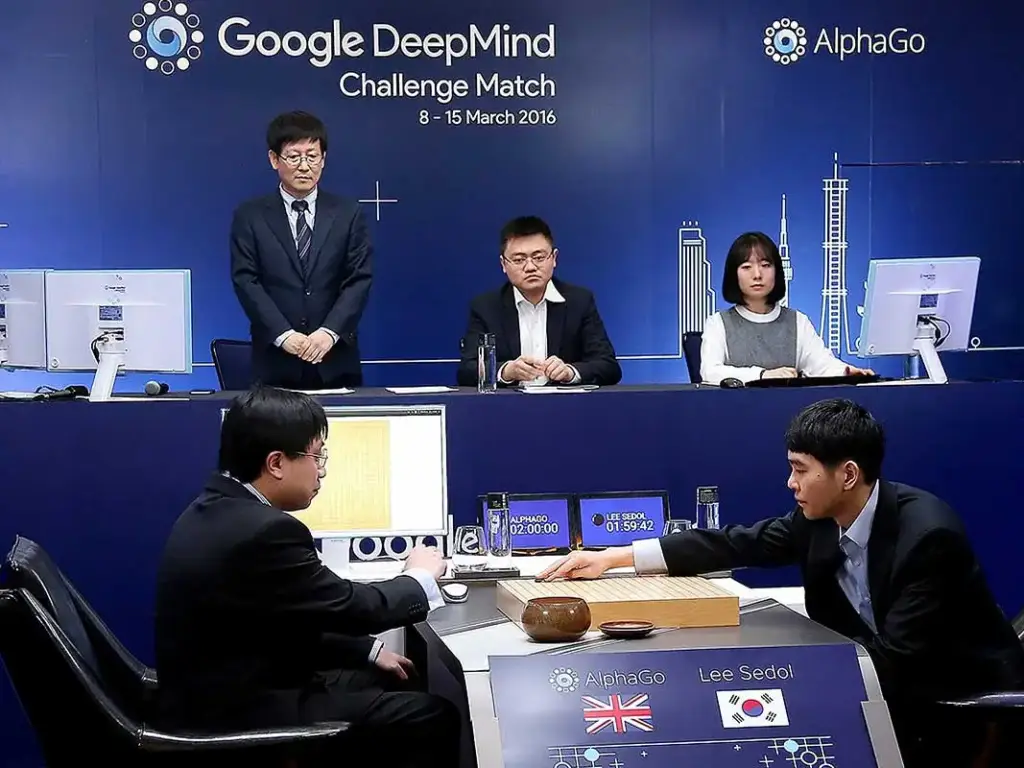
Source: New Scientist – Website
Chris Maddison’s First Role as an Intern
Chris Maddison joined the project while still in graduate school. He contributed foundational ideas during his internship at Google DeepMind. His work influenced the early research direction.
Maddison focused on neural network modeling methodologies. These approaches improved the system’s evaluation of board positions. Such refinements later proved crucial to AlphaGo’s performance.
Ilya Sutskever’s Influence on the Project’s Origins
Ilya Sutskever’s outreach played a role in initiating the effort. His early encouragement connected academic research with commercial innovation. That collaboration accelerated experimentation in deep learning.
Sutskever later co-founded OpenAI, advancing global AI development. The AlphaGo initiative demonstrated how research networks drive transformation. Ideas flowed rapidly between laboratories and universities.
Recommended Article: Samsung Advances AI Driven Global Factory Shift by 2030
Technical Innovations That Powered AlphaGo
AlphaGo combined deep neural networks with reinforcement learning techniques. It evaluated millions of potential board states at remarkable speed. Training involved extensive simulated gameplay sessions.
Through repeated self-play, the system refined its strategic understanding. This process enabled rapid improvement beyond human limitations. Maddison’s architectural contributions supported these advances.
The Match That Changed Perceptions of AI
The televised series captivated audiences worldwide. Many observers described it as a historic technological turning point. AlphaGo’s unexpected move in game 2 became iconic.
Commentators and professional players were astonished by its creativity. The move demonstrated AI’s capacity for novel strategic thinking. Public perceptions of machine intelligence shifted dramatically.
From Intern to Academic Leader
Following AlphaGo, Maddison pursued an academic career. He now serves as a professor at the University of Toronto. His research continues exploring foundational machine learning questions.
The experience reshaped his perspective on collaborative AI development. He emphasizes teamwork over narratives of individual genius. Breakthroughs often emerge from collective experimentation.
Legacy of AlphaGo in Modern AI Development
AlphaGo paved the way for broader AI applications. Its methodologies influenced advancements in language models and robotics. Reinforcement learning gained renewed prominence across disciplines.
The story illustrates how early-career contributions can shape history. Maddison’s internship highlights innovation’s transformative potential. Collaborative ambition often sparks world-changing breakthroughs.