Framework Signals Shift Toward Lower Bilateral Tariffs
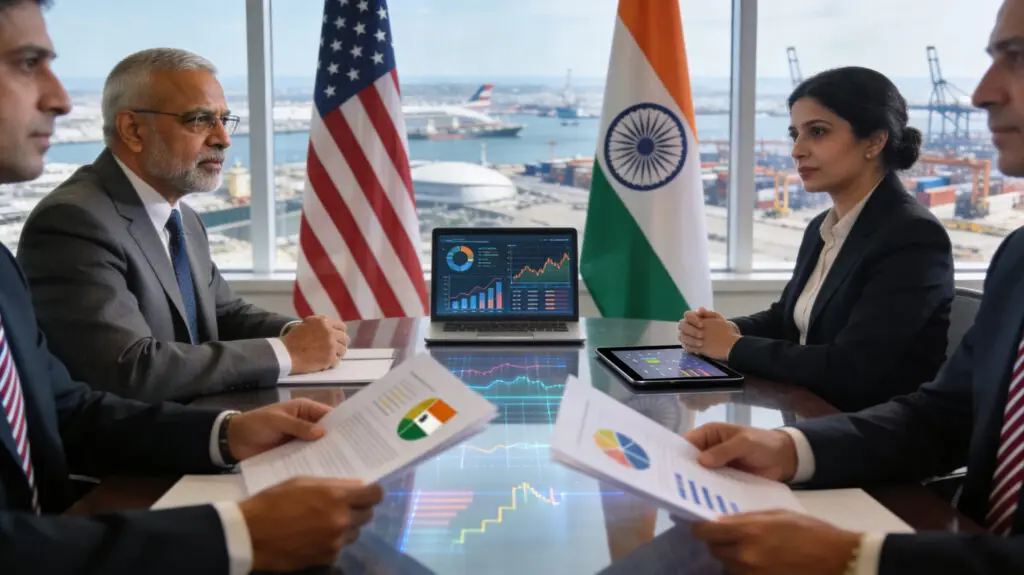
India and the US announced a temporary trade framework to lower tariffs and improve relations between the two countries. The announcement comes after months of tension caused by higher taxes meant to affect decisions about energy and market access. Both governments said that the step was a practical step forward, not a final solution to trade problems that had been going on for a long time.
Officials said that more talks are needed to set formal deadlines and standards for enforcing commitments. The framework does, however, show a desire to rebalance trade while keeping power for larger agreements in the future. Businesses and markets were careful in their reactions, waiting for more information about the effects on different sectors and when they would happen.
Source: The Durango Herald/Website
Energy Commitments Influence Timing Of Negotiations
Energy issues had a big impact on when and how the interim trade talks were held. Washington said that New Delhi would have to rely less on cheap Russian oil supplies in order to get tariff relief. Indian officials said they were aware of the need for energy diversification, but they stressed that national security and affordability should come first.
The framework text did not go into detail about how to enforce commitments to get energy. Analysts said that energy alignment was more of a diplomatic tool than a permanent obligation. The problem is still sensitive because global energy markets are unstable and there is geopolitical pressure.
India Pledges Selective Reductions On US Imports
India agreed to lower or get rid of tariffs on certain types of American industrial and agricultural goods. Officials pointed out protections for sensitive domestic sectors that employ millions of people in farming and food supply chains. The approach is more like calibrated liberalization than a full opening of the market.
The trade authorities said that phased implementation would give domestic producers time to get used to the new rules so they could compete. They stressed that staple grains, dairy, and some vegetables that are important for food security should be exempt. The government framed concessions as fair steps that would help the economy grow without hurting people’s jobs.
Recommended Article: India Budget Bets On Manufacturing To Sustain Economic Growth
Leadership Messages Emphasize Partnership And Growth
Political leaders said that the framework showed that the two countries were building more trust and a strategic partnership. Statements stressed the expected benefits of working together on investment technology and making exports more competitive. People said that the deal was a way to align economic interests with bigger goals for working together on global issues.
Officials said that more access to the American market could help create jobs and improve factories. They said that the long-term benefits of tariff changes are greater than the short-term changes that come with them. Messaging in public communications focused on opportunity instead of concession.
Domestic Opposition Raises Agriculture And Sovereignty Concerns
Opposition parties said the temporary deal is unfair because it favors American business interests too much. They said that agricultural communities could still face competitive pressure, even with the stated protections. Before making binding promises, critics wanted the parliament to look into them.
People were also worried about the idea that trade policy and foreign energy decisions were linked. Leaders of the opposition said that the framework gave up economic sovereignty because of pressure from outside. The debate shows how domestic politics affect international trade talks.
Executive Actions Roll Back Previous Punitive Tariffs
Through executive action, the United States got rid of a 25% tariff that had been in place before. The rollback is in line with the interim framework and keeps the power to make changes in the future. Officials made it clear that tariff tools are still available if expectations for compliance change.
The administration said that reversals were not permanent guarantees but rather conditional confidence-building measures. It was said that trade enforcement flexibility is very important for protecting national interests. This method keeps the upper hand in negotiations for future talks.
Interim Deal Fits Broader Global Trade Strategy
The framework fits well with India’s growing network of trade agreements with Europe and other countries in the region. Policymakers think that diversification makes the economy more resilient in times of uncertain global trade. The deal with the US is part of a bigger plan to boost exports.
Experts say that a full agreement is still needed to solve many technical problems. Future talks will decide how long and how far the tariff cuts will go in each sector. The temporary deal shows that things are moving in a good direction, but it doesn’t end the bigger trade agenda.