




Fidelity Highlights $65K Bitcoin As A Strategic Entry Zone
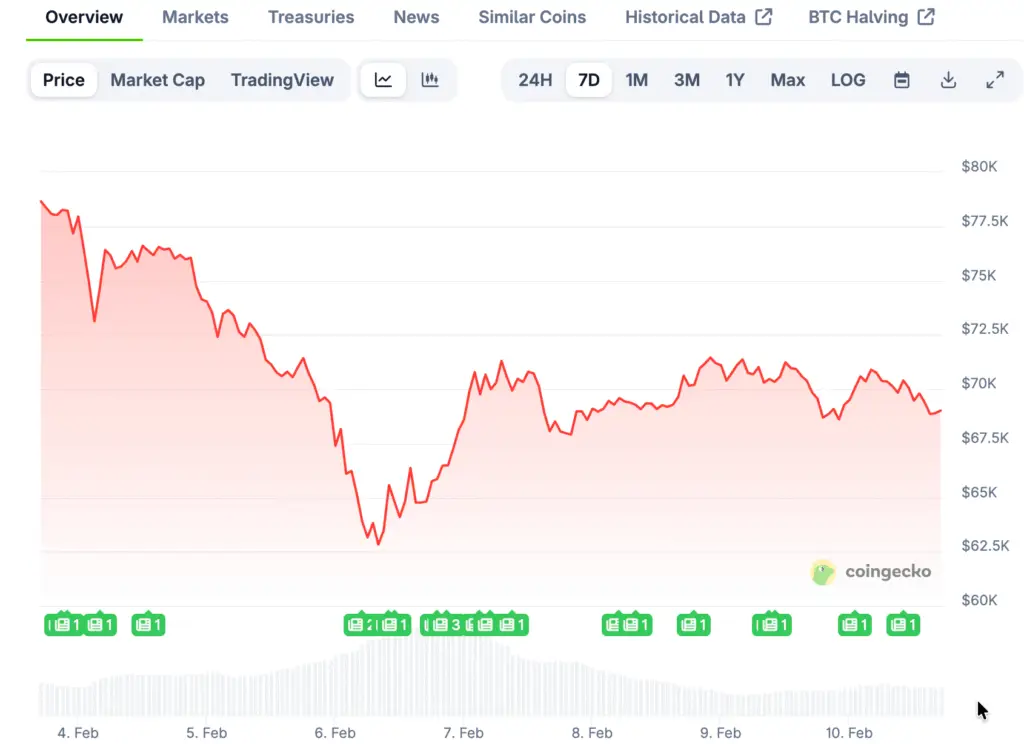
During a recent market consolidation, Fidelity’s global macro director Jurrien Timmer said that $65,000 was a good time to buy Bitcoin. He said that the level was linked to macro-driven volatility and technical support from areas that had been resistance before. Timmer said that the move shows cyclical cooling instead of structural weakness in Bitcoin’s long-term path.
Timmer said that changes in the leadership of the Federal Reserve had a big effect on currencies, bonds, and other risky assets. He thinks that Bitcoin’s current position is good for long-term investors who are willing to wait, even though it is volatile. The $65K zone is in line with support that has been seen in the past during bull market transitions.
Bitcoin Consolidation Reflects Cycle Reset Not Breakdown
Fidelity says that Bitcoin has been stabilizing since it hit a high of over $120,000 in late 2025. Even though prices have gone down recently, charts show that they are still above their long-term upward trendline. This behavior points to a reset phase rather than the beginning of a long-term bearish cycle.
Fidelity’s view sees consolidation as normal after big moves up in previous cycles. Volatility often settles down before the next directional leg comes up. In the past, these kinds of phases have rewarded investors who bought near important support levels.
Federal Reserve Politics Shape Near Term Market Volatility
After President Donald Trump chose Kevin Warsh to be the next chair of the Federal Reserve, the markets reacted strongly. Investors saw the move as a sign of stricter policy and a quicker reduction of the balance sheet. This made the dollar stronger and put pressure on inflation hedges like Bitcoin and other risky assets.
Timmer said that Bitcoin’s weakness was a macro response, not a problem with a specific asset. Expectations about monetary policy often affect how crypto prices move in the short term. Bitcoin has historically been able to handle shocks like these over longer periods of time and continue to grow in value.
Recommended Article: Bitcoin Hits 2026 Low as Risk Assets Unwind Globally
ETF And Institutional Flows Signal Continued Engagement
Even though the market was consolidating, the total amount of Bitcoin ETF and ETP flows came close to $59.6 billion, showing that institutions are still involved. Futures open interest stayed high, which means that professional market participants are still involved. These numbers go against stories of institutions leaving during the recent pullback.
Institutional flows often help keep markets stable during times of high volatility by taking on selling pressure. Fidelity thinks that these changes are good for Bitcoin’s long-term future. Consistent participation supports the idea of consolidation instead of giving up.
Gold Outpaces Bitcoin As Investors Seek Defensive Assets
Fidelity saw that gold continued to do better than Bitcoin during recent stock market drops when there was a lot of uncertainty in the economy. Since January 2024, Gold ETPs have brought in about $52.1 billion, while Bitcoin has brought in $23.5 billion. This shows a defensive capital rotation, not a rejection of digital assets.
Timmer thinks that gold will stay strong compared to other assets until flows come more in line with Bitcoin. When the economy is tightening, defensive positioning usually favors precious metals. Bitcoin has historically gained momentum again when the macro picture becomes clearer and people are willing to take risks again.
$65K Zone Aligns With Prior Cycle Resistance Levels
The $65,000 level is where previous Bitcoin market cycles had resistance zones that are now acting as support. Long-term investors often find these kinds of role reversals to be good places to buy. Fidelity’s charts show that technical support is clustering around the mid-60,000 range.
These levels tend to draw in buyers who want to get a good risk-reward ratio. Historical patterns show that similar consolidations happen before new upside expansions. Timmer sees the zone as strategic instead of opportunistic for short-term speculation.
Fidelity Sees 2026 As Consolidation Year For Bitcoin
Fidelity says that 2026 will be a year of consolidation after a possible cycle peak in October 2025. This phase lets too much leverage go away while the fundamentals keep getting stronger without anyone noticing. Historically, periods of consolidation come before the next big trend extension.
Instead of being a trading signal, Timmer sees $65K as a long-term accumulation zone. He stresses the need for patience in the face of changing asset flows and macroeconomic crosscurrents. For strategic investors, consolidation might be a chance instead of something to worry about.