


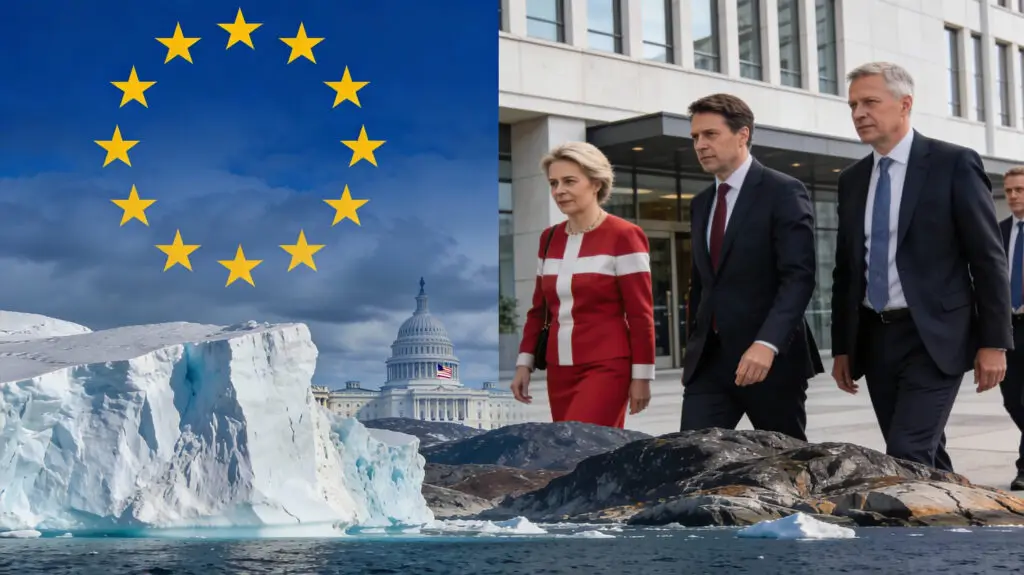
Transatlantic Crisis Erupts Over Greenland Annexation Threat
Things got worse when the US said it wanted to take over Greenland, a Danish territory that runs itself. This unprecedented action could have led to conflict between NATO allies and made relations across the Atlantic less stable. Markets and diplomats quickly saw how bad the possible geopolitical break would be.
European governments first tried to solve the crisis through diplomacy, but they did not get very far. Talking privately with officials from the US, Denmark, and Greenland did not solve important security and resource issues. The situation called for more than just normal diplomatic reassurances.
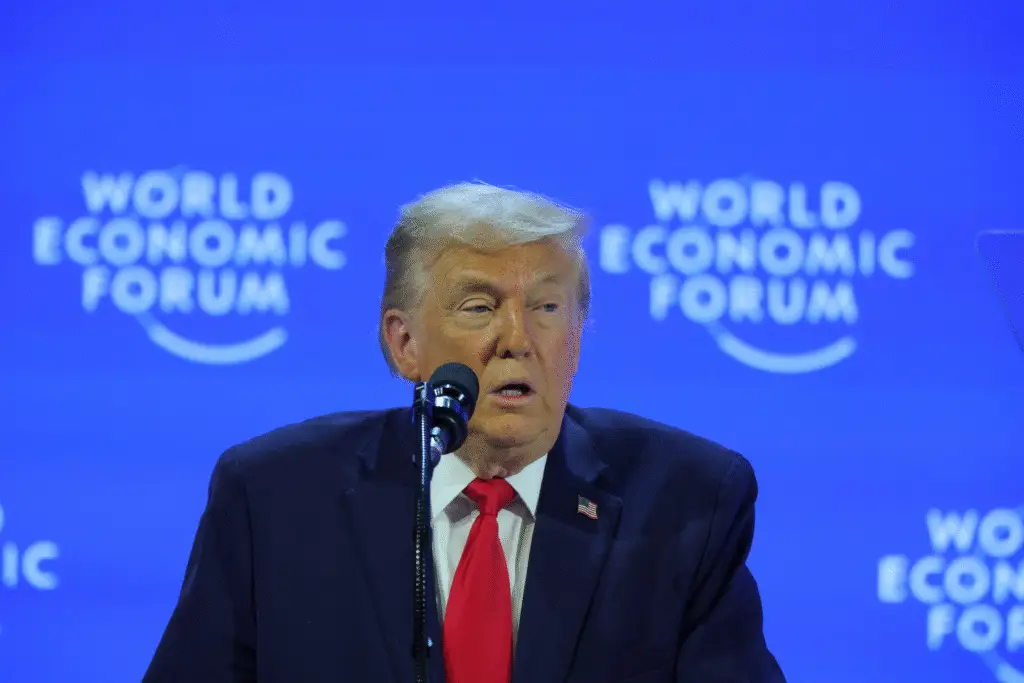
Source: Reuters/Website
EU Signals Retaliatory Economic Measures To Washington
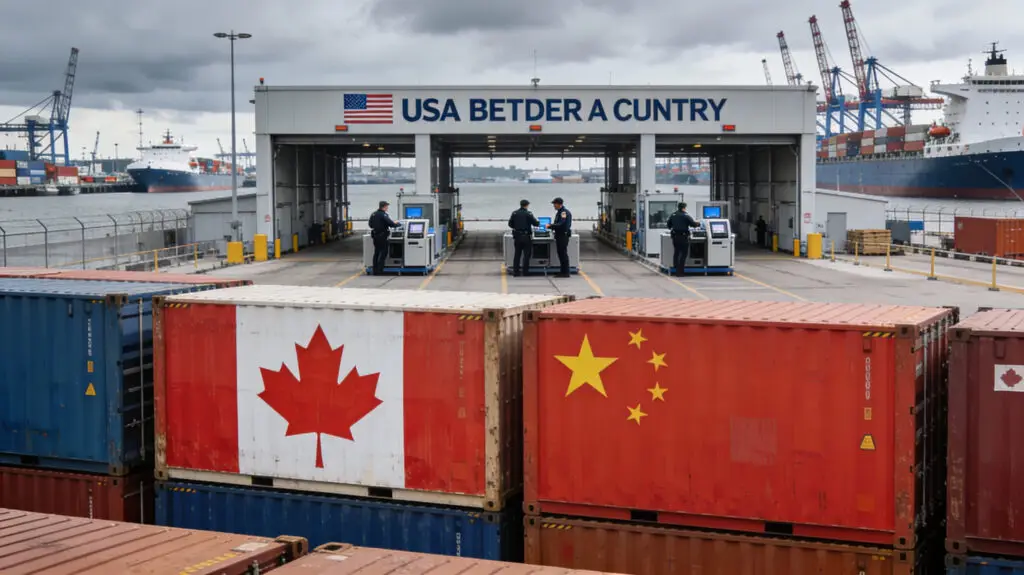
Europe changed its strategy by suggesting retaliatory trade measures worth about $93 billion. This threat was aimed directly at economic interests that are sensitive to investor and market confidence. The financial markets reacted right away, putting more pressure on the White House.
The possibility of EU retaliation alone caused more volatility than diplomatic arguments. Appeals to alliance solidarity were less convincing than economic leverage. This was a rare time when Europe was able to challenge America’s use of force.
Trump Changes His Mind Because Of Market Pressure
After talking with NATO Secretary General Mark Rutte, President Donald Trump dropped his threats to raise tariffs. The change happened because the markets were worried about what Europe might do in response to the trade war. Trump took an off-ramp that kept his political face while lowering economic risk.
The climbdown showed that even tough foreign policy stances can be limited by financial instability. Markets set limits that diplomacy alone could not. This result showed how strong economic statecraft is in modern geopolitics.
Recommended Article: Does the World Economic Forum Still Shape the Global Economy
Anti-Coercion Instrument Exposes EU Unity Gaps
Even though it worked, Europe’s response showed that member states were very divided. The EU’s anti-coercion tool lets countries take action against each other without needing everyone to agree, but it does need political will. Some governments were hesitant to use it because they were worried about how it would affect their economies.
If Trump had kept going, it would have been unclear if he could get the necessary majority. This reluctance showed how hard it was for Europe to work together on a large scale. Unity was still weak, even though everyone had the same strategic goals.
Economic Leverage Reshapes Europe-US Dependency
The Greenland incident showed that Europe could use economic tools to fight back against US pressure. This made people less likely to think that Europe was completely dependent on Washington. Security cooperation and specific economic threats were mutually beneficial.
Getting American institutions like Congress involved also helped keep the executive branch from going too far. This approach with many parts showed that Europe can have an impact on outcomes without directly confronting them. As a result, the balance of power across the Atlantic changed slightly.
Strategic Statecraft Remains EU Structural Challenge
Europe has a hard time consistently combining economic power with political strategy. Leaders frequently express lofty aspirations without providing tangible execution. Reports and plans often get stuck because national priorities are not clear.
The EU’s legalistic structure makes it harder to quickly use the economy as a weapon, unlike the US or China. But coordinated statecraft could still help Europe make a name for itself on the world stage. This necessitates a political commitment to prioritize collective benefits over national interests.
Greenland Lesson Highlights Path Forward For Europe
When it looked like Europe might retaliate economically, markets showed that it was trustworthy. Financial actors reacted more quickly and strongly than diplomats ever could. Even though politics were divided, this gave Europe back some power.
The episode suggests that strategic ambiguity can help settle internal disagreements. Europe can stop coercion by making sure that its enemies do not know what its full responses will be. Europe’s future global power may depend on how well it uses its economic tools.