




Ethereum Price Decline Signals Growing Bearish Market Sentiment
Ethereum’s price has been going down lately because it fell below important short-term technical support levels. The drop shows that traders who look at market momentum and technical indicators are becoming more bearish. People in the market are keeping a close eye on price changes to see if they stabilize or keep going down.
When prices break below short-term support zones, it usually means that buyers are losing faith in the cryptocurrency markets. Traders often see these kinds of technical breakdowns as signs that the market is going down in the short term. When support levels don’t hold, selling pressure can build up faster.
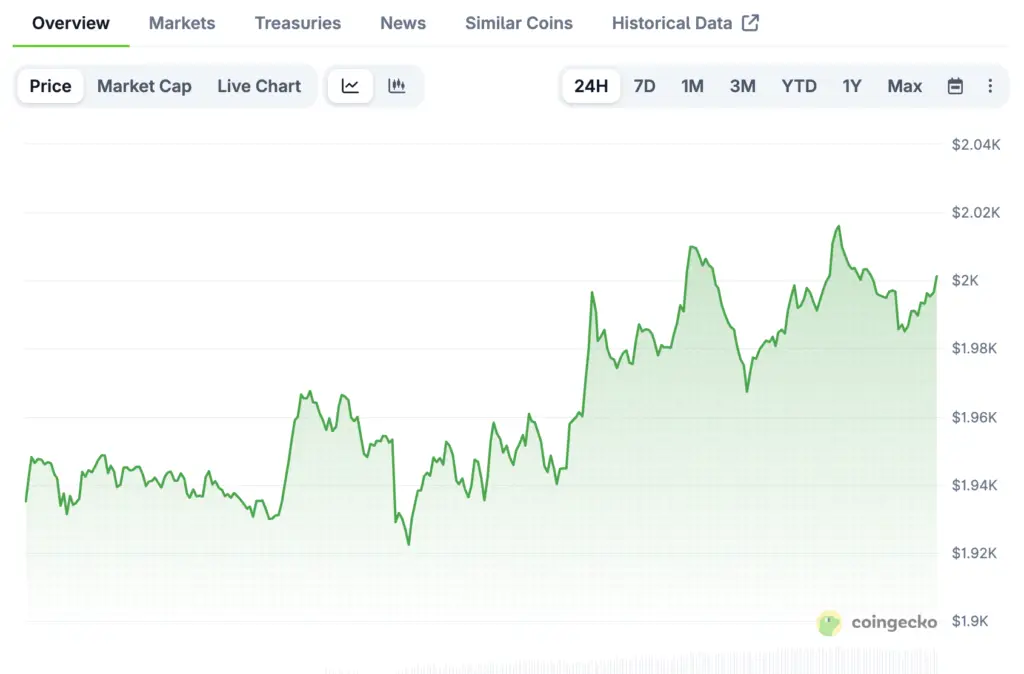
Traders Keep a Close Eye on Important Ethereum Support Zones
Several support levels are being watched by technical analysts to see which way the Ethereum market might go in the near future. Buyers may try to stabilize in the first major support zone, which is between $1,800 and $1,820. In the past, this price range drew buyers during market corrections.
Analysts say that if selling keeps going, the next support zone will be between $1,740 and $1,760. These levels are deeper areas where investors might try to build up their Ethereum positions. Market reactions in these ranges will show how people feel about the situation as a whole.
Psychological Support Level Near $1,700 Remains Important
Around the psychological support zone near $1,700 is another important technical level. Traders often pay attention to round numbers because they affect how people think about the market. If Ethereum gets close to this level, buyers might try to protect it strongly.
If the $1,700 support level isn’t held, bearish momentum could grow in all cryptocurrency markets. This kind of move might make short-term traders and leveraged investors want to sell even more. On the other hand, a lot of people wanting to buy could help keep prices stable for a short time.
Recommended Article: Ethereum Weakens Despite Strong Institutional Support
Resistance Levels Must Break for a Bullish Recovery
Support zones are still important, but traders are also keeping an eye on resistance levels that could mean a recovery. The closest resistance zone is between $1,880 and $1,900, where there was selling pressure before. Getting this area back could help bring back short-term bullish momentum.
The $2,000 level is a strong psychological barrier that goes beyond that range. A lot of traders see $2,000 as a key point that shows the market is getting better. If the price stays above this level, it will likely make investors more hopeful.
Technical Indicators Suggest Continued Bearish Momentum
Several technical indicators right now suggest that Ethereum markets will continue to be bearish. Short-term Relative Strength Index readings show that traders are losing their buying power. At the same time, MACD signals show that prices are still going down in the short term.
Technical market participants often use these indicators to help them decide when to trade. When several indicators line up, they can make people more sure that the trend will continue to go down. So, traders are still being careful until stronger bullish signals show up.
Elevated Trading Volume Reflects Strong Selling Pressure
Recent market activity also shows that Ethereum’s price drop has been accompanied by a rise in trading volume. When prices go down, higher volume often means that there is more selling pressure in the financial markets. This pattern shows that traders are feeling more bearish.
A lot of trading can mean that big investors or institutional traders are changing their positions. When prices are going down, this kind of activity often means that the market is weak for a long time. Because of this, analysts keep a close eye on volume patterns for signs that a trend is about to change.
Broader Crypto Market Weakness Weighs on Ethereum
The recent drop in Ethereum’s price is also a sign of weakness in the cryptocurrency market as a whole. Bitcoin has fallen below a few important technical levels, which is putting pressure on altcoins. Ethereum often follows Bitcoin’s lead because the prices of cryptocurrencies are still very closely linked.
Uncertainty in the global economy and politics has also made people less interested in speculative assets. When the economy is unstable, investors often move their money to safer investments. This cautious feeling is still affecting cryptocurrency markets, including Ethereum.