


CES 2026 Delivers Major Announcements From Las Vegas Show Floor
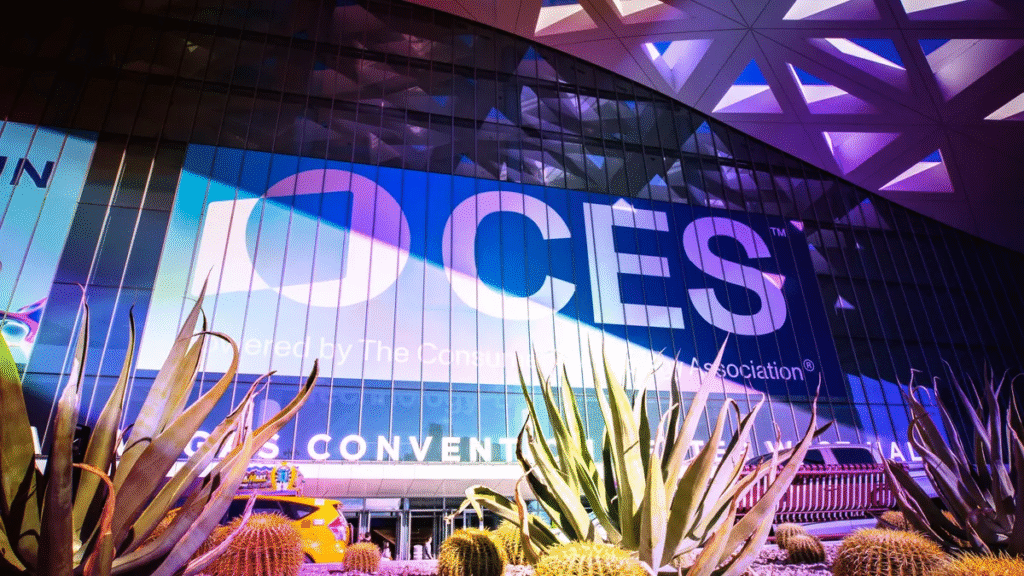
CES 2026 was a busy week in Las Vegas with lots of new products, press conferences, and surprise tech demos. The Verge team went straight to the show floors to test out gadgets and talk to executives about new devices that are coming out soon. Coverage was mostly about consumer electronics that were set to come out during the 26 global retail cycles of 2020.
Thousands of exhibitors showed off new hardware ideas, from experimental prototypes to flagship devices that are ready for production. Journalists wrote about both strange new gadgets and more common ones that improve entertainment, transportation, and connected home systems. The event confirmed CES as the most important annual product show for the tech industry.
Source: CNET
Artificial Intelligence Dominates Product Strategies Across Industries
AI was a big part of almost every major product announcement in the fields of computers, home appliances, mobility, and entertainment. Companies pushed AI assistants, adaptive interfaces, and automated systems that were meant to make daily digital experiences more personal. Executives said that artificial intelligence would be the basis for future plans to make consumer technology better.
The demonstrations focused on making decisions in real time, improving voice interaction, and making connected devices more aware of their surroundings. Many vendors showed off AI chips built right into consumer hardware to make it less dependent on the cloud. Analysts think that these integrations will speed up the use of autonomous features in all types of consumer electronics.
Lego Introduces Smart Bricks Merging Physical Toys With Electronics
Lego showed off its first smart brick platform that runs on electronics and is meant for interactive building and digital feedback. The system has built-in sensors that let the bricks respond with light and sound during coordinated play sessions. The executives said that the project was a big step toward combining physical and digital entertainment.
The company also said it would work with the Star Wars franchise to make interactive themed building environments. Kids can pretend to fight in space by connecting figures and building structures that respond to them. People who work in the industry liked how Lego combined creativity with principles of educational technology.
Recommended Article: Samsung Readies Google Gemini Smart Refrigerator for CES 2026
Robotics Evolve From Novelty to Household Practicality
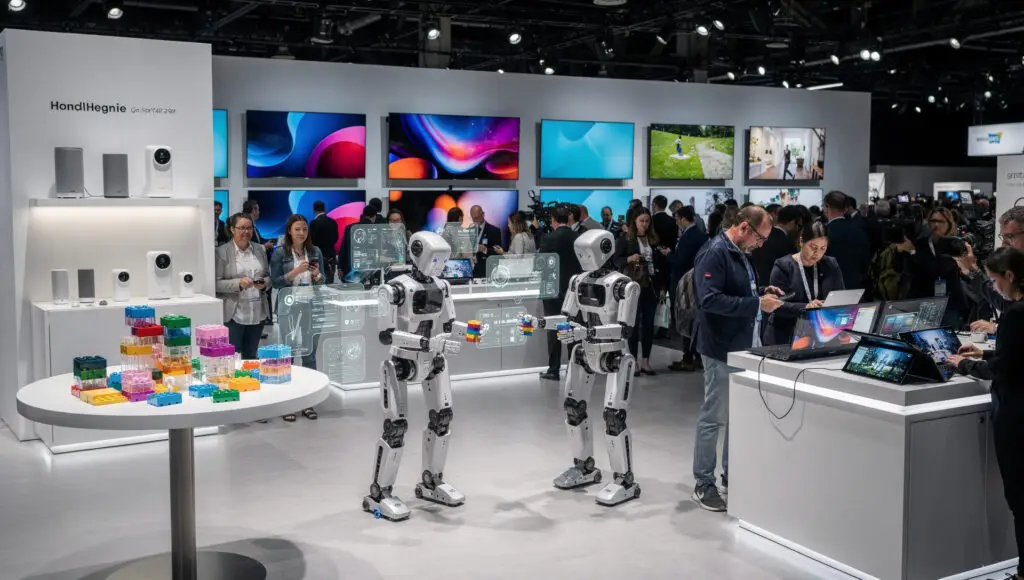
Companies that make robots showed off machines that could climb stairs, clean the house, and help with everyday tasks. Several exhibitors showed off humanoid robots that could move in sync and pick up and move things. These improvements show that robotics companies are competing more and more to get people to buy their products.
During public demonstrations, Hyundai-owned Boston Dynamics showed off its Atlas robot working in fake manufacturing settings. Engineers said that by 2028, production models would be able to help with car assembly. Experts think that service robots will become more common in homes over the next 10 years.
Display and Computing Hardware Push Unconventional Form Factors
Laptop makers came up with expanding screens that make the workspace bigger without making the laptop less portable or less battery-efficient. TV makers showed off ultra-thin TVs that blend in perfectly with the walls of living rooms. These products are meant to change the way people see and use digital content.
A number of brands also pushed solid-state battery technology, which promised big improvements in how quickly electric vehicles could be charged. Researchers said that this improvement could greatly increase driving ranges while also making things safer in the long run. Companies that make car technology kept a close eye on the news that came out during CES demonstrations.
Experimental Gadgets Attract Attention Alongside Mainstream Products
CES once again drew huge crowds with its unusual controllers, new input devices, and accessories focused on entertainment. Swedish companies made cheap Bluetooth speakers that focus on eco-friendly materials and simple sound engineering. Visitors liked how the design philosophies combined low prices with high-quality sound.
Using bone conduction technology to send sound while eating, one startup showed off lollipops that play music. People who came tried out edible electronics while listening to audio tracks that were built into them. These kinds of new ideas added to CES’s reputation for mixing useful tech with fun tech experiments.
The Verge Provides Comprehensive Live Coverage Throughout Event
The Verge published regular updates about product launches, interviews, first-hand impressions, and reactions from the industry. Readers read daily summaries of the biggest news stories in the fields of computing, robotics, cars, and entertainment technology. Journalists also looked at how this would affect consumer markets around the world.
Editors put together lists of the best inventions, strange hardware designs, and technology platforms that will shape the future. Their reporting focused on making things easy to understand for both tech fans and regular people. The publication is still one of the best places to learn about how the consumer electronics industry has changed over time.