Canada Recalibrates Trade Strategy Amid Global Economic Uncertainty
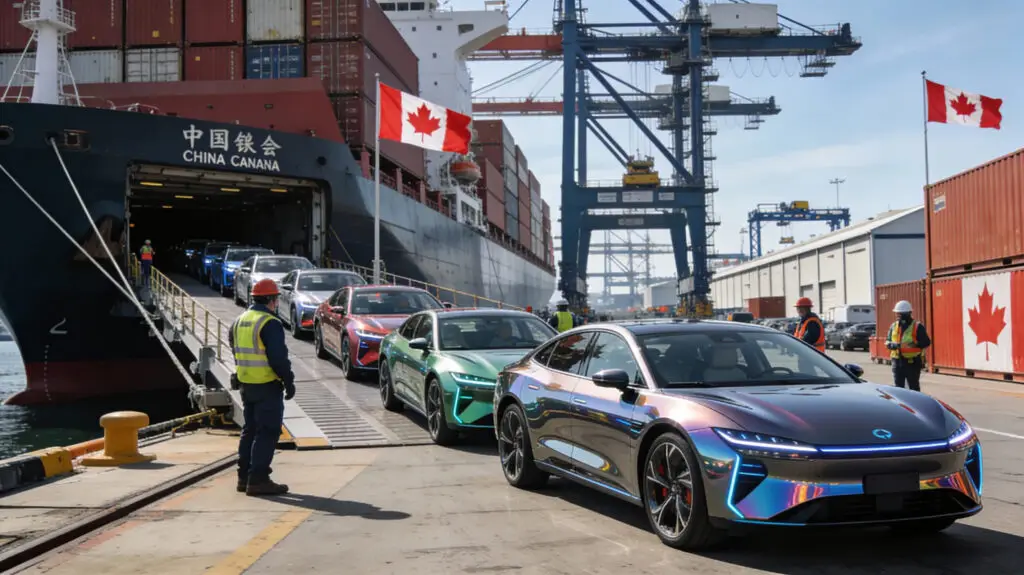
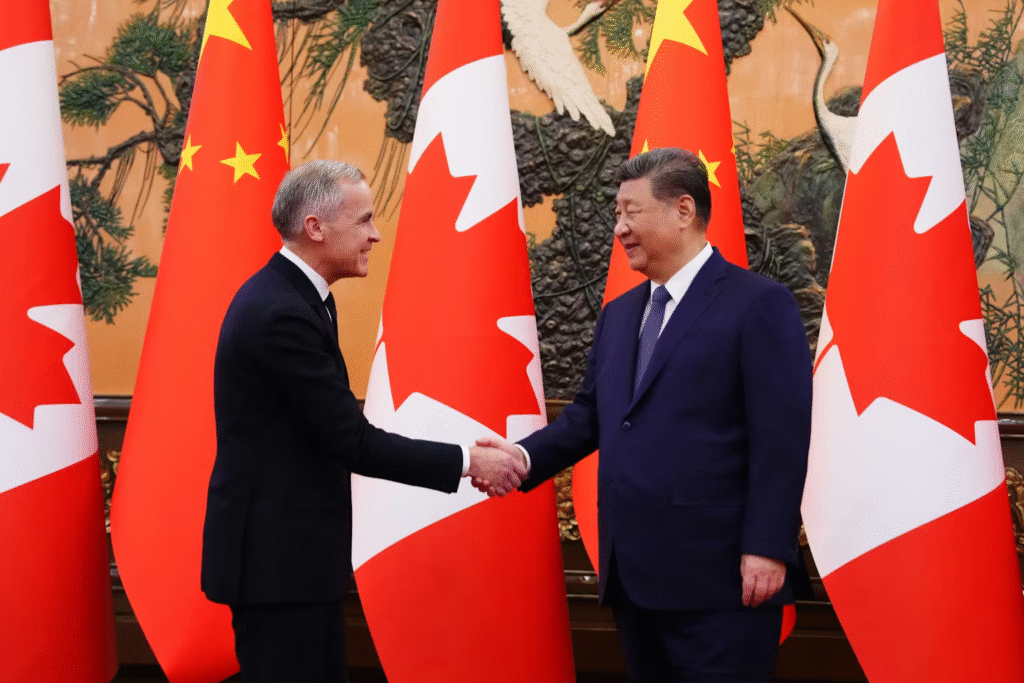
Canada lowered tariffs on electric vehicles from China, showing that it is willing to diversify its trade relationships even though trade relations with the United States are uncertain. This move shows that Ottawa knows that traditional alliances do not always guarantee stable market access or predictable economic outcomes. Policymakers say that diversification makes the country more resilient and less vulnerable to sudden policy changes from major trading partners.
The decision came about because Canada was under a lot of pressure from tariffs on metals and cars that Washington had put in place. Officials think that relying only on North American frameworks puts exporters at risk of political and economic disruptions happening over and over again. The China agreement is seen as a way to get ready for a more fragmented and competitive global trade environment.
Source: The Conversation/Website
Electric Vehicle Tariff Changes Reshape Canada China Trade Dynamics
The deal lowers Canadian tariffs on Chinese electric vehicles to 6.1% within annual quotas. Officials say the quota system protects Canadian industries while allowing controlled access to the market for cheap cars. As competition increases, Canadian consumers may benefit from lower prices and a wider range of models.
Critics say the policy could hurt domestic manufacturers who are already struggling with supply chain issues and changes in investment. Provincial leaders from regions that make cars are worried about job losses without additional support for the industry. The federal government says that safeguards and future investments will help reduce long-term risks for the industry.
Agricultural Exports Gain Relief As China Cuts Retaliatory Tariffs
China agreed to cut tariffs on Canadian canola seed, meal, seafood, and some agricultural exports by a large amount. Farmers were happy with the decision after years of financial strain caused by retaliatory duties and market closures. Agricultural regions see the deal as bringing back predictability for producers who rely on Chinese demand.
Lower tariffs are expected to stabilize incomes and encourage new planting and planning for exports this season. Industry groups say that restored access gives them more bargaining power and boosts long-term investment confidence. Rural economies expect these changes to have an impact on logistics, processing, and supporting service sectors across the country.
Recommended Article: Syrian President Visits Germany for High-Level Political Talks
Political Responses Show That Canada Is Divided By Region
Across Canada, there were clear regional differences between agricultural provinces and manufacturing focused areas. Leaders in Saskatchewan praised the deal for making life easier for farmers and reopening important export routes. However, officials in Ontario criticized the move, saying it could hurt jobs and investment in the domestic auto industry.
Federal leaders agree with the concerns but stress the importance of maintaining a balanced national economy over protecting specific industries. They say that the benefits of diversification outweigh the problems that arise in specific areas when combined with targeted adjustment programs. This debate highlights the ongoing tension between regional economic priorities in Canada’s federal system.
United States Response Reflects Evolving North American Trade Tensions
Washington’s response was mixed, which shows that there is still uncertainty in the economic relationship between Canada and the United States. Trade officials warned that the agreement could make it harder for North American supply chains to work together and be competitive. The President’s comments were more conciliatory, suggesting that allies should be able to deal with China on their own.
The event shows that the North American trade framework is becoming less predictable. Canada is still committed to keeping its current agreements, but it is also making plans for what to do if negotiations fail. Analysts see the deal with China as a way to protect Canada from future trade problems with the US.
China’s Electric Vehicles Have More Of An Impact On Global Markets
China is the world’s biggest maker of electric cars, making up about 70% of all electric cars made in the world. The deal gives Chinese manufacturers more access to another advanced consumer market. Export growth supports Beijing’s strategy to deal with domestic overcapacity by selling more goods abroad.
Chinese brands’ global credibility and technological reputation also get stronger when they enter the Canadian market. Experts say that success in Canada could lead to acceptance in other developed markets. This means that the deal has effects that go beyond just the amount of trade between the 2 countries.
Canada’s Foreign Economic Policy Will Have Long Term Effects
The deal shows that Canada is willing to engage in practical ways despite political and security concerns. Officials call the strategy selective cooperation aligned with national economic interests. This is a change from values driven trade to outcome focused economic diplomacy.
Analysts say that for Canada to keep doing well, it needs to have policies that help workers and key industries at home. Without these kinds of policies, diversification could lead to uneven economic effects across regions. The deal with China may be the first step in a bigger change in Canada’s global trade strategy.