




Bitcoin’s Price Has Dropped Below The Important 70000 Support Level
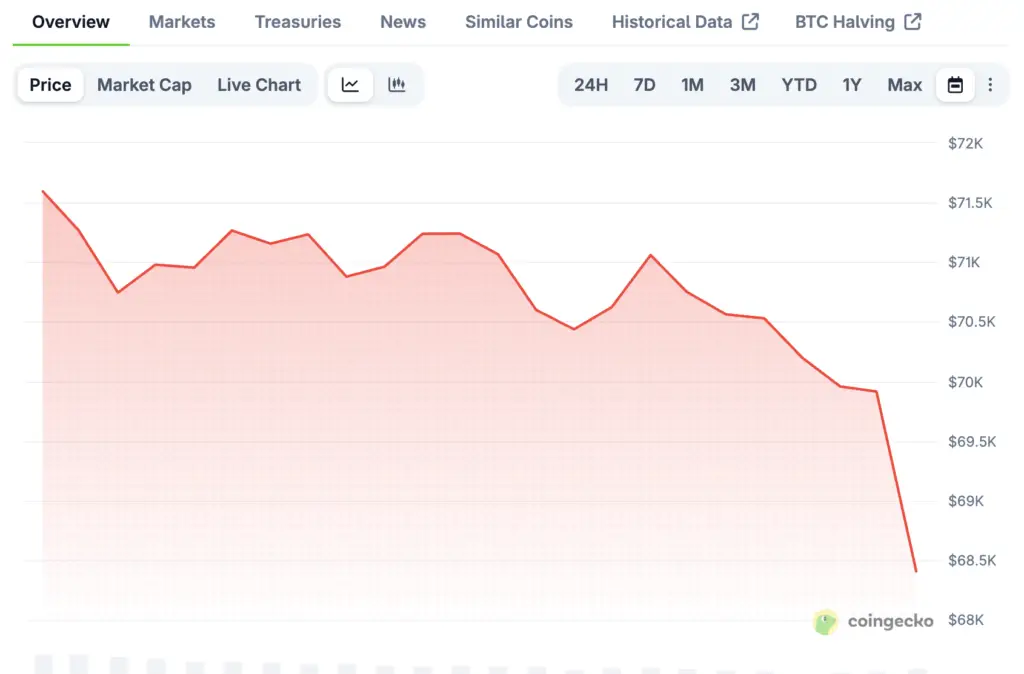
Bitcoin fell about 3.1% during Asian trading sessions, going from recent highs to levels between 70180 and 70200. The cryptocurrency had gone up above 74000 before more selling pressure came in because of uncertainty in the economy as a whole. This drop is due to short-term volatility, which happens when traders quickly respond to changes in the world that affect financial markets.
Bitcoin stayed above the 70000 level, which many traders see as a key psychological support level, even though it fell. Keeping this level means that buyers are still active and ready to protect important price areas even when the market is uncertain. Analysts think that this strength is a sign that the overall bullish trend may still be going strong.
Iran Conflict Triggers Risk Off Sentiment Globally
Bitcoin’s recent drop happened at the same time as rising tensions between the US, Israel, and Iran in the Middle East. These changes have made global markets more uncertain, which has caused investors to move toward safer assets and away from riskier ones. Because cryptocurrencies are sensitive to changes in global sentiment, they often react quickly to geopolitical instability.
When tensions rise, investors become more careful and put protecting their money ahead of taking risks. Because of this change in mood, there is more selling pressure on all digital assets, including Bitcoin and other major cryptocurrencies. People in the market are keeping a close eye on what’s going on to see how it might affect financial stability in the long term.
Oil Price Surge Adds Pressure On Risk Assets
Prices of oil have gone up a lot because people are worried about supply problems near the Strait of Hormuz, which is an important shipping route around the world. This rise in energy prices adds to worries about inflation, which can hurt risky assets like cryptocurrencies and stocks. When oil prices go up, it often makes people worry about the economy as a whole, which makes investors less confident around the world.
The link between rising oil prices and falling risk appetite shows how all the world’s financial markets are connected. When inflation expectations go up because energy costs go up, investors tend to cut back on their exposure to volatile assets. This dynamic has been a big part of Bitcoin’s recent price changes.
Recommended Article: Bitcoin Pulls Back Near $71,000 As Software Stocks Surge
Market Reacts To Inflation And Economic Uncertainty
Concerns about inflation have grown as geopolitical tensions make it harder for goods to move around the world and raise prices in many industries. These things make it hard to know what central banks will do with monetary policy in the future and how stable the global economy will be. These changing macroeconomic conditions are causing investors to change their portfolios.
People often think of Bitcoin as a way to protect against inflation, but short-term changes can still show how the market as a whole feels. Traders may sell their positions temporarily when there is more uncertainty, even though they are confident in digital assets in the long term. This causes changes that show how complicated the link is between macroeconomic trends and the performance of cryptocurrencies.
Weekly Gains Show That The Bitcoin Market Is Strong
Even though Bitcoin’s daily price has been going down lately, it is still on track to gain about 7% this week. This performance shows underlying strength, even though short-term changes in price continue to have an effect. The fact that the stock market has been able to keep going up every week shows that investors are still interested, even though there are geopolitical concerns.
People in the market see this strength as a sign that demand for Bitcoin will stay strong over time. Both institutional and retail investors are still keeping an eye on price levels for possible entry points during market dips. This behavior backs up the idea that Bitcoin is a good long-term investment.
Short-Term Volatility Meets Long-Term Trends In Momentum
The difference between daily losses and weekly gains shows how Bitcoin’s market behavior is both good and bad right now. External events cause short-term volatility, but adoption and macroeconomic factors still affect longer-term trends. This makes the environment dynamic, with prices able to change quickly within larger upward trends.
Traders are dealing with these conditions by balancing long-term investment strategies with risk management. To make sense of Bitcoin’s price movements during times of high uncertainty, you need to understand how these 2 things work together. As new events affect how investors feel, the market keeps changing.
Geopolitical Risks Still Have An Effect On Crypto Markets
In the near future, geopolitical risks like wars and trade problems will probably keep having an effect on cryptocurrency markets. These things can cause prices to change quickly because investors react to changes in the stability of the world economy. Because Bitcoin is a major digital asset, it is still very sensitive to these kinds of changes.
As things change in the Middle East, traders will keep a close eye on how it affects energy markets and the world’s financial systems. If things stay uncertain, cryptocurrencies and other risky assets may keep changing value. But trends in long-term adoption may still help Bitcoin’s overall growth.