



Bank of Canada Says It Will Stay Quiet After Big Rate Cuts
The Bank of Canada is likely to keep its overnight rate steady after lowering it from mid-2024 to late-2025. Economists say that the current level of policy is close to neutral, meaning it does not help or hurt the economy as a whole. This position lets policymakers carefully look at new data while the world is still very uncertain.
Recent messages from central banks stress the need for patience because mixed signals make it hard to make policy decisions in the short term. Officials say that employment growth is slowing down and inflation is not rising steadily, so there is no reason to tighten policy again. Because of this, markets are starting to expect stability rather than surprises from upcoming policy meetings.
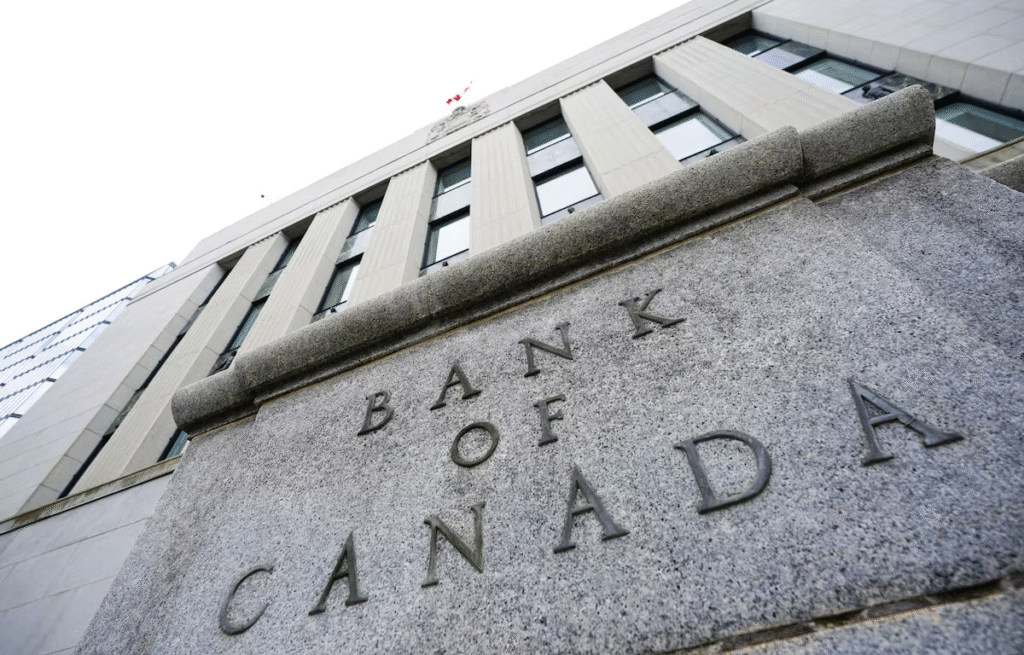
Source: The Globe and Mail/Website
Economists Expect Rates to Remain Unchanged Through 2026
A recent poll of economists shows that most of them agree that Canadian interest rates will stay the same for most of 2026. Almost three-quarters of those who answered now think that the central bank will keep its current policy. This shows that people are sure that earlier rate cuts were enough to fix the economy without causing inflation to rise again.
Expectations changed from late-2025 to now, as the risks of slower growth became more clear. Economists do not see many reasons for the economy to get better in the near future, so they think interest rates need to go up. Instead, cautious optimism supports a long pause unless there are big shocks to the economy from outside.
Central Bank Caution Grows Because of Weak Job Market
After a few months of small job gains, Canada’s job market has started to cool down. Job growth has stopped recently, and unemployment has gone up a little, which makes people worry about the stability of their household income. These changes make it less necessary to have stricter monetary policy, even though inflation worries remain.
Policymakers keep a close eye on labor trends because they have a big effect on how long inflation lasts. Current data show that there is still enough slack in the market to meet demand without causing prices to rise quickly. This balance helps keep interest rates steady while the job market gets better.
Recommended Article: Trump Remarks on NATO and War Talks Rattle Global Diplomacy
Inflation Trends Support Keeping Policy the Same
Even though inflation has been going up and down in the short term, it is still close to the middle of the central bank’s target range. Even though the headline numbers went up for a short time, core inflation measures went down. These changes point to underlying price pressures that are slowing down instead of speeding up out of control.
Economists say that long-term disinflation makes it less likely that more strict policy actions will be needed. Keeping rates stable lets inflation expectations settle down without hurting the economy’s fragile growth. This method lowers the chances of overtightening during times of recovery when things are still up in the air.
Trade Uncertainty Looms Over Canada’s Economic Outlook
Trade tensions are still a big risk from outside Canada that will affect the country’s economy in 2026. Export-dependent industries are worried about upcoming reviews of major trade agreements. Economists say that new tariffs could make people less likely to invest and slow down growth in general.
Even though there are risks, Canada’s economy has stayed fairly strong despite trade barriers. Many experts think that negotiations will keep market access open instead of causing widespread problems. Policymakers are still being careful because of possible bad outcomes that could happen because of changes in the world.
Growth Expected to Recover Gradually Over Medium Term
After a sharp slowdown in recent quarters, economic growth is expected to slowly pick up again. Predictions say that output growth will be close to 2% by the end of 2026. This improvement is due to the delayed effects of earlier rate cuts that helped demand.
Analysts say that changes in interest rates have a big effect on Canada’s economy. Previous easing measures are likely to boost spending and investment throughout the forecast period. These changes make people more sure that a patient monetary policy is the right way to go.
Future Policy Moves More Likely Cuts Than Hikes
Most economists think that future changes to policy will likely involve lowering rates rather than raising them. Persistent slack in the labor market and uncertain global conditions make tightening scenarios less likely. So, central bankers put flexibility first in case things go wrong.
If trade problems get worse or growth slows down even more, more easing may be needed. To make tightening measures necessary, inflation would have to keep going up. Until then, stability is still the main thing that guides policy forecasts.