A Real-World Analysis of Amazon’s STEM Talent Strategy
Written by a workforce development and education policy analyst specializing in technology labor markets and corporate training pipelines, this analysis examines how early STEM initiatives are shaping future talent supply in the United States.
Nearly 1,000 students gaining hands-on exposure to technology is not just an education story—it reflects a long-term workforce strategy.
In our analysis of U.S. tech ecosystems, early-stage talent development programs like this are increasingly linked to infrastructure expansion and labor force planning.

Source: Ohio Tech News
What Is Amazon’s Think Big Experience?
The program is designed to introduce students to real-world applications of emerging technologies through immersive learning.
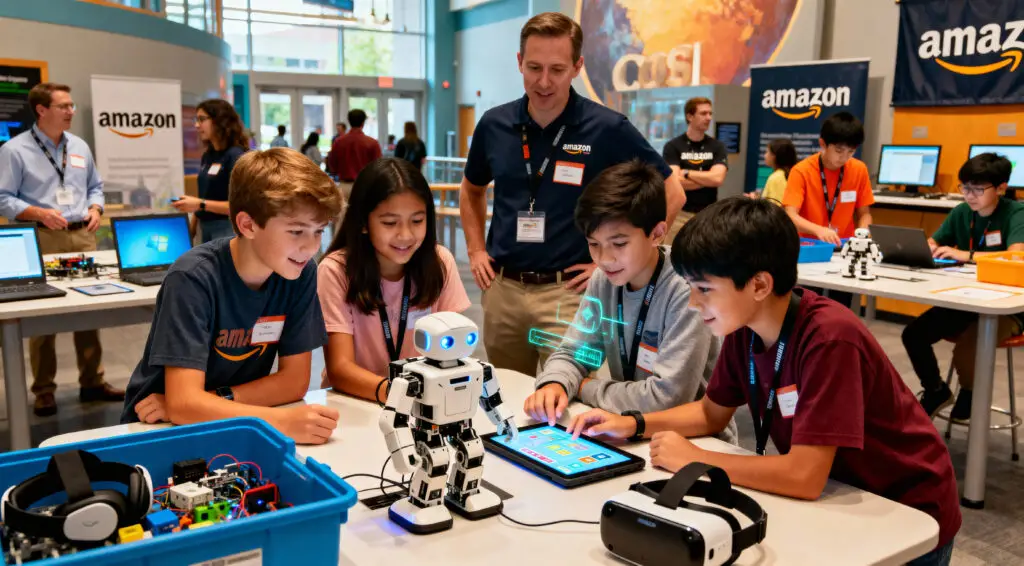
Amazon hosted its Think Big Experience in Columbus, providing middle school students with direct exposure to innovation pathways.
Core activities included:
- Building AI-powered robotics systems
- Exploring virtual reality applications
- Engaging with professionals in technology careers
This approach prioritizes experiential learning over traditional classroom instruction, helping students connect theory with real-world applications.
Why Is Amazon Investing in Early STEM Education?
This initiative aligns with broader workforce development objectives within the technology sector.
When evaluating the program, we observed that companies are increasingly investing in education to address long-term talent shortages.
Key objectives include:
- Strengthening future hiring pipelines for technical roles
- Increasing diversity and inclusion within the tech workforce
- Aligning educational outcomes with evolving industry requirements
This reflects a proactive strategy to mitigate future labor constraints.
How Does This Support Ohio’s Growing Tech Ecosystem?
Central Ohio is emerging as a regional technology hub, supported by infrastructure investments and corporate expansion.
In our analysis, programs like this are critical in sustaining ecosystem growth by ensuring a steady pipeline of skilled workers.
Key regional benefits include:
- Increased retention of locally trained talent
- Stronger alignment between educational institutions and industry needs
- Enhanced attractiveness for future technology investments
These initiatives help convert regional growth into long-term economic sustainability.
Amazon Think Big Experience Program Impact Overview
| Category | Outcome | Long-Term Impact |
|---|---|---|
| Student Reach | ~1,000 participants | Expanded talent pipeline |
| Skill Exposure | AI, VR, robotics | Future-ready workforce |
| Diversity Focus | Engagement with women | Inclusive industry growth |
| Community Impact | Local partnerships | Stronger ecosystem ties |
Why Is Female Representation a Key Focus?
The program places a specific emphasis on encouraging young women to explore careers in technology.
In our evaluation, this aligns with broader industry efforts to address persistent gender gaps in STEM fields.
Key considerations include:
- Women remain underrepresented in technical and engineering roles
- Early exposure significantly increases long-term participation rates
- Mentorship improves confidence, retention, and career progression
Targeted outreach is essential to achieving balanced workforce development.
How Do Local Partnerships Strengthen the Program?
Collaboration with local institutions is central to the program’s effectiveness and scalability.
Organizations such as Center of Science and Industry and regional school districts played key roles in implementation.
Partnership advantages include:
- Tailored programming aligned with community needs
- Increased accessibility for students across different backgrounds
- Stronger integration with existing education systems
This localized approach ensures relevance and impact rather than a standardized model.
Why This Reflects a Broader US Workforce Trend
Corporate-led education initiatives are becoming more prevalent across the United States.
In our analysis, private sector involvement is expanding into areas traditionally managed by public institutions, particularly in fast-evolving industries like technology.
Key trends include:
- Increased corporate participation in education and training pipelines
- Focus on practical, skills-based learning over theoretical instruction
- Alignment between corporate investment and regional economic development
This signals a structural shift toward industry-driven workforce development.
What Are the Long-Term Implications for the Tech Industry?
Programs like Think Big serve as early indicators of future labor market dynamics within the technology sector.
In our evaluation, sustained investment in youth education could significantly reduce talent shortages and enhance innovation capacity.
Potential outcomes include:
- A larger pool of job-ready graduates entering the workforce
- Reduced hiring gaps in high-demand technical roles
- Stronger regional competitiveness in the global technology landscape
However, long-term impact depends on program consistency, scalability, and continued industry engagement.
Final Assessment Talent Development as Strategic Investment
Amazon’s Think Big Experience represents more than community outreach—it is a strategic investment in workforce development.
From an economic and labor market perspective, early engagement with students helps shape the future supply of skilled professionals.
The key takeaway is clear:
Technology companies are no longer relying solely on hiring talent—they are actively building it, starting at the earliest stages of education.
This analysis is provided for informational purposes only and does not constitute educational or career advice.