



AI Grows Beyond Rich Economies
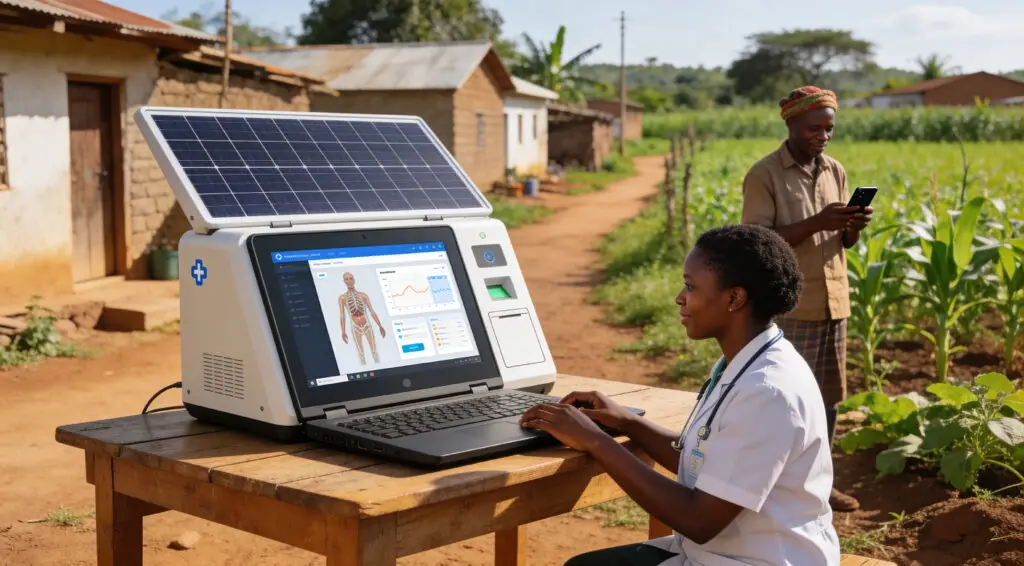
Artificial intelligence is no longer only available in rich countries. Innovators in the Global South are using new technologies to solve big problems in healthcare, farming, and industrial productivity. These apps are changing communities and making it easier for everyone to grow.
In the past, advanced tools were mostly found in rich countries because of gaps in infrastructure and investment. But as costs go down and technical skills improve, developing countries are able to create localized solutions that meet the needs of their people.

Source: UN News/Website
Workplace Injuries Highlight Urgent Need for Solutions
In many rural areas, machines that cut fodder are still important for farming, but they are also very dangerous. These machines have caused serious injuries, including amputations, to workers in India, Pakistan, and Kenya, among other places.
After these kinds of accidents, things can change for the rest of your life. People who are hurt often can’t do simple things like cooking, sewing clothes, or harvesting crops. This makes it hard for them to stay financially independent and socially active.
AI-Powered Prosthetics Help People Move Again
Most workers who needed advanced prosthetic devices couldn’t afford them until recently. That is starting to change as locally made AI tools make prosthetics that work well more affordable and available.
Bioniks Technologies, which is based in Karachi, worked with UN Women to make prosthetic limbs just for women who work in Pakistan’s Sindh province. The project made lightweight and strong bionic arms that could restore mobility by using digital scanning, 3D modeling, and AI-assisted customization.
Recommended Article: Google And Microsoft Pay Creators Big To Push AI Tools
Technology Gives Back Freedom and Money
The project was not only about helping people get better physically, but also about helping them get their jobs back. Participants got training, mental health support, and community awareness sessions to help them learn how to be safer and avoid getting hurt again.
For a lot of women, being able to go back to embroidery and other skilled work was a big change. The program showed that new technology isn’t just about making things faster; it can also give people back their dignity, confidence, and job opportunities.
Democratizing AI Becomes a Global Priority
These kinds of efforts are part of a larger international push to make sure that AI helps all societies instead of making inequality worse. As AI adoption speeds up around the world, the United Nations has stressed how important it is to develop it in a way that is fair and ethical.
People are starting to think that closing the technology gap is important for long-term growth. Without taking action on purpose, developing economies could fall even further behind in productivity, education, and innovation during what many call a new industrial revolution.
India AI Impact Summit Shows Progress
The India AI Impact Summit, which will take place in New Delhi in mid-February, will likely focus on projects that are helping developing countries use AI more widely. Several UN agencies plan to show off projects that show how new technologies can help solve problems in the real world.
The event is one of the first big AI events in the Global South. It builds on earlier global talks and shifts the focus to areas that want to use technology to promote inclusive development.
Bridging the Growing Gap in AI
UN Special Envoy for New and Digital Technologies Amandeep Gill has warned about the risks of having too much technological power in one place. He says that in the past, people who were slow to adopt new technologies were left behind by decades. The world must not let this happen again.
It’s good to see that governments in Southeast Asia, Africa, and India are already putting policies in place to help researchers and startups get access to AI. These kinds of policies are meant to create innovation ecosystems that can compete on a global scale.
Governance and Collaboration Shape the Future
The United Nations doesn’t officially run the AI Impact Summit, but it is an important step toward better international control of AI. More and more, policymakers are realizing that working together is necessary to make sure that responsible deployment happens.
The growing use of AI in the Global South shows a big change: innovation is no longer just driven by rich countries. Artificial intelligence has the power to change lives, boost economies, and open up opportunities for millions of people around the world if it is made available and used wisely.