



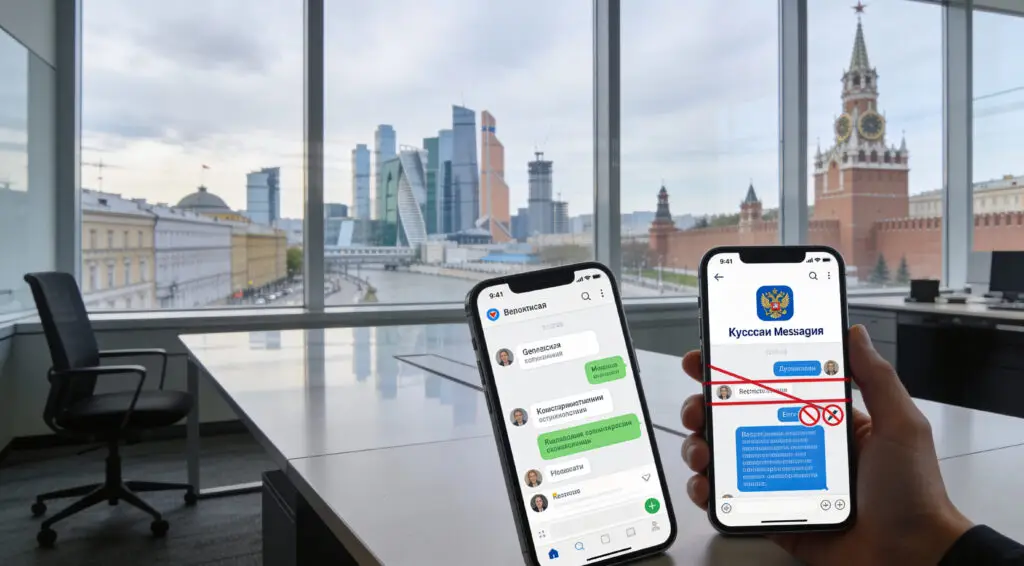
Russia Moves to Block WhatsApp Nationwide
The Russian government has officially blocked the messaging app WhatsApp, saying it didn’t follow the rules in Russia. Dmitry Peskov, a spokesman for the Kremlin, made the announcement and said that the decision was necessary to enforce national rules. At the same time, officials told people to use a state-backed platform instead.
The ban is one of the most important digital restrictions that have been put in place since the fighting in Ukraine got worse. People who watch say that the measure is part of a larger effort to change the way information works in Russia. Messaging apps are becoming more and more important in geopolitical debates.
Source: Themorning.lk
State-Backed MAX Positioned as Replacement
Authorities are actively promoting MAX, a messaging platform supported by the government that aims to connect communication with digital public services. Officials say it is a multifunctional ecosystem that can handle payments, administrative tasks, and everyday messaging needs. The plan is to bring all digital interactions together on infrastructure that is controlled by the government.
Supporters say that localized platforms give countries more control over their own affairs by making them less dependent on foreign technology providers. Critics, on the other hand, wonder if these kinds of systems put ease of use ahead of protecting users’ privacy. The level of public trust may affect how many people adopt.
Privacy Concerns Surround Data Access
Experts in technology say that MAX doesn’t have the end-to-end encryption that is common on global messaging platforms like WhatsApp. Without this extra layer of security, authorities could theoretically get access to messages if they asked for them. Privacy advocates are worried about the possibility of more surveillance.
The platform is honest about the fact that it may have to share user data with the government if the law requires it. This kind of openness has made the debate over digital rights even more heated in online spaces that are becoming more regulated. Now, security architecture shapes how people think.
Recommended Article: EU Warns Meta Over WhatsApp AI Competition Block
Rights groups speak out against more digital controls
Human rights groups have spoken out against the ban, saying it is another step toward making it harder to get information in Russia. Advocacy groups say that limits on communication tools often stop people from speaking out and make it harder for people to have their own conversations. Amnesty called the policy “digital repression.”
Campaigners say that using public safety as an excuse often hides bigger political goals, like keeping an eye on communications. Critics also say that censorship could hurt people’s rights over time. International observers are still keeping a close eye on what happens.
Restrictions Extend Beyond Messaging Platforms
The ban on WhatsApp comes after calls through foreign-owned platforms like Telegram were already limited because of disagreements over data-sharing rules. Authorities accused these services of resisting cooperation in fraud and terrorism investigations. Regulators and tech companies have been getting more and more angry with each other.
Russia has already blocked big social networks like Twitter, Facebook, and Instagram, and it has also made it harder to use video sites. There have been more restrictions lately on Apple’s FaceTime service. The pattern shows that the regulatory path will continue.
Users Turn to VPNs Amid Connectivity Challenges
Since late December, a lot of Russians have been using virtual private networks (VPNs) to keep using WhatsApp. When governments limit digital channels, VPN use often goes up because it lets people get around geographic blocks. These kinds of workarounds show that people still want to be able to communicate freely.
However, using circumvention tools can be risky from a technical standpoint and could have legal consequences, depending on how strict the rules are. Uncertainty about connectivity could make both personal and professional interactions more difficult. Digital resilience is becoming more and more important.
Global Debate Intensifies Over Online Freedom
A WhatsApp spokesperson said that cutting off secure communication for more than 100 million people could make things less safe in the long run. Secure messaging often keeps journalists, activists, and regular people safe from unwanted access. Limiting these kinds of tools has effects around the world.
Russia’s decision shows how hard it is to balance security and civil liberties as governments around the world rethink digital sovereignty. The changing world suggests that communication platforms will continue to be important to geopolitical strategy. Policies in the future may change what people around the world expect from internet freedom.