



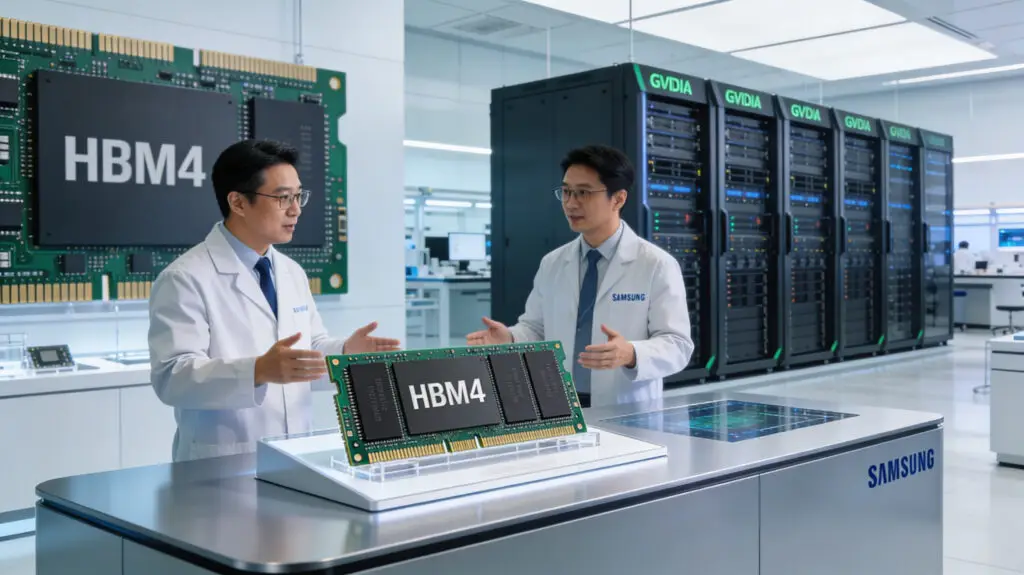
Samsung Takes the Lead in Memory with HBM4 Launch
Samsung Electronics is getting ready to start making a lot of its 6th-generation high-bandwidth memory. This is a big step forward in the development of semiconductors. Nvidia has already certified the HBM4 chips, which means they are ready to be used in advanced AI hardware. People in the industry see the development as proof that Samsung is serious about being the leader in next-generation memory technologies.
High-bandwidth memory is very important for speeding up the transfer of data between processors and storage devices in high-performance computing systems. Faster memory helps avoid bottlenecks that can slow down AI model training and inference. As workloads grow, manufacturers are putting more and more emphasis on memory breakthroughs along with processor improvements.
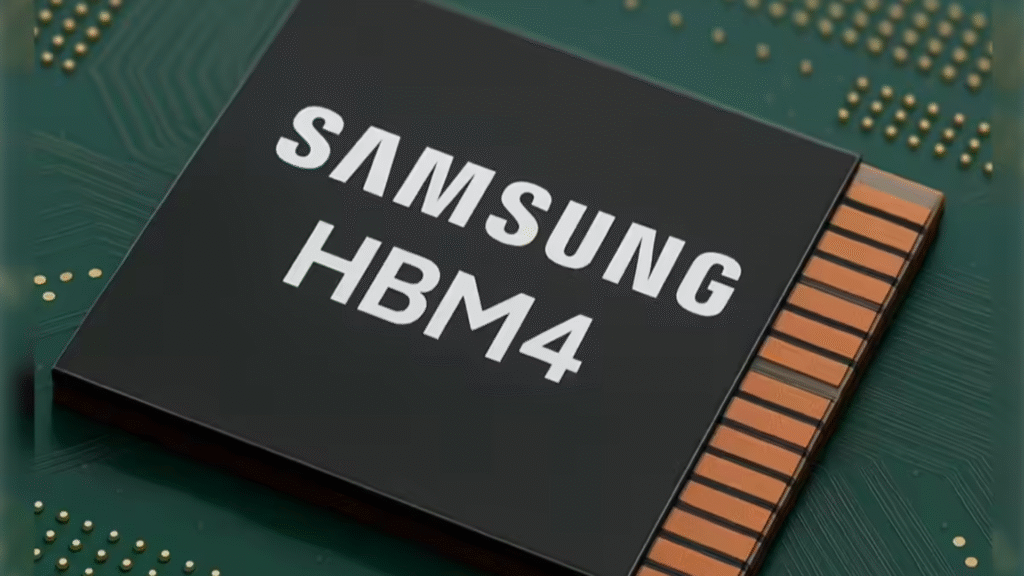
Source: TechRadar/Website
Production Fits With Nvidia’s AI Accelerator Schedule
Reports say that Samsung carefully planned its production to match Nvidia’s upcoming AI accelerator platform, which is known internally as Vera Rubin. Shipments should arrive soon after the Lunar New Year, making sure there is enough supply as customers get ready to set up new computers. Early coordination shows how closely semiconductor ecosystems often need to work together.
This kind of alignment cuts down on delays that could mess up product launches in the fast-changing AI infrastructure market. When planning multibillion-dollar data center investments, technology companies need to know that parts will be available when they need them. So, strategic timing makes both operational efficiency and business confidence stronger.
HBM4 Technology Promises AI to Work Faster
HBM4 is a big step up from the current HBM3E generation. It has better bandwidth and energy efficiency, which are both important for doing complex calculations. These changes make it possible to process large datasets that are often used in generative AI applications more quickly. With better throughput, more complex algorithms can run at the same time.
Engineers made the memory to meet the growing need for real-time analytics and environments for machine learning with a lot of capacity. Efficient memory architecture can greatly speed up the training of large neural networks. As a result, new technologies like HBM4 are setting higher standards for competitive performance.
Recommended Article: SK Hynix Overtakes Samsung as AI Memory Drives Profit Shift
Growing AI Demand Drives Semiconductor Innovation
The rise in the use of artificial intelligence has put more pressure on chipmakers to make parts that can handle workloads that have never been seen before. As models use more resources, data centers need hardware that strikes a balance between speed, scalability, and energy use. Memory technologies are now at the heart of this change.
Businesses in many fields are spending a lot of money on AI infrastructure to boost productivity and make automation possible. This wave of investment is changing the priorities of semiconductor companies, making them focus on specialized architectures that are best for parallel processing. Suppliers who can meet these needs stand to see a lot of long-term growth.
Certification Signals Readiness For High Performance Platforms
The chips have passed Nvidia’s strict quality certification, which shows that they meet the high standards for reliability and compatibility that business customers need. Before components can enter mission-critical computing environments, they often need to go through this kind of validation. It also gives buyers who are looking at hardware for big projects peace of mind.
Most of the time, certification processes include a lot of stress testing under very heavy loads to make sure the product is durable. Successful completion means that the memory can handle continuous operation in AI clusters that are very busy. This credibility makes Samsung look better to hyperscale clients.
Competition Grows Stronger in the Global Memory Market
Samsung’s progress comes at a time when other companies, like SK Hynix, are fighting hard to take over the high-bandwidth memory market. Being the leader in this market can affect how much power you have over prices and how long you can work with big tech companies. As the demand for AI grows, the stakes keep getting higher.
Analysts say that performance metrics and the ability to scale up production are becoming more and more important for differentiation. Companies that can quickly ramp up production may be able to get strategic contracts before their slower competitors. The contest shows how important semiconductor supply chains are on a larger scale, both politically and economically.
Samsung’s AI Era Position Is Stronger After This Move
Reports say that Samsung has increased the number of tests it does on customers’ sides, which shows that it is confident about starting full-scale manufacturing. Increasing sample distribution lets partners check that their own modules work with each other before they go live. This proactive approach lowers the risks of integration.
Samsung puts itself at the center of the AI hardware revolution by making big investments in advanced memory. Now, semiconductor leadership depends on supporting the computational backbone that powers smart systems all over the world. If adoption picks up speed as expected, HBM4 could become a key part of the next generation of computing infrastructure.