




Bitcoin’s Sharp Drop Wipes Out Post-Election Gains
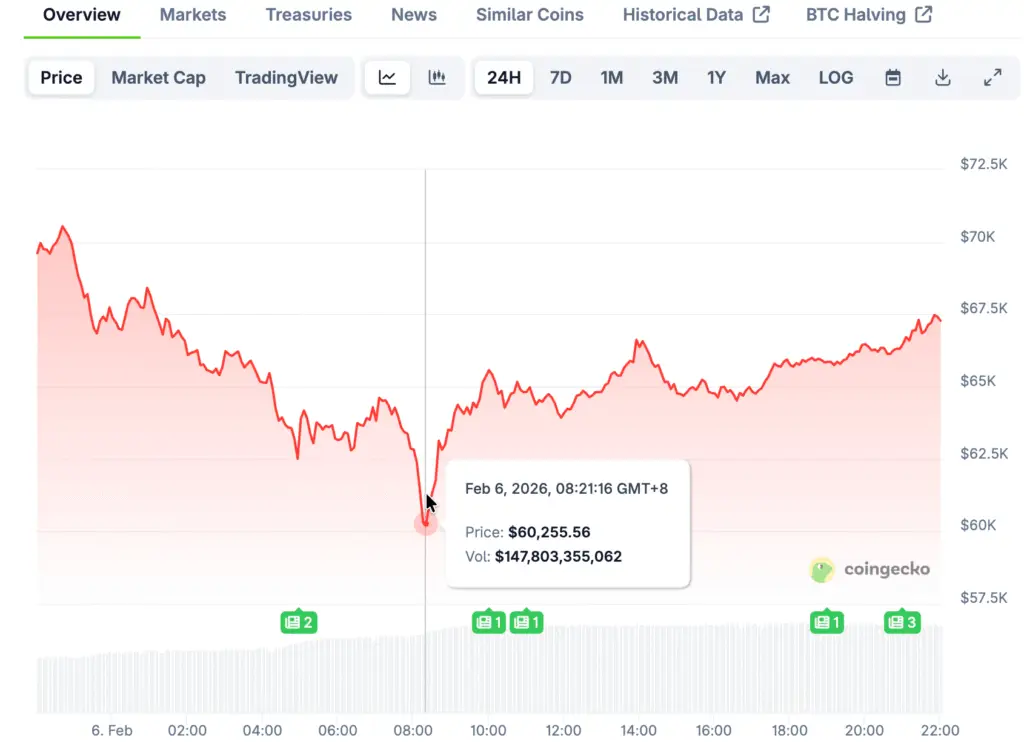
Bitcoin dropped to around $60,000 after another wave of liquidations wiped out almost 30% of its value in a month. The drop has now brought Bitcoin down to almost 50% of its peak value.
A lot of the lost value came from gains made after Donald Trump’s election, when his public support helped fuel speculation. Analysts now say that the political tailwind caused a boom-and-bust cycle instead of lasting stability.
Bloomberg Analyst Warns of a Trump-Fueled Boom Bust
Mike McGlone, a strategist at Bloomberg Intelligence, says that the crypto markets got too hot after Trump took office again. He says that hope based on policy expectations hid bigger structural risks.
McGlone said that the change was very clear: “crypto markets got Trumped.” He thought that political momentum sped up speculative excess instead of strengthening long-term fundamentals.
Heavy Selling Pressure from Macroeconomic Stress
The selloff got worse when weak U.S. labor data showed that job losses in January were at their highest level since 2009. Major stock market indexes fell by more than 1% in response to the news.
Investors have cut back on their exposure to risky assets like cryptocurrencies because the economy is becoming less stable. Once again, Bitcoin’s sensitivity to risk-off conditions has been shown.
Recommended Article: Bitcoin Hits 2026 Low as Risk Assets Unwind Globally
Competition Makes Bitcoin’s Scarcity Story Less Strong
Bitcoin is no longer just competing with gold and other traditional assets. It also has to compete with millions of other cryptocurrencies that have come out in the last 10 years.
McGlone says that the rise of so many digital assets makes people think that Bitcoin is less rare. The fact that memecoins are worth billions of dollars shows how money is spread out in the crypto world.
Federal Reserve Uncertainty Weighs on Crypto
Markets are worried about Trump’s choice of Kevin Warsh as the next chair of the Federal Reserve. People see Warsh as a policy hawk who is likely to put controlling inflation ahead of growth.
Tighter monetary expectations make it harder for money to flow in financial markets. Historically, less liquidity puts pressure on speculative assets like Bitcoin and other cryptocurrencies.
The 4-Year Bitcoin Cycle Comes Back
Another reason for the drop is Bitcoin’s 4-year halving cycle, according to analysts. As we’ve seen in the past, rallies that happen after a halving are often followed by long corrections.
People who have held on to their stocks for a long time are selling them because they are worried that history is repeating itself. This release of supply has put more pressure on prices to go down.
Long-Term Outlook Still Split
Even though things don’t look good in the short term, some analysts are still optimistic about the future of crypto. They say that more activity on the blockchain, the use of stablecoins, and the building of infrastructure are all positive trends.
Others say that Bitcoin’s search for a stable bottom will continue to cause price swings. For now, the market seems stuck between fear of the big picture and long-term belief.