


Manufacturing Takes Center Stage in India’s Growth Strategy
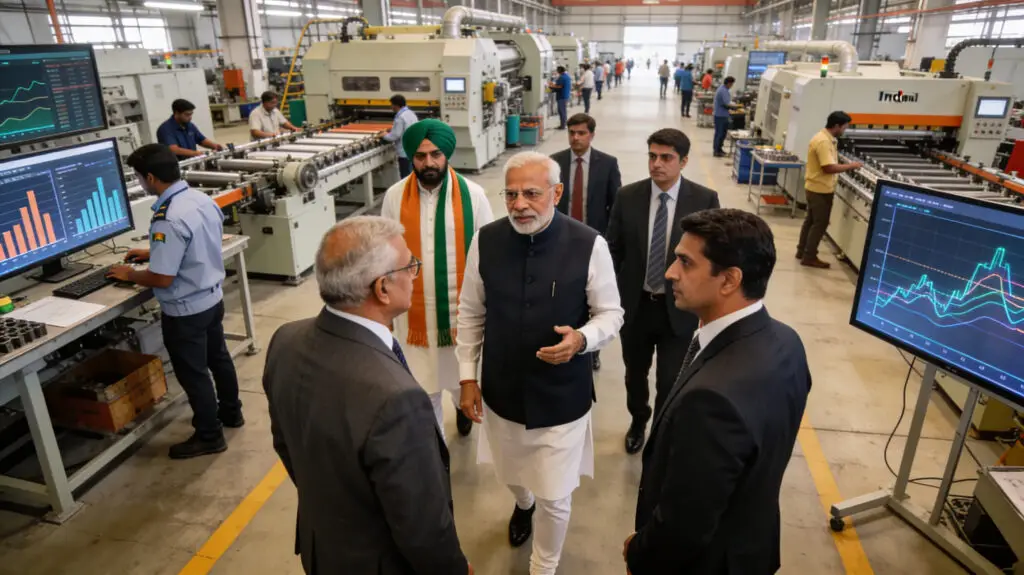
The most recent budget for India puts manufacturing at the center of efforts to keep the country’s growth going. The government thinks that industrial growth is important to provide jobs for the millions of people who enter the workforce each year. This focus shows how important it is to rebalance the economy in the face of global uncertainty.
Despite having big goals, manufacturing only makes up less than 1/5 of the country’s output right now. Over time, policymakers want to raise its share to 25%. This would make jobs, exports, and the resilience of the domestic supply stronger.
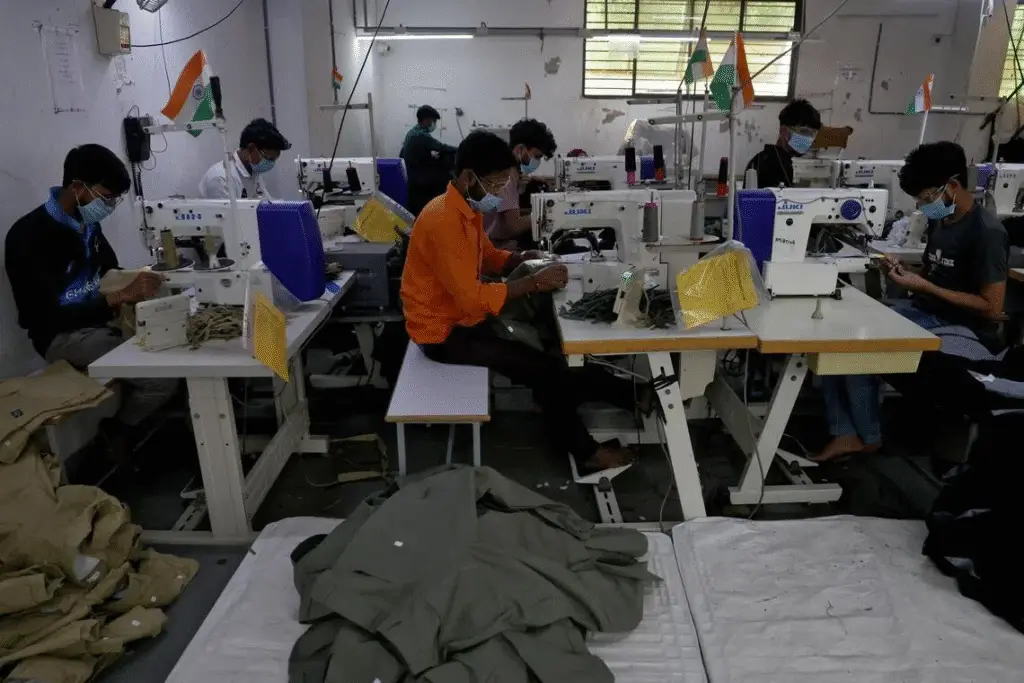
Source: The Straits Times/Website
Budget Prioritizes Structural Reforms and Investment Push
Nirmala Sitharaman, the finance minister, stressed the need for structural reforms that would help the strength of the industry and the financial sector. The budget lays out plans to make it easier to invest and more efficient to allocate capital. The goal of these changes is to make both domestic and foreign investors more confident.
In addition to reforms, spending priorities include cutting-edge technologies like AI. Investing in technology is seen as a way to boost productivity and competitiveness. The method connects the size of manufacturing with growth paths that are driven by new ideas.
Seven Important Areas for Industrial Growth
The budget names 7 areas where manufacturing should grow quickly across the country. These include chemicals, semiconductors, rare earth magnets, pharmaceuticals, and capital goods. Textiles and sports goods are also important parts of the strategy.
Focusing on certain sectors makes it possible to give targeted incentives and infrastructure support. Authorities expect that clustering will have benefits and that the supply chain will become more complex. The goal of this sectoral push is to create manufacturing ecosystems that can compete on a global scale.
Recommended Article: Trump Warns UK Against China Ties Amid Shifting Global Alliances
Fiscal Discipline Balances Growth Ambitions
India expects its economy to grow by about 7% this fiscal year. Inflation is expected to stay around 2%, which will help keep the economy stable. The government made it clear that they were committed to balancing growth with fiscal responsibility.
Under the new framework, debt to GDP is expected to go down a little. Debt ratios are now a key part of fiscal policy. This change aims to gain credibility while still allowing for growth goals that are based on investments.
Borrowing and Infrastructure Spending Support Demand
The government plans to borrow a lot of money from bond markets to pay for its top priorities. Next year, gross borrowing is expected to be ₹17.2 trillion. These funds help pay for investments in infrastructure and industry.
The amount spent on infrastructure will go up to ₹12.2 trillion. This kind of investment supports improvements in logistics, energy, and connectivity across the country. Officials see infrastructure as essential for making manufacturing more competitive and creating demand.
Financial Sector Reforms Aim to Unlock Capital
A high-level group will look over the rules that govern India’s financial sector. The review looks at non-bank finance companies and frameworks for managing foreign investments. The goal of these changes is to make it easier for a growing economy to get capital.
The budget also talked about ways to make the corporate bond markets bigger. There was a lot of talk about total return swaps and incentives for municipal bonds. These tools open up more ways to get money than just borrowing from a bank.
Markets React Cautiously Amid Global Trade Pressures
After the budget announcement, the stock markets reacted carefully. As investors thought about the effects of policy, India’s benchmark index fell. After changes to the derivative tax, capital market stocks fell more sharply.
Prime Minister Narendra Modi said that reforms are the next generation of solutions for long-term growth. India is still looking for trade partners to help it deal with the risks of high tariffs from other countries. The budget makes it clear that we need to balance our domestic needs with the realities of the global economy.