


A Compact Sonar Built for Modern Subsea Operations
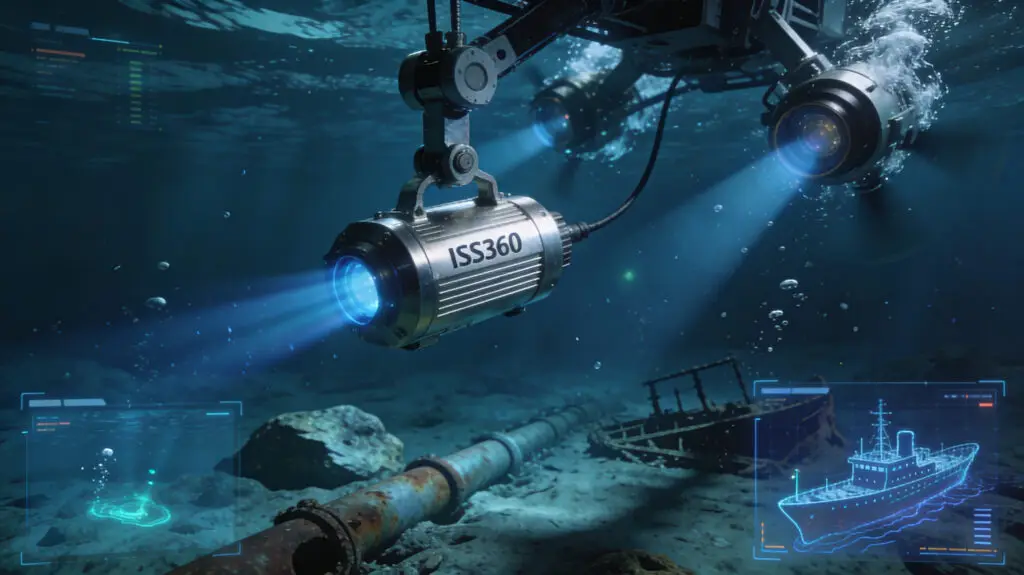
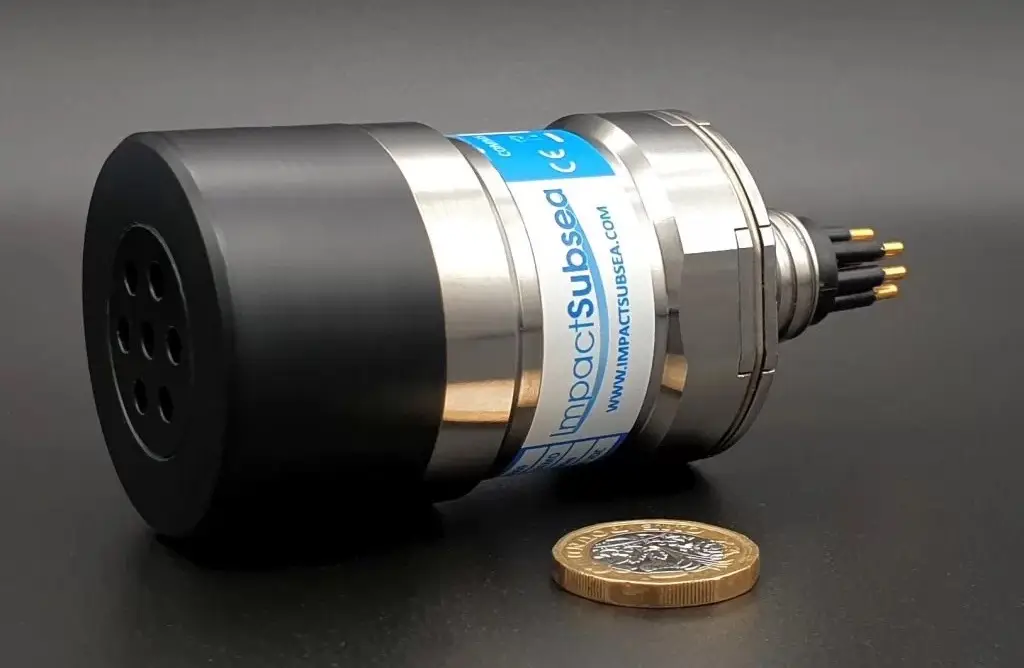
Impact Subsea, a leader in subsea sensor technology, has kept improving its ISS360 Imaging Sonar range to keep up with the growing needs of underwater navigation and inspection. The ISS360 has established itself as a modern alternative to older scanning sonar systems since its launch in 2020. It is small, very reliable, and provides better imaging for ROV and AUV operations.
The ISS360 is a better and more efficient version of older systems that were hard to use and had a lot of moving parts. It helps with navigation, avoiding obstacles, and finding targets. Because of its small size and ability to take pictures, it can be used for both commercial and scientific missions under the sea in tough conditions.
Source: Ocean Science & Technology/Website
Five Years of Progress in Technology
The ISS360, which came out in March 2020, was the world’s smallest scanning imaging sonar. It was made to give underwater vehicles a big boost in performance. It changed from a small scanning solution to a high-definition imaging platform over time, without losing size or dependability.
Impact Subsea followed a planned development path. They added inductive coupling to get rid of slip rings, increased depth ratings to 6,000 meters with titanium housing, and later added high-definition resolution that lets operators see targets clearly even when visibility is 0.
High-Definition Imaging and Signal Innovation
The ISS360HD was a big step forward for sonar because it could measure angles with 1 degree of accuracy and ranges with millimeter-level accuracy. This progress made it easier to recognize targets and better understand the situation in places where optical systems don’t work.
The Impact Subsea Signalling Scheme was the next big thing. It used CHIRP technology and phase shift modulation to cut down on interference between sonars that are close to each other. This development was especially useful for complicated missions that involved more than 1 vehicle or subsea sites with a lot of instruments.
Recommended Article: Samsung and Pearson Unveil AI Wearable for Focus and Attention
Open-Source Integration and System Flexibility
Impact Subsea has put a lot of emphasis on giving users more power by making a free, open-source Software Development Kit available on GitHub. This SDK works with any operating system and lets developers add the ISS360 directly to their own control software. This lets them create custom interfaces and advanced autonomy functions.
The ISS360 supports direct software integration, which is in line with the growing need for flexible, software-based subsea systems. This method has made the sonar especially appealing to AUV makers who want more control over navigation, avoiding obstacles, and planning missions.
A Practical Upgrade for Legacy Sonar Systems
For operators who used to use compact scanning sonar lines that are no longer available, the ISS360 is a clear upgrade. It was designed to outperform older models in terms of image quality, reliability, and ease of integration, while still being compatible with newer subsea platforms.
Impact Subsea offers professional service to keep seals intact, calibrate sensors accurately, and make sure sensors are always reliable. This is so that sensors can be used for a long time. This makes sure that the sonar works the same way every time it is used.
Real-World Missions Have Shown That It Works
The ISS360 has shown that it works well in tough subsea situations, such as recovering high-value equipment in almost no visibility and being used in autonomous scientific platforms. Its use on systems like WHOI’s REMUS AUVs shows how important it is for advanced mission autonomy and obstacle avoidance.
Other uses include precise inspections of reservoirs, monitoring cable touchdowns, and surveying infrastructure in rough offshore conditions. These real-world uses show that the sonar is reliable and can be used for commercial, scientific, and industrial purposes.
Ongoing Growth and Future Prospects
Impact Subsea is still putting money into the long-term growth of the ISS360 and ISP360 sonar range. This shows that they believe compact imaging sonar is a key technology for underwater work. Ongoing refinement focuses on performance, flexibility in integration, and resilience in operations.
More improvements to the ISS360 lineup are expected later in 2026, which will help it stay ahead of the curve as a solution for underwater systems that are becoming more autonomous and data-driven.