SunRISE Mission Is Almost Ready to Launch After Hard Qualification Tests
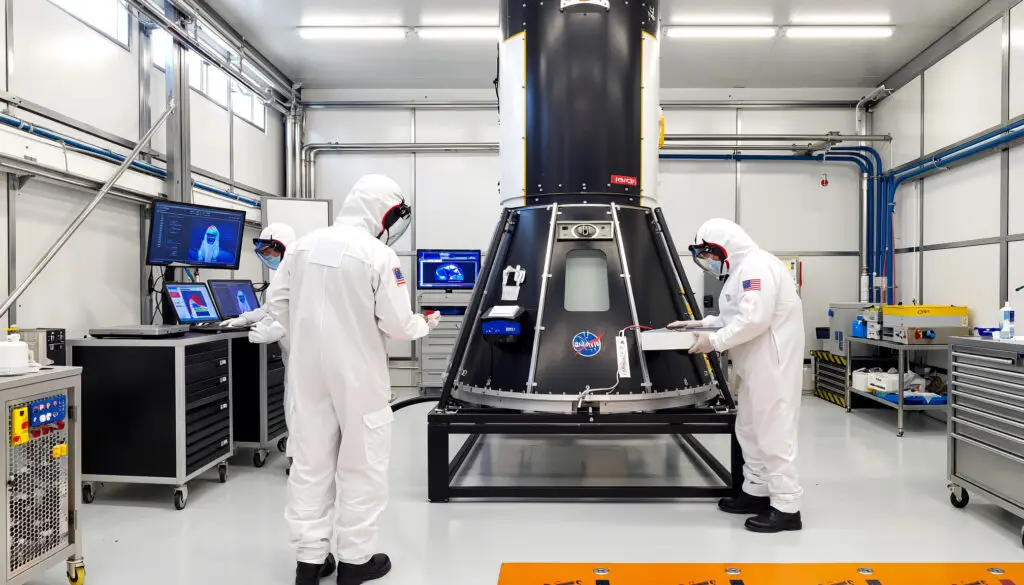
NASA’s SunRISE mission did a lot of environmental tests to make sure the spacecraft was ready for launch and operations in space. These tests made sure that each satellite could handle the stresses of launch while still making accurate scientific measurements.
Passing qualification tests is a big step toward being able to use the system later this year. Engineers checked that mission systems could work and last in simulated space environments.
Source: NASA Science/Website
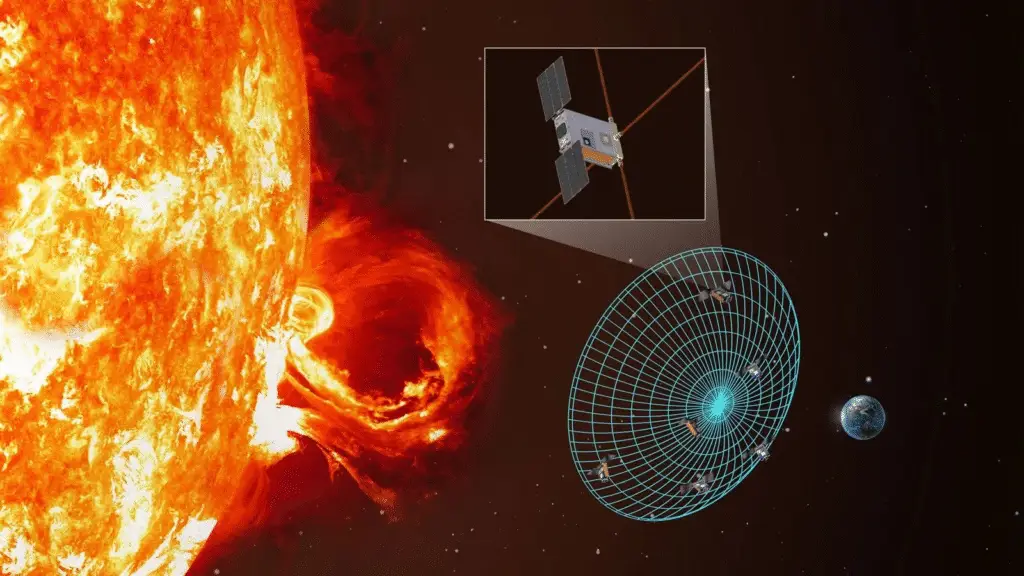
6 Small Satellites Will Act As 1 Giant Radio Telescope
Once they are in space, the 6 small satellites that make up SunRISE will work together as a single radio interferometer. This shape makes it possible to find solar radio bursts that come from deep inside the Sun’s corona.
By putting signals together, scientists can make maps of solar magnetic activity with a level of detail that has never been seen before. These observations enhance comprehension of energetic solar particle phenomena.
Vibration Tests Simulated Extreme Launch Conditions Accurately
Engineers put each spacecraft through vibration tests that were based on the specific launch vehicle and payload configuration for the mission. When fully loaded to launch mass, each satellite was tested on 3 axes.
Functional checks before and after the test showed that there was no drop in performance. All 6 spacecraft passed without any problems, which showed that the mechanical integrity was good.
Recommended Article: NASA Selects Tech Proposals to Advance Search for Life Mission
Thermal And Electromagnetic Testing Ensured Instrument Reliability
Thermal vacuum tests imitated the very high and very low temperatures and vacuum conditions that satellites experience in space. These tests showed that systems work well even after being in space for a long time.
Testing for electromagnetic compatibility made sure that the electronics on board don’t mess with sensitive scientific instruments. This keeps the data safe during mission operations.
Mission Will Fly as a Rideshare on the Vulcan Centaur Rocket
As part of a rideshare mission, SunRISE will launch from Cape Canaveral on a Vulcan Centaur rocket. The Space Systems Command of the United States Space Force is paying for the launch.
After being put into space, the satellites will go a little above geosynchronous orbit. This height allows for stable formation flying and constant solar observation.
Interferometry Makes It Possible to Map Advanced Solar Radio Bursts
When put into service, each satellite will have 4 antenna booms that make an X shape. The formation will cover distances of up to 16 kilometers.
Using interferometry, scientists will combine observations to make 1 virtual radio telescope. This makes it possible to accurately follow solar radio emissions through space.
SunRISE Complements Existing NASA Heliophysics Missions
The SunRISE mission will improve data from other NASA heliophysics spacecraft that are watching how the sun behaves. These datasets work together to make it easier to predict space weather.
Better weather forecasts help keep astronauts, satellites, and buildings on Earth safe. SunRISE gives us important information about how solar storms spread through the solar system.