ADB Returns To Davos With Renewed Regional Focus
ADB President Masato Kanda made it clear that the bank was back in Davos after 6 years with a clear regional agenda. He said that Asia Pacific economies are choosing to work together instead of breaking up because of rising geopolitical uncertainty. His message made it clear that ASEAN integration was key to long-term stability and shared wealth.
Kanda said that policy choices, not unavoidable structural forces, are what cause the world to become fragmented. He said that more Asian governments see cooperation as necessary to keep economic growth on track. This approach positions ASEAN as a counterweight to widening divisions in the global economy.
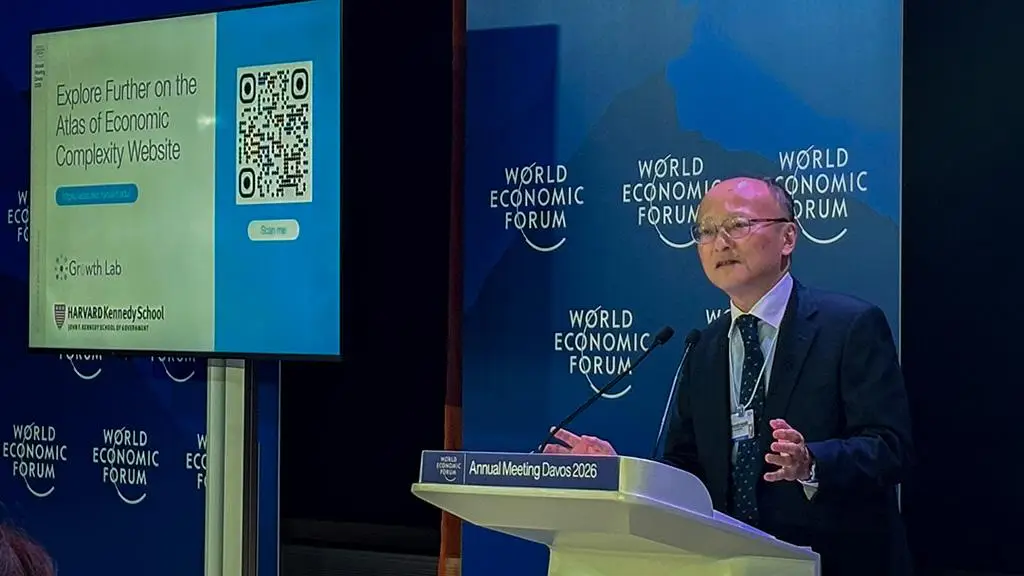
Source: Asian Development Bank/Website
Private Capital Seen As Critical To Development Goals
Kanda stressed that public funding alone cannot meet the development and infrastructure needs of the Asia Pacific region. He said governments, development banks, and private investors must work together more closely. The objective is to turn viable ideas into projects that can be financed and scaled.
ADB aims to improve alignment between policy frameworks and institutional capital deployment. Kanda highlighted the importance of clear rules on risk mitigation and project preparation. These conditions are essential for attracting long-term private sector investment.
High Level Advisory Group Targets Investment Bottlenecks
During the Davos meetings, ADB launched a High Level Private Sector Advisory Group. The group will help shape strategies to channel institutional capital into priority sectors. Its mandate is to address market barriers rather than outline broad aspirational goals.
Advisors will recommend concrete actions to support digital transformation, sustainable growth, and economic resilience. The initiative reflects ADB’s shift toward results-oriented private sector engagement. Its goal is to accelerate capital flows into emerging market projects.
Recommended Article: Does the World Economic Forum Still Shape the Global Economy
ASEAN Growth Tied To Energy And Digital Infrastructure
Kanda joined discussions assessing whether ASEAN’s growth trajectory is sufficient. He emphasized that digital infrastructure and energy security must be developed in parallel. These issues are interconnected and directly influence productivity and regional integration.
ADB reaffirmed its support for the ASEAN Power Grid initiative. Kanda said the bank could commit up to $10 billion over the next 10 years. The investment would strengthen cross-border energy connectivity and resilience.
Diplomatic Meetings Reinforce Multilateral Engagement
During the forum, Kanda held meetings with several heads of state and finance officials. Discussions focused on regional cooperation, economic resilience, and investment alignment. Leaders from Sri Lanka, Canada, Mongolia, Thailand, and Pakistan were among those engaged.
These interactions reinforce ADB’s role as a trusted multilateral partner. Kanda positioned the bank as a bridge between national priorities and regional solutions. The meetings helped align views on shared economic challenges.
Private Sector Dialogue Highlights Digital Platforms
Kanda engaged with private sector leaders on deeper collaboration opportunities. He met with Grab CEO Anthony Tan to discuss digital platforms as economic infrastructure. These platforms support livelihoods, urban mobility, and food supply chain resilience.
He also spoke with Rich Lesser, Global Chair of the Boston Consulting Group. Their discussion centered on geopolitical risks and evolving investment dynamics. These insights inform ADB’s strategic engagement with private sector partners.
Research Partnerships Support Long Term Regional Capacity
Kanda met with academic leaders to emphasize the importance of research in innovation and policy alignment. These engagements strengthen links between development finance and global knowledge networks. Scholars from Asia, Europe, Africa, and North America participated.
ADB views research collaboration as essential to evidence-based decision-making. These partnerships support sustainable digital infrastructure and climate resilience. The approach connects financial instruments with long-term regional capacity building.