



Israel Recognition Of Somaliland Marks Major Horn Of Africa Shift Now
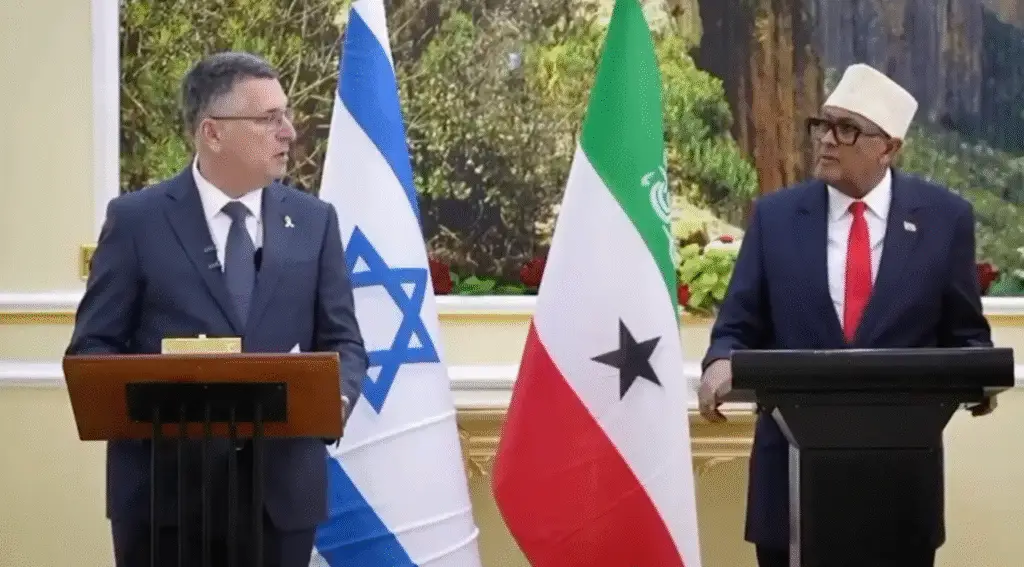
Israel said it would recognize Somaliland in order to build partnerships in the region that go beyond the usual state to state diplomatic channels. Somalia and other African and Middle Eastern governments quickly condemned the decision. Officials said the move was a strategic response to the growing isolation in the region after the Gaza conflict.
Recognition shows that Israel is moving toward working with nontraditional partners who can help them diplomatically and geographically abroad. Netanyahu publicly praised the intelligence leadership, which shows that security concerns played a big role in the decision making process for the diplomatic announcement. Analysts say that similar outreach efforts have happened before, but they were done quietly with regional authorities and not through formal recognition systems.
Source: Responsible Statecraft
Proximity To Yemen Houthis Drives Israeli Security Calculations Heavily
Somaliland is directly across the Gulf of Aden from Houthi controlled territory in Yemen. The Houthis said that any Israeli military presence would be seen as a legitimate military target right away. During Foreign Minister Gideon Saar’s visit, he talked about security cooperation in public at the strategic port of Berbera.
Israeli experts say that missile threats in the southern Red Sea need infrastructure for forward monitoring and quick response. Recognition lets Somaliland authorities share intelligence, plan logistics, and maybe even coordinate naval operations, and this is happening more and more often. Experts think that geographic access makes it easier for surveillance drones and maritime security assets to get to where they need to go.
Berbera Port Offers Israel Strategic Access To Vital Shipping Routes
Berbera is close to the Bab al Mandeb chokepoint, which connects trade routes between the Red Sea and the Indian Ocean. During different times in history when the world was changing politically, the port used to have facilities for the Soviet Union, the United States, and the United Arab Emirates. Israel sees access to infrastructure as a way to improve its maritime surveillance logistics and deterrence capabilities in the region.
The Institute for National Security Studies said that Somaliland could be a good place to gather intelligence against the Houthis. Facilities could help keep an eye on arms smuggling routes and work well with Yemen’s government forces in the area. Such a presence would greatly change the balance of security in the Red Sea corridor over the next few years.
Recommended Article: French Government Survives No-Confidence Votes Over Mercosur
Israel Security Doctrine Adapts Toward Unconventional Alliance Building
Israel had to completely rethink its traditional deterrence models because of problems with Iran, Hezbollah, and Houthis. Military reports say that long range strikes alone did not work well enough to stop the Houthis from being able to do things in the region. Think tanks say that cyber operations and regional partnerships should be based on integrated intelligence right away.
Somaliland gives a chance to test this new doctrine in real world regional security situations abroad. Officials privately admit that the diplomatic risks are outweighed by the urgent operational benefits that are currently seen at home and abroad. Israeli strategists think that working with unusual partners is the best way to protect fragile maritime areas from Iranian proxies spreading their influence.
Somaliland Seeks Recognition Amid Pressure From Somalia And Isolation
Recently, Somaliland lost land and saw more restrictions from the federal government of Somalia, which had a big impact on politics at home. Airspace controls, visa restrictions, and port rules all put a lot of stress on the economy and government across the country. During the current time of instability, leaders said that recognition is not an optional diplomatic goal but a basic need.
The government sent letters to almost all world leaders asking for open access to recognition agreements. Only Israel agreed, which sped up diplomatic talks and talks about public safety during the negotiations phase. Officials think that the alliance will keep Somali pressure at bay while slowly drawing Western political interest over the next few years.
Regional Backlash Grows As Somalia And Arab States Condemn Recognition
Somalia said that recognizing it would violate its sovereignty and weaken its territorial integrity, which is a principle of international law that is accepted around the world. Members of the African Union are worried that this will set a bad example for separatist movements across the continent, which could lead to more instability. Arab governments spoke out against Israeli expansion, and the Houthi leadership made direct military threats in public many times after that.
The United States did not officially support the move, but it also did not condemn Israel during Security Council debates. Washington says its policy toward Somalia has not changed, even though tensions are rising in the region over the decision to recognize Somaliland internationally. Analysts say that the backlash can be handled because both Israel and Somaliland are already diplomatically isolated around the world.
Future Of Israel Somaliland Partnership Remains Uncertain Yet Vital
Both governments will keep carefully weighing the risks to security and the possible diplomatic opportunities over the next few months. According to the schedule, the embassy will open during the visit of the president of Somaliland to Israel later this year. Foreign ministers said they were committed to improving relations through long term frameworks for economic security and political cooperation between the two countries.
Somalia is calling for new talks and warning that recognizing the country without talking could seriously undermine efforts to stabilize the region. Think tanks warn that militarization could lead to more violence in trade routes across the Red Sea, which would be bad for business. In the end, the course of the relationship depends on how conflicts play out, how long diplomats can last, and how the world reacts over time.