


NASA Launches Bold Vision to Find Habitable Worlds
NASA has revealed some industry proposals to help move the Habitable Worlds Observatory forward. This is a groundbreaking mission that will take pictures of Earth-like planets orbiting stars that are similar to our Sun. The telescope will look at the chemical makeup of the atmospheres of other planets to look for signs of life outside of Earth.
This big flagship project will also do a lot of research on the universe and help people explore Mars, our solar system, and beyond in the future. Administrator Jared Isaacman said it was the kind of “bold science that only NASA can do.”
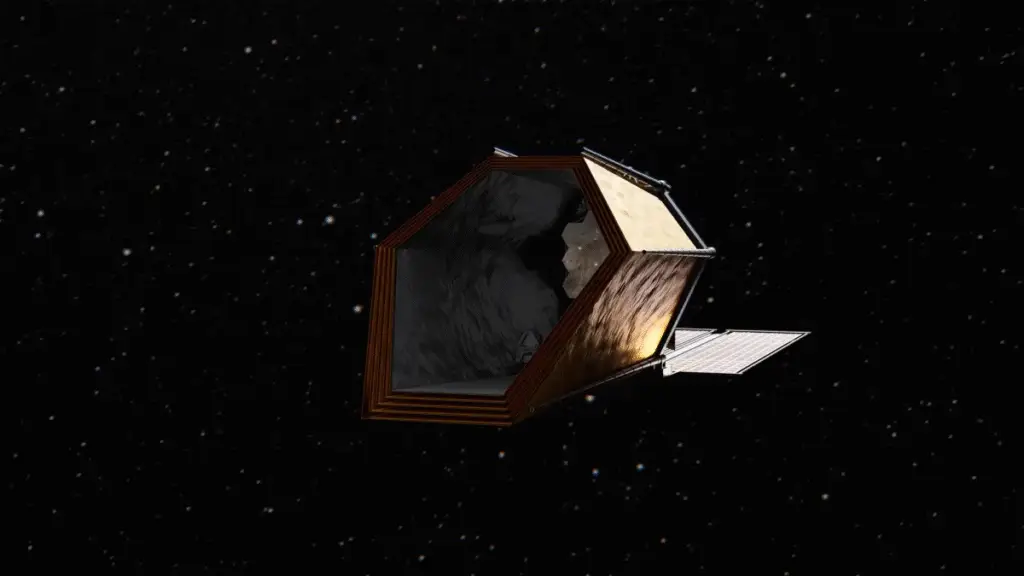
Source: SpaceNews
Exploring Life Beyond Earth with Advanced Optics
The Habitable Worlds Observatory will rely on an optical system that is very stable and can keep motion smaller than the width of an atom. This level of accuracy will be very important for finding faint light from faraway worlds that orbit bright stars.
The mission will include a powerful coronagraph, which is a tool that blocks light from stars so that nearby planets can be seen. NASA wants to make it thousands of times better than any other space coronagraph.
Servicing Design Makes Sure of Long-Term Scientific Value
The observatory will be built so that it can be serviced in space. This will allow future maintenance missions to upgrade instruments and make the observatory last longer. This modular design makes it more flexible and useful for science for decades.
NASA officials say that this method is similar to what they learned from the Hubble and James Webb Space Telescopes, and it will help build a long-term base for exploring other planets.
Recommended Article: WordPress Plugin Brings AI Search SEO Tools to Small Firms
Partnerships with Leading Aerospace Innovators
Seven big companies have gotten three-year, fixed-price contracts from NASA. Astroscale U.S., BAE Systems, Busek Co., L3Harris Technologies, Lockheed Martin, Northrop Grumman, and Zecoat Co. are among the chosen companies.
To help NASA reach the mission’s tough technological goals, each organization will share its knowledge in areas like space engineering, propulsion, material science, and precision optics.
Government Leadership Meets Commercial Innovation
Shawn Domagal-Goldman, head of NASA’s Astrophysics Division, said, “This mission asks if we are alone in the universe.” He stressed that combining government leadership with private innovation will make goals that seem impossible today possible in the near future.
Domagal-Goldman called the project a “critical incubator for future missions.” He stressed how NASA’s partnerships speed up major breakthroughs in astrophysics and deep-space exploration.
Building on Decades of Space Research Progress
The new projects build on previous NASA partnerships, such as the 2017 System-Level Segmented Telescope Design program and the 2024 large telescope technology awards. These past projects made it possible to design next-generation observatories with very high accuracy.
NASA officials said that the Hubble, James Webb, and upcoming Nancy Grace Roman Space Telescopes are still helping to shape this ambitious plan to study distant planetary systems.
Setting the Next Discovery Frontier for Humanity
The Habitable Worlds Observatory is NASA’s next step toward finding planets outside of our solar system that can support life. Its cutting-edge technology will help scientists answer one of the oldest questions in human history: Are we alone?
NASA is getting closer to finding new worlds and changing what people know about their place in the universe by putting money into new optical and spacecraft technologies.