


Tehran Indicates Conditional Willingness for Dialogue
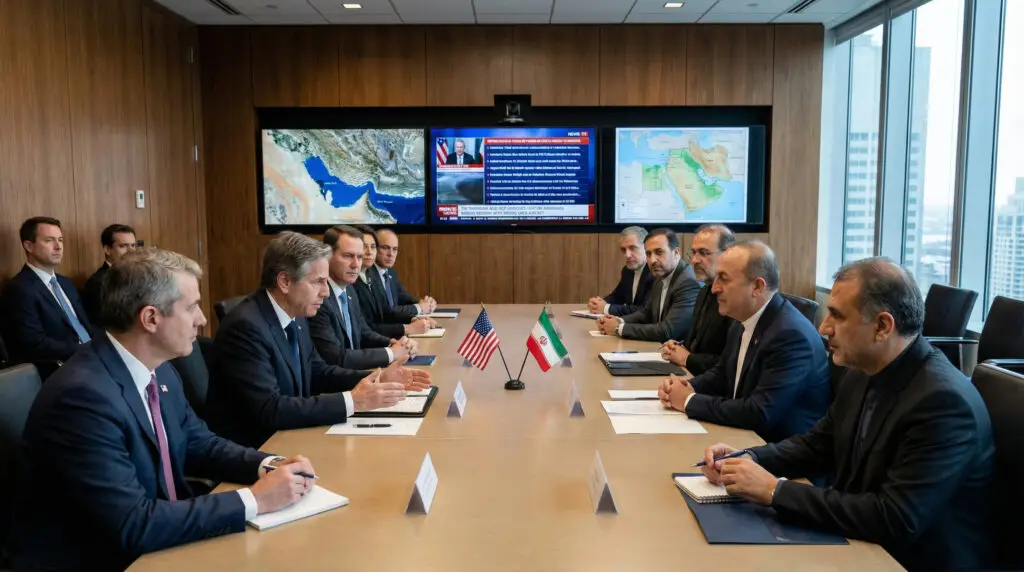
Iranian Foreign Minister Abbas Araghchi said that Tehran remains open to dialogue with the United States, provided that talks are conducted “on the basis of mutual respect.” His remarks came after U.S. President Donald Trump claimed that Iran had reached out to discuss its nuclear program. However, Araghchi did not confirm any direct contact or planned meetings between the two nations.
Speaking aboard Air Force One, Trump asserted that “Iran called—they want to negotiate,” while warning that talks could collapse if violence against protesters continued. His comments followed widespread demonstrations across Iran that have drawn global attention. The U.S. has warned it could use military force if repression intensifies.

Source: The Guardian
Contacts Follow Heightened Regional Tensions
According to diplomatic sources, Araghchi recently held discussions with Trump’s special envoy, Steve Witkoff. The talks reportedly focused on reducing tensions and preventing a potential U.S. strike on Iranian targets. Concerns surrounding Iran’s nuclear activities were also discussed.
Iran’s Foreign Ministry confirmed that communication channels with Washington remain open but inconsistent. Spokesperson Esmaeil Baghaei said U.S. messages often appear “contradictory,” complicating progress in diplomacy. This pattern has fueled doubts about the seriousness and structure of possible negotiations.
Crackdown on Protests Raises International Alarm
Araghchi claimed that the situation in Iran was “under total control” following weeks of anti-government protests. Now in their sixteenth day, the demonstrations have prompted a harsh security response across several provinces. Human rights groups estimate the death toll could range from 300 to as high as 3,000.
Trump condemned the crackdown, saying Iranian authorities had crossed “a red line.” He emphasized that some victims “shouldn’t have been killed,” hinting at potential policy consequences. The White House has reportedly convened a strategy meeting to evaluate responses, including limited military action.
Recommended Article: Iran Protests Grow as Economic Crisis Deepens Nationwide
Trump Threatens Action While Promoting Negotiations
Despite advocating dialogue, Trump warned that the U.S. could “act very strongly” if violence escalates. He said the Pentagon was “looking at options” and expected final recommendations within 24 hours. His remarks underscored the difficulty of balancing diplomatic outreach with deterrence signaling.
Trump also announced plans to consult Elon Musk about using Starlink satellite networks to restore internet access in Iran. The Iranian government has maintained a near-total internet blackout for four days to restrict protest coordination. Washington views digital access as vital to protecting freedom of expression under authoritarian regimes.
Political Divide Inside Iran on Negotiation Strategy
Analysts say the renewed talk of negotiations reflects growing divisions within Iran’s leadership over the need to lift U.S. sanctions. Reformist figures argue that easing sanctions is essential to stabilizing the economy and addressing social unrest. Inflation, corruption, and currency depreciation remain key drivers of nationwide protests.
However, Supreme Leader Ayatollah Ali Khamenei and the conservative parliament appear reluctant to resume direct talks. Their refusal to acknowledge the legitimacy of public demonstrations has hardened official policy positions. Internal rifts between reformists and hardliners continue to hinder the formation of a unified diplomatic strategy.
Regime Displays Strength Through Mass Mobilization
In response to international criticism, Iranian authorities organized large pro-government rallies across major cities to project stability and control. The demonstrations aimed to counter the perception of weakness amid growing domestic and foreign pressure. Notably, reformist President Masoud Pezeshkian did not address the rallies—parliament speaker Mohammad Bagher Ghalibaf spoke instead.
Ghalibaf denounced Trump as “delusional” and accused Washington of orchestrating unrest through covert interference. Pezeshkian’s absence highlighted divisions within Iran’s ruling elite. Hardliners, skeptical of his earlier acknowledgment of protest grievances, have continued to resist policy concessions.
What the Future Holds for U.S.-Iran Relations
Observers warn that Trump’s public remarks may undermine backchannel diplomacy by aggravating Tehran’s leadership. Iranian officials could view engagement with Washington as politically risky amid ongoing unrest. Previous negotiations collapsed following U.S. airstrikes on Iranian nuclear facilities last year.
Regional mediators, including Omani Foreign Minister Badr bin Hamad al-Busaidi, continue to facilitate indirect communication between the two sides. Yet, repression and mutual distrust leave the path to renewed nuclear dialogue uncertain. For now, Tehran’s stated willingness to negotiate “on the basis of respect” remains a cautious and conditional signal rather than a genuine diplomatic breakthrough.