


TESDA Positioned As Central Agency For AI Workforce Preparation
Joey Salceda, a former lawmaker, says that TESDA is the best organization to deal with the effects of artificial intelligence on the job market in the Philippines. His policy paper talks about how TESDA works all over the country and is supposed to keep training working Filipinos.
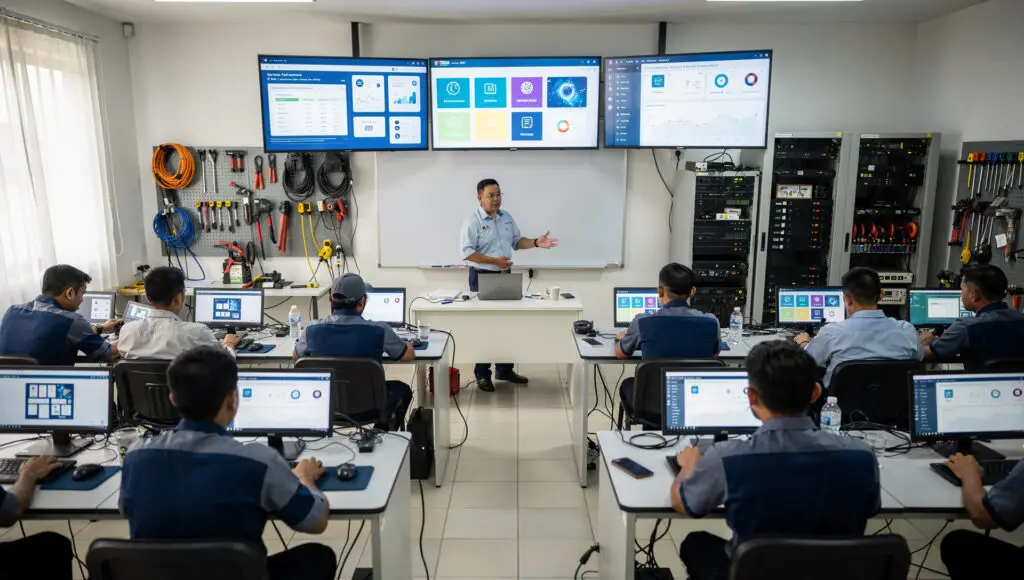
TESDA works directly with workers in many industries who are at risk of being automated, unlike agencies that focus on technology. Because of this closeness, curriculum updates can happen more quickly when people change jobs. Salceda says that no other school is closer to the intersection of the future of work.
Source: TESDA
Artificial Intelligence Presents Immediate Risks To Philippine Employment
According to the research, 36% to 40% of jobs in the Philippines are at risk of being affected by AI. Business process outsourcing, clerical services, retail, and basic manufacturing operations are the most at risk.
Without the right reskilling programs, up to fourteen percent of jobs could be lost directly. These numbers show that the workforce needs to adapt quickly, not wait for policy changes. Salceda says that doing nothing could make unemployment and inequality worse.
AI Will Reshape Jobs Rather Than Fully Replace Workers
Salceda stresses that artificial intelligence is more likely to add to jobs than get rid of workers completely. To see productivity gains, workers will need to learn how to work well with smart systems.
The main problem is whether workers will be able to learn useful AI skills in time. He sets up the debate as being ready for change instead of being against it. Training institutions should concentrate on practical and user-friendly AI applications.
Recommended Article: Grok AI Safety Failures Raise Alarms Over Image Generation
Everyday AI Applications Can Empower Ordinary Filipinos
Salceda says that AI shouldn’t be seen as a skill that only a few people have or as a technical skill. He talks about how it could help small business owners, farmers, and local governments be more productive every day.
Sari-sari store owners, for example, use AI to help them decide how much to charge for their goods and how much to keep in stock. Farmers could use data on the weather, soil, and the market to make planting calendars. Barangays might use AI-powered permit tracking systems to make things run more smoothly.
Vibecoding Lowers Barriers To Practical AI Adoption
One of the main ideas being pushed is “vibecoding,” which is when AI assistants turn natural language prompts into code that can be used. This method makes it so that workers and small businesses don’t need to know how to program in the old way.
By making it easier to interact, vibecoding makes digital innovation available to industries that have not been able to use technology before. Salceda says that TESDA can make these tools more widely used by offering short, modular training programs. This method is in line with the need for quick skill acquisition.
Administrative Bottlenecks Limit TESDA’s Current Effectiveness
Even though TESDA has a lot of potential, it has structural problems that make it harder to roll out new programs and come up with new ideas. It is still linked to the Department of Labor and Employment, which makes it harder to get approvals from different levels of government.
There are six Cabinet secretaries on its twenty-two-member governing board, and they all have different priorities. These factors make it harder to make decisions and slow down big changes. Salceda warns that problems with bureaucracy make it harder for people to respond quickly to changes in technology.
Structural Reforms Proposed To Secure Managed AI Transition
Salceda wants to make TESDA an independent agency that reports directly to the President. The goal of this change is to make government more efficient and speed up AI-related training programs across the country.
He also wants universal skills transition accounts to pay for retraining without adding to the budget. These accounts would give workers the tools they need to plan for career changes. Salceda puts the choice in terms of managed change versus chaotic disruption.