



Economists See Chance in Lowering Tariffs
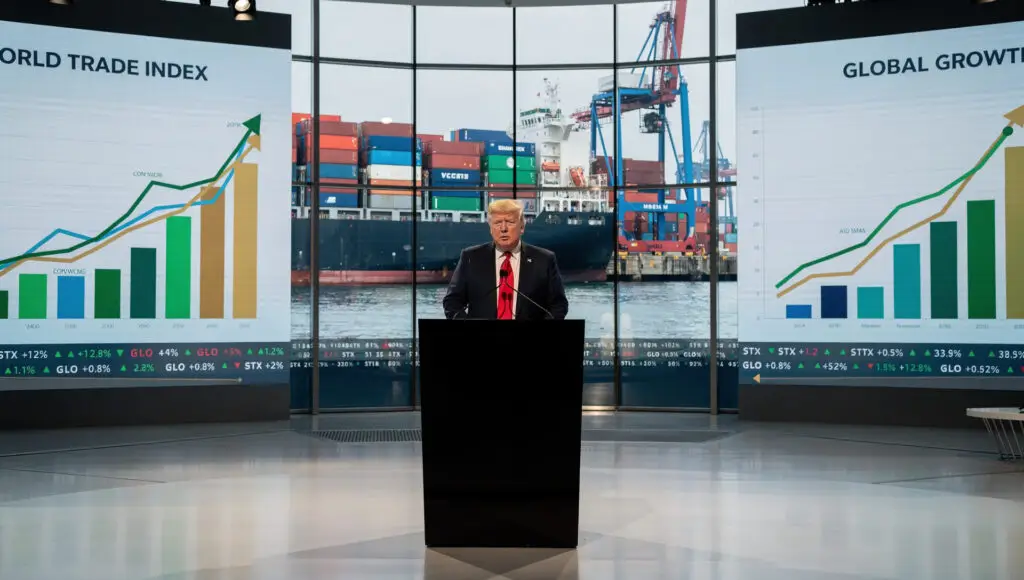
According to a recent study by Oxford Economics, President Donald Trump might boost the world economy by getting rid of his “Liberation Day” tariffs in 2025. Daniel Harenberg, an economist, discovered that getting rid of tariffs might speed up GDP throughout the world and cut inflation by a lot.
The analysis says that removing tariffs may contribute 0.5 percentage points to global GDP every year between 2026 and 2027.

Trump’s Trade Policy Shock Continues to Shape Markets
Trump’s tariffs, which were meant to help the U.S. become less dependent on manufacturing, have instead messed up supply chains throughout the world. The increasing prices of imports have caused inflation and hampered growth in key economies.
The administration has called these steps a patriotic economic policy, but analysts say they might hurt U.S. consumer confidence and business competitiveness in the long run.
A Path Toward Global Recovery and Inflation Relief
Harenberg says that getting rid of tariffs will not only boost global commerce, but it would also cut U.S. consumer prices by 0.4% per year until 2029. The consequent drop in inflation would boost buying power and make financial markets more stable.
He stressed that even a small amount of trade normalization might have big economic effects within a year of starting.
Recommended Article: US Treasury Yields Fall Ahead of Key Economic Data Week
Possible Political Timing Before 2026 Elections
Harenberg’s “extreme upside scenario” sees Trump completing a number of bilateral trade accords before the midterm elections in 2026. The objective would be to get good economic news and bring back corporate confidence.
This model says that tariffs that are put in place in 2025 would slowly go down to levels that were in place before “Liberation Day” by the end of 2026.
Consumer and Business Implications of Tariff Reversal
If tariffs were removed, importers and producers would instantly pay less, which would mean cheaper pricing at stores. Cheaper goods would be excellent for American families, and exporters may get back into important overseas markets.
Analysts also think that corporations will start investing and hiring again as trade flows get stronger and policy circumstances become more stable.
Long-Term Trends Favor Lower Tariff Levels
According to the Yale Budget Lab study that Harenberg talks about, U.S. tariffs have generally gone down over time. He said that Trump’s present approach could just be a temporary change, not a permanent one.
He thinks that import duties will slowly go down over the following ten years, finally going back to what they were before 2025 as global trade pressures grow.
Balancing Protectionism and Global Growth
Reversing tariffs might have big benefits, but it’s not certain if politicians would be willing to do it. Trump has said many times that tariffs are a way to protect the economy and the country.
Economists argue that the hard part will be finding a way to balance the needs of the US government with the clear benefits of freer trade and lower inflation throughout the world.