

Global Economic Growth Slows To 2.6 Percent
The UNCTAD’s most recent estimate says that global economic growth would decelerate to 2.6% in 2025. Financial instability and ongoing geopolitical uncertainty are putting more and more pressure on trade and investment, which have a big effect on global markets.
Changes in financial markets today have an effect on commerce that is almost as strong as the effect of actual production and consumption in many nations. Developing countries are still more susceptible since financial shocks have a direct effect on their investment and economic stability.
Developing Economies Face Mounting Financial And Climate Pressures
Developing nations are still growing faster than industrialized economies, but high borrowing prices make it hard for them to invest wisely. Climate threats make problems worse, pushing people to keep paying off debt and raising interest payments by a lot every year.
Extreme weather disasters cost the most susceptible countries over $20 billion a year in extra interest. These extra financial burdens make it harder to build infrastructure, run social services, and reach long-term economic development goals.
Dollar Dominance Shapes Global Financial System Significantly
The U.S. dollar is still the principal currency used in international markets and for cross-border financial transactions. Over the previous five years, its proportion of SWIFT electronic transactions has gone from 39% to over 50%.
The dollar’s dominance helps keep things stable amid global financial crises, but it also makes underdeveloped countries more vulnerable to changes they can’t control. Relying on U.S. financial cycles makes it harder for policymakers to change their minds and increases risks in developing markets in all parts of the world.
Recommended Article: Jaishankar Says Global Politics Outweighs Economic Priorities
Modern Slavery Affects 50 Million People Worldwide
There are almost 50 million individuals living in modern forms of slavery across the world right now. These include forced labor, child exploitation, and human trafficking. Secretary-General António Guterres stressed that this is still a catastrophe that needs an immediate international response.
In the past, almost 15 million people were trafficked across oceans in terrible conditions, which led to many fatalities along the journey. Through concerted action, efforts to promote awareness want to end forced labor, sexual exploitation, and child conscription across the world.
Millions Of Workers Exploited Through Informal And Forced Labor
Forced labor throughout the world steals around $236 billion a year in pay, which hurts workers who are already disadvantaged and trying to feed their families. Crime groups take advantage of poverty, inequality, and natural disasters to make money off of people’s pain in many places.
No corner of the world is safe; Asia and the Pacific have the most enslaved labor. Every year, Europe, Africa, the Americas, and the Arab States also have big difficulties with worker exploitation.
Latin America’s Agricultural Sector Dominated By Informal Jobs
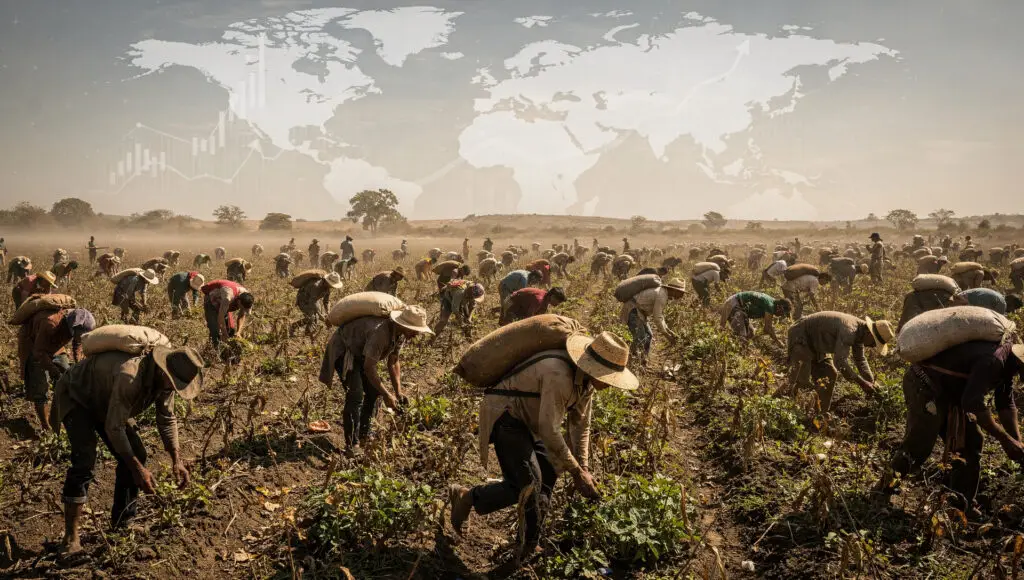
More than 80% of agricultural workers in Latin America work without social security safeguards and in informal settings. Because there aren’t enough formal job protections, women, young people, and elderly people in rural regions are at greater danger.
Almost half of all child labor is in the informal sector, and more than half of the workers don’t have enough schooling. These conditions make it harder for people to move up the economic ladder and damage the long-term viability of regional agriculture businesses.
UN Agencies Promote Policies For Decent Employment And Sustainability
The ILO and FAO are working to make Latin America’s agricultural industry a source of good jobs, food security, and long-term prosperity. Governments, businesses, and workers work together to put in place rules that promote fairness and formal employment.
Even if things have gotten better from 2019 to 2023, about half of young agricultural workers still labor informally, along with most women. People are still working to make labor protections stronger and make it easier for people in the region to get training, resources, and social security benefits.